
UNITED STATES SECURITIES AND EXCHANGE COMMISSION
Washington, D.C. 20549
SCHEDULE 14A INFORMATION
Proxy Statement Pursuant to Section 14(a) of the Securities Exchange Act of 1934
Filed by the Registrant þ
Filed by a Party other than the Registrant o
Check the appropriate box:
þ Preliminary Proxy Statement
o Confidential, for Use of the Commission Only (as permitted by Rule 14a-6(e)(2))
o Definitive Proxy Statement
o Definitive Additional Materials
o Soliciting Material under § 240.14a-12
(Name of Registrant as Specified In Its Charter)
(Name of Person(s) Filing Proxy Statement, if other than the Registrant)
Payment of Filing Fee (Check all boxes that apply):
þ No fee required
o Fee previously paid with preliminary materials.
o Fee computed on table in exhibit required by Item 25(b) per Exchange Act Rules 14a-6(i)(1) and 0-11

Distribution Solutions Group, Inc.
301 Commerce Street, Suite 1700
Fort Worth, TX 76102
Dear Fellow Stockholders:
You are cordially invited to attend our Annual Meeting of Stockholders of Distribution Solutions Group, Inc. ("DSG", the "Company", "we" or "us"), which will be held solely online via live webcast at 10:00 a.m., Central Time, on Thursday, May 14, 2026. Further information about the meeting and the matters to be considered is contained in the formal Notice of Annual Meeting of Stockholders and Proxy Statement on the following pages.
Our confidence in DSG’s future remains strong, notwithstanding the macroeconomic headwinds and choppy demand environments that characterized 2025. For the year, we delivered almost $2 billion in revenue, representing total growth of 9.8% and organic daily sales growth of 3.6%. We also generated $84 million in operating cash flow, driven by strong earnings flow-through and disciplined working capital management. While we recognize there is more work to be done, our teams made meaningful progress throughout the year—winning new business, expanding wallet-share, strengthening customer trust, and advancing enterprise-wide technology, e-Commerce capabilities, and other customer-facing initiatives. These actions reflect continued execution against strategic priorities and tangible progress toward our long-term value-creation goals.
Our mission remains clear: to accelerate growth through a balanced approach to high-value acquisitions and organic investment, leveraging our people, technology, and culture. With strong collaboration across our leadership team and the support of LKCM Headwater, we continue to deepen customer engagement, improve profitability, and compound cash flow. We believe DSG’s culture is a competitive advantage, and our vision is to fully leverage and scale our differentiated platform of products, solutions, and capabilities to expand and capture market share—organically and inorganically—while delivering sustainable long-term profitability, cash flow, and value for our stockholders.
It is important that your shares be represented at this meeting. Whether or not you plan to attend, we hope that you vote using one of the available voting options outlined on your proxy card.
I am proud of the progress our teams made on strategic initiatives in 2025 and of the focus they brought to building a better Distribution Solutions Group. I want to thank our Board and stakeholders for their partnership and support in what was a constructive and foundational year.
Sincerely,
J. Bryan King
Chairman, President, and Chief Executive Officer
PRELIMINARY PROXY STATEMENT – SUBJECT TO COMPLETION
Distribution Solutions Group, Inc.
301 Commerce Street, Suite 1700
Fort Worth, TX 76102
________________
NOTICE OF ANNUAL MEETING
OF STOCKHOLDERS
May 14, 2026
TO THE STOCKHOLDERS:
We are very pleased that this year’s Annual Meeting will again be a virtual meeting of stockholders, which will be conducted solely online via live webcast on May 14, 2026, at 10:00 a.m., Central Time. You will be able to attend and participate in the Annual Meeting online and vote your shares electronically by visiting: www.meetnow.global/MHJTGL9 on the meeting date and time described in the accompanying Proxy Statement.
We continue to embrace the latest technology to provide expanded access, improved communication and cost savings for our stockholders and the Company. We believe that hosting a virtual meeting will enable greater stockholder attendance and participation from any location around the world.
What will I be voting on?
| Proposals | Page Number | Board Recommendation | ||||||||||||
1. Election of seven directors | FOR each nominee | |||||||||||||
2. Ratification of the appointment of Grant Thornton LLP | FOR | |||||||||||||
3. To approve, on an advisory basis, the compensation of our named executive officers (say-on-pay) | FOR | |||||||||||||
| 4. Approval of DSG's Amended and Restated 2026 Equity Compensation Plan | FOR | |||||||||||||
5. Transaction of such other business as may properly come before the meeting or any adjournment or postponement thereof. | ||||||||||||||
Who is entitled to vote at the Annual Meeting?
You may vote at the meeting if you were a Distribution Solutions Group, Inc. stockholder of record at the close of business on the record date. The Board of Directors of the Company (the “Board” or “Board of Directors”) has fixed the close of business on March 20, 2026, as the record date for the determination of stockholders entitled to notice of and to vote at the meeting.
Accompanying this Notice is a Proxy, a Proxy Statement and a copy of the Company's 2025 Annual Report on Form 10-K.
1
Important Note Regarding the Availability of Proxy Materials for the Annual Meeting to be held on May 14, 2026: A copy of this Notice, the accompanying Proxy Statement and the Company's 2025 Annual Report on Form 10-K are available at www.edocumentview.com/DSGR.
By Order of the Board of Directors
Richard D. Pufpaf
Secretary
Fort Worth, Texas
April ___, 2026
The accompanying Proxy Statement is dated April ___, 2026, and the accompanying Proxy Statement and form of proxy are first being sent to Company stockholders on or about April ___, 2026.
2
TABLE OF CONTENTS
| Page | |||||
3
_______________
PROXY STATEMENT
ANNUAL MEETING OF STOCKHOLDERS
May 14, 2026
________________
QUESTIONS AND ANSWERS ABOUT THE 2026
ANNUAL MEETING AND VOTING
How do I vote?
You can vote at the Annual Meeting using the voting procedures set forth at www.meetnow.global/MHJTGL9 or by proxy without attending the meeting. You may also vote your shares by telephone or via the Internet as set forth in the enclosed proxy. Even if you expect to attend the virtual annual meeting, we strongly encourage you to sign and return the enclosed proxy in the envelope provided. If you execute a proxy, you still may attend the virtual meeting and vote using the voting procedures set forth at www.meetnow.global/MHJTGL9.
Can I change my vote?
Yes. If you are a registered stockholder, you can change your proxy vote or revoke your proxy at any time before the Annual Meeting by:
(1) Revoking it by written notice to Richard D. Pufpaf, our Secretary, at 301 Commerce Street, Suite 1700, Fort Worth, Texas 76102, before your original proxy is voted at the Annual Meeting;
(2) Delivering a later-dated proxy (including a telephone or Internet vote); or
(3) Voting at the meeting using the voting procedures set forth at www.meetnow.global/MHJTGL9.
If you are a beneficial owner and hold your shares in “street name,” please refer to the information forwarded by your bank, broker, or other holder of record for procedures on revoking or changing your proxy.
How many votes do I have?
You will have one vote for every share of Distribution Solutions Group, Inc. ("DSG", "Company", "we", "our") common stock that you owned at the close of business on March 20, 2026, except that, as discussed in Proposal 1 (Election of Directors), stockholders are entitled to cumulative voting in the election of directors. For all other proposals, you will have one vote for every share of DSG common stock that you own.
How many shares are entitled to vote?
There are 46,186,293 shares of DSG common stock outstanding as of March 20, 2026 and entitled to be voted at the meeting.
How many votes are needed to elect the directors?
•Directors will be elected by a plurality of the votes cast at the meeting by the holders of shares present in person or represented by proxy.
•If any nominee should become unavailable for election as a director, which is not contemplated, the proxies will have discretionary authority to vote for a substitute.
•In the absence of a specific direction from a stockholder, proxies in respect of such stockholder’s shares will be voted “For” the election of all named director nominees for which no specific direction is given by that stockholder.
How many votes are needed to pass Proposal 2 (Ratification of Appointment of Grant Thornton LLP), Proposal 3 (Advisory Vote to Approve Named Executive Officer ("Named Executive Officer" or "NEO") Compensation) and Proposal 4 (Approval of DSG's Amended and Restated 2026 Equity Compensation Plan)?
•Assuming a quorum is present, approval of each of Proposals 2, 3 and 4 requires the affirmative vote of the holders of a majority of the total voting power of the shares of Company common stock present in person or represented by proxy at the Annual Meeting.
•In the absence of a specific direction from a stockholder on any of Proposals 2, 3 and/or 4, proxies in respect of such stockholder’s shares will be voted “For” the proposal.
4
What if I vote “Withhold” for the election of a director?
Because directors are elected by a plurality of the votes cast at the Annual Meeting, a proxy marked “Withhold” with respect to one or more director nominees will have no effect on the election of the nominees, assuming that no other director candidates are properly nominated by any Company stockholder and that each director nominee receives at least one vote in the election.
What if I vote “Abstain” on any of Proposals 2, 3 and/or 4?
A vote to “Abstain” on Proposal 2, 3 and/or 4 will have the same effect as a vote “Against” that proposal.
What is required for a quorum to be present?
A quorum of stockholders is necessary to hold a valid Annual Meeting. The presence at the Annual Meeting, in person or by proxy, of the holders of a majority of the total voting power of all outstanding shares of Company common stock entitled to vote at the Annual Meeting constitutes a quorum. Shares of Company common stock represented at the Annual Meeting by attendance in person or by proxy, whether or not such shares are voted (including shares for which a stockholder directs an “abstention” from voting), will be counted as present for purposes of determining a quorum. Shares underlying “broker non-votes” will also be counted as present for purposes of determining a quorum. If a quorum is not present, the Annual Meeting may be adjourned and reconvened at a later date and/or time.
What is a “broker non-vote”?
Under applicable stock exchange rules, banks, brokers or other nominees who hold shares in “street name” on behalf of the beneficial owner of such shares have the authority to vote such shares in their discretion on “routine” proposals when they have not received voting instructions from the beneficial owners. However, banks, brokers or other nominees are not allowed to exercise their voting discretion with respect to matters that under applicable stock exchange rules are “non-routine.” A so-called “broker non-vote” results when a bank, broker or other nominee returns a valid proxy voting on one or more matters to be voted on at a stockholders meeting but does not vote on a particular “non-routine” matter because the bank, broker or other nominee does not have discretionary authority to vote on such “non-routine” matter without voting instructions from the beneficial owner of the shares and has not received voting instructions on such “non-routine” matter from the beneficial owner of the shares. The Company believes that Proposals 1, 3 and 4 are considered “non-routine” matters under applicable stock exchange rules, and Proposal 2 is considered a “routine” matter.
What is the effect of a broker non-vote on each of the proposals?
Because directors are elected by a plurality of the votes cast at the meeting, a broker non-vote on Proposal 1 will have no effect on the election of the nominees.
Because Proposal 2 is considered a routine matter, your broker is permitted to vote your shares on Proposal 2 even if your broker does not receive voting instructions from you. Accordingly, there will be no broker non-votes with respect to Proposal 2.
A broker non-vote on Proposal 3 and/or 4 will be counted as shares present at the Annual Meeting for purposes of determining quorum, but will not be counted as votes cast and will have no effect on the outcome of these proposals.
Is my vote confidential?
Yes. Your voting records will not be disclosed to us except:
•As required by law;
•To the inspectors of voting; or
•In the event the election is contested.
The tabulator, the proxy solicitation agent, and the inspectors of voting must comply with confidentiality guidelines that prohibit disclosure of votes to DSG. The tabulator of the votes and at least one of the inspectors of voting will be independent of DSG and our officers and directors.
If you are a holder of record and you write comments on your proxy card, your comments will be provided to us, but your vote will remain confidential.
5
When will I receive the Proxy Statement?
This Proxy Statement will be available to stockholders on or about April ___, 2026 in connection with the solicitation of the accompanying proxy by our Board of Directors. Only stockholders of record at the close of business on March 20, 2026 are entitled to notice of and to vote at the Annual Meeting. We have retained Morrow Sodali LLC, 333 Ludlowe Street, 5th Floor, South Tower, Stamford, Connecticut, 06902, a firm specializing in the solicitation of proxies, to assist in the solicitation at a fee estimated to be $10,000 plus expenses. Officers of the Company may make additional solicitations in person or by telephone. Expenses incurred in the solicitation of proxies will be borne by the Company.
If the accompanying form of proxy is executed and returned in time or you vote your shares by telephone or via the internet as set forth in the enclosed proxy, the shares represented thereby will be voted.
6
Corporate Governance Highlights
The table below highlights key corporate governance initiatives adopted by the Board of Directors (the "Board" or "Board of Directors") or otherwise approved by stockholders.
| Company Action | Stockholder Impact | Additional Detail | |||||||||
Board Diversity Policy | The Board believes that a board made up of highly qualified directors from diverse backgrounds and who reflect the changing population demographics of the markets in which the Company operates, the talent available with the required expertise, and the Company’s evolving customer and employee base, promotes better corporate governance. | Corporate Governance Section | |||||||||
Social and Environmental Responsibility Policy | The Company is committed to understanding, monitoring and managing our social and environmental impact, and we recognize the importance of this responsibility as a discipline that helps us manage risks and sets out the framework for managing our social and environmental commitment. | Corporate Governance Section | |||||||||
Board Declassification | Provides for annual election of directors. A declassified board generally means board members are held accountable and are more responsive to stockholders. | Corporate Governance Section | |||||||||
| Corporate Governance Principles | The Corporate Governance principles and charters are intended to ensure our Board has the necessary authority and practices in place to review and evaluate our business operations and to make decisions that are independent of management. | Corporate Governance Section | |||||||||
Clawback Policy | The Board of Directors adopted the Clawback Policy in order to protect the Company in the event that the Company is required to prepare an accounting restatement due to material noncompliance by the Company with any financial reporting requirement under applicable securities laws. The Company amended its Clawback Policy consistent with the requirements of the final Nasdaq listing standards implementing the Securities Exchange Act of 1934 (the “Exchange Act”) Rule 10D-1. | Corporate Governance Section | |||||||||
Anti-Hedging Policy | Under the Anti-Hedging Policy, the Company prohibits any executive officer of the Company or member of the Company's Board of Directors from purchasing financial instruments that are designed to hedge or offset any decrease in the market value of Company common stock. | Corporate Governance Section | |||||||||
Cybersecurity | Cybersecurity is a key enterprise risk. As a result, the Audit Committee reviews our cybersecurity risk management practices and performance, primarily through reports provided by the Chief Information Officers (“CIOs”) and the internal audit department on the Company’s cybersecurity management program. | Corporate Governance Section | |||||||||
Stockholders to call special meeting | Increases director accountability. In the event that our Board does not take into account the wishes of our stockholders on any outstanding matter, the stockholders have the ability to bring up such matters at a special meeting. Provides stockholders of the Company the ability to provide their views as to the corporate governance of the Company through the call of a special meeting. | By-Laws | |||||||||
7
PROPOSAL 1: ELECTION OF DIRECTORS
Stockholders are entitled to cumulative voting in the election of directors. Under cumulative voting, each stockholder is entitled to that number of votes equal to the number of directors to be elected, multiplied by the number of shares such stockholder owns, and such stockholder may cast his or her votes for one nominee or distribute them in any manner he or she chooses among any number of nominees. Unless otherwise indicated on the proxy card, votes may, in the discretion of the proxies, be equally or unequally allocated among the nominees named below. Directors will be elected by a plurality of the votes cast at the meeting by the holders of shares represented in person or by proxy. Thus, assuming a quorum is present, the seven persons receiving the greatest number of votes will be elected as directors and votes that are withheld will have no effect.
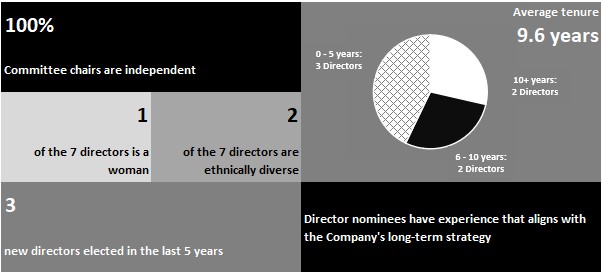
The Amended and Restated By-Laws of the Company provide that the Board of Directors shall consist of such number of members, between five and nine, as the Board determines from time to time. At the Annual Meeting, seven directors are to be elected to serve until the 2027 annual meeting of stockholders. The chart below summarizes the demographics of the seven nominees of our Board of Directors.
| THE SEVEN NOMINEES FOR THE BOARD OF DIRECTORS | ||
Directors to Serve Until 2027
| Name | Age | First Year Elected/Appointed Director | ||||||||||||
| I. Steven Edelson | 66 | 2009 | ||||||||||||
| Lee S. Hillman | 70 | 2004 | ||||||||||||
| J. Bryan King | 55 | 2017 | ||||||||||||
| Mark F. Moon | 63 | 2019 | ||||||||||||
| Bianca A. Rhodes | 67 | 2021 | ||||||||||||
| M. Bradley Wallace | 53 | 2023 | ||||||||||||
| Robert S. Zamarripa | 70 | 2022 | ||||||||||||
8
I. Steven Edelson has served as co-founder and now a non-Managing Director of International Facilities Group, a leading facilities development and management company, since June 1995. Mr. Edelson is the founding principal of IFG Development Group, which provides development advisory services, as well as acts in a development capacity in multiple areas of the real estate industry. Mr. Edelson also serves as Principal and Managing Director of The Mercantile Capital Group, a Chicago-based private equity investment firm. Mr. Edelson is a Director of Bionanosim a leading drug delivery and drug discovery company based in Israel. Mr. Edelson is also a member of the Board of Governors of the Hebrew University in Jerusalem. Mr. Edelson is a Trustee at the Truman Institute for Peace and is the proud recipient of the 2005 Ellis Island Congressional Medal of Honor. In 2014, Mr. Edelson became a NACD Board Leadership Fellow. These professional experiences, along with Mr. Edelson's particular knowledge and experience in capital management, qualify him to serve as a Director.
Lee S. Hillman has served as Chief Executive Officer and board member of Performance Health Systems, LLC, since 2012, and its predecessor since 2009. From February 2006 to May 2009, Mr. Hillman served as Executive Chairman and Chief Executive Officer of Power Plate International ("Power Plate") and from 2004 through 2006 as CEO of Power Plate North America. Mr. Hillman has served as President of Liberation Advisory Group, a private management consulting firm, since 2003. Previously, from 1996 through 2002, Mr. Hillman served as CEO of Bally Total Fitness Corporation, then the world's largest fitness membership club business, and from 2000 through 2002 also served as Executive Chairman of its Board of Directors. He was CFO of Bally Entertainment Corporation, an entertainment and manufacturing conglomerate, from 1991 to 1996, and prior to that an audit partner with Ernst & Young.
Since 2022, Mr. Hillman has served as Lead Independent Director of the Board of Distribution Solutions Group, where he is also the Chairman of the Audit Committee and served as the Compensation Committee Chairman through 2024. He served in similar roles on the Board of Directors of Lawson Products, DSG's predecessor, since 2004. Mr. Hillman also currently serves as a member of the Board of Directors of Franklin BSP Capital Corporation ("FBCC"), Franklin BSP Multifamily Trust, Inc., Franklin BSP Private Credit Fund and Franklin BSP Real Estate Debt BDC where he also serves as chairman of the Audit Committees. Previously, he has served as a member of the Board of Directors of several exchange-listed, public and privately-held companies, including Franklin BSP Lending Corporation (merged into FBCC in 2024), RCN Corporation (where he was Chairman of the Board), HealthSouth Corporation, Wyndham International, Bally Total Fitness Corporation (where he was Executive Chairman of the Board), HC2 Holdings, Inc. and Professional Diversity Network, Holmes Place, Plc., as well as Trustee of the Adelphia Recovery Trust. Mr. Hillman holds a B.S. in Finance and Accounting from the Wharton School of the University of Pennsylvania and a M.B.A. in Finance and Accounting from the Booth School of Business of the University of Chicago. Mr. Hillman is a Certified Public Accountant. These professional experiences, along with Mr. Hillman's particular knowledge and experience in accounting, finance and restructuring businesses and having served as Chief Executive Officer, Chief Financial Officer, and/or director of other publicly traded U.S. and international companies and as a former audit partner of an international accounting firm, qualify him to serve as a Director.
J. Bryan King, CFA, is a Principal of Luther King Capital Management Corporation ("LKCM"), an SEC-registered investment advisor with approximately $28.8 billion of assets under management as of December 31, 2024, and Founder and Managing Partner of LKCM Capital Group and LKCM Headwater Investments, LLC (“LKCM Headwater”), the private capital investment group of LKCM. On April 27, 2022, the Board of Directors of the Company appointed Mr. King to serve as President and Chief Executive Officer of DSG (f/k/a Lawson Products, Inc.), effective May 1, 2022, which is in addition to his role as Chairman of the Board of the Company. Mr. King has acted as an investment manager responsible for lower middle market investments in public and private companies since 1994 when he joined his first distribution company board. Those private capital focused partnerships manage over approximately $3 billion of flexible private capital focused on long-term investment strategies to drive stockholder value through building more profitable and durable businesses. The LKCM investment team and their affiliates and related parties generally represent approximately 30% of the capital in the partnerships, and outside capital is predominantly limited to taxable investors with prior significant experience building businesses similar to those in which LKCM invests. In 2003, Mr. King established the LKCM Distribution Holdings advisory board of operating partners, key limited partners, and relevant thought leaders to support LKCM Capital Group and its affiliates' investment activities in value-added distribution and related service offerings. In specialty distribution, Mr. King has Chaired and/or been the Managing Partner with direct controlling oversight of DSG (f/k/a Lawson Products, Inc.), TestEquity, Gexpro Services, Relevant Industrial Solutions, Critical Rental Solutions, Commercial Buildings Solutions, Industrial Distribution Group (IDG), Rawson, Golden State Medical Supply, and the ERIKS North American assets, including Lewis-Goetz (LGG), and XMEK (f/k/a ERIKS Seals and Plastics). He also has served in various capacities, including Chairman, on and alongside of many other boards of both public and private companies, as well as numerous not for profit and community organizations. Mr. King graduated from Princeton University and today serves on the advisory board for the Princeton University Museum of Art. He also graduated from Harvard Business School, as well as Texas Christian University where he serves on the Executive Committee of Trustees and chairs the Investment Committee with oversight over the TCU Endowment, and previously chaired the Fiscal Affairs, and Audit and Risk Management committees. These professional experiences, along with Mr. King's particular knowledge and expertise in finance and capital management, qualify him to serve as a Director.
9
Mark F. Moon has served as President of MFM Advisory Services since 2016 and as an advisor and operating partner for LKCM since 2016. In 2016, Mr. Moon joined the Board of Directors for BearCom LLC, which is the largest value-added distributor of two-way radio communications and solutions. Mr. Moon also served on the Board of Directors for TestEquity prior to the business combination with Lawson Products, Inc. and Gexpro Services. Mr. Moon served for more than thirty years with Motorola Solutions, Inc. from 1985 to 2016. During this time, he held a variety of leadership roles culminating in the responsibility for leading 10,000+ employees located in 100+ countries. Prior to his retirement, he served as President with responsibilities for the strategy of the company and leading all aspects of global operations including Sales and Marketing, Product Research and Development, Software and Services, and Supply Chain. In addition, Mr. Moon served as Chairman of the Board of Directors for Vertex Standard, as a member of the Board of Directors for the National Fallen Firefighters Foundation and as a member of the Advisory Board of the Georgia Institute of Technology’s School of Industrial and Systems Engineering where he was named to the Academy of Distinguished Engineering Alumni in 2014. These professional experiences, along with Mr. Moon’s particular knowledge and expertise in sales and marketing, global operations and supply chain management qualify him to serve as a Director.
Bianca A. Rhodes has served as the President and Chief Executive Officer of Knight Aerospace Medical Systems, LLC, a global leader in custom air medical transport products, since 2014. Ms. Rhodes currently serves as a member of the Board of Directors of a number of non-profit organizations. Prior to this time, she founded CrossRhodes Consulting where she advised private enterprises on financial and operating issues helping them to raise capital and structure buyouts while also managing a family real estate business. Ms. Rhodes began her career as a commercial banker with the National Bank of Commerce in San Antonio and later joined TexCom Management Services, a computer leasing company. At TexCom she was instrumental in the sale of the company to Intelogic Trace (NYSE:IT) where she became the CFO. Additionally, she has served as CFO of Kinetics Concepts Inc. (NASDAQ:KNCI), a global corporation that produces medical technology for wounds and wound healing. During her tenure there, she engineered a successful turnaround, significantly increasing the company’s value, prior to going private. She is a member of the San Antonio Women's Hall of Fame, was named the 2021 Business Woman of the Year and a 2025 South Texas Power Player. Ms. Rhodes is a graduate of the McCombs Business School at the University of Texas in Austin. These professional experiences, along with knowledge and experience acquired in managing distribution and technology firms, qualify Ms. Rhodes to serve as a Director.
M. Bradley Wallace has served as a Founding Partner of LKCM Headwater Investments, the private capital investment group of LKCM, where he is responsible for all aspects of the investment process including sourcing and analyzing new investment opportunities and overseeing the implementation of post-transaction operational initiatives, several of which have been within the Industrial Distribution sector. Mr. Wallace has served as a member of the Board of Directors of Alliance Consumer Group, Pavement Maintenance Group, and Partner Industrial. Mr. Wallace also serves as an investment professional for LKCM Capital Group, he served for two years as the Chief Financial Officer for a $200M retail chain, where he was responsible for restructuring the business and integration of several acquisitions subsequent to LKCM Capital Group’s initial purchase of the assets out of bankruptcy. Prior to joining LKCM, Mr. Wallace served as Principal and Portfolio Manager for KBK Capital, where he served on the investment committee and was responsible for senior debt, mezzanine and private equity transactions. While at KBK, he served as a Director and interim Chief Executive Officer of a food manufacturing and distribution company, overseeing the restructuring of its management. Mr. Wallace began his career in finance as an originator and manager of $100 million factoring and asset-based lending portfolio. Mr. Wallace graduated with a Bachelor of Business Administration and a Masters of Business Administration, with the honor of Top Scholar, from Texas Christian University. These professional experiences, along with Mr. Wallace’s particular knowledge and expertise in finance, investments, and accounting qualify him to serve as a Director.
Robert S. Zamarripa founded Zam Capital, a business advisory and investment company in 2012. Additionally, Mr. Zamarripa founded ZJR, an industrial real estate holding company in 1988 and is currently a managing partner. Mr. Zamarripa founded OneSource Distributors in 1983, serving as Chairman and Chief Executive Officer until 2013. OneSource is a leading electrical, utility and industrial automation distributor in the United States and Mexico. OneSource is recognized as an industry leader in providing technology driven value and supply chain services to its customers. Additionally, OneSource was recognized as the fifth largest Hispanic owned business in the United States by Hispanic Business Magazine in 2011. OneSource was ranked as one of the top 20 largest Electrical Distributors in the United States in 2011 by Electrical Wholesale Magazine. Mr. Zamarripa has served on the Board of Directors for Flow Control Group (2021 - present), SourceAlliance.com (1990 - 1992) and IMARK Group (2008 - 2012). Additionally, Mr. Zamarripa has served in advisory board positions for the following electrical, industrial and automation equipment manufacturers: Rockwell Automation, Eaton Corporation, General Electric Company, Hoffman Engineering, Hubbell Inc., Thomas and Betts Corporation, ABB and Leviton Manufacturing Co. Inc. In addition, Mr. Zamarripa served as a strategic advisor to a special committee of the Company’s Board of Directors in connection with the business combination between Lawson Products, Inc., TestEquity and Gexpro Services. Mr. Zamaripa graduated with a Bachelor of Arts from the University of California, Santa Barbara. These professional experiences, along with knowledge and experience acquired in managing and leading distribution firms, qualify Mr. Zamarripa to serve as a Director.
10
Recommendation of the Board
THE BOARD OF DIRECTORS RECOMMENDS THAT YOU VOTE “FOR” THESE NOMINEES.
11
PROPOSAL 2: RATIFICATION OF THE APPOINTMENT OF GRANT THORNTON LLP
The Audit Committee of the Board of Directors (the “Audit Committee”) of the Company has appointed Grant Thornton LLP (“GT”) to serve as the Company’s independent registered public accounting firm for the fiscal year ending December 31, 2026. Although the Company’s governing documents do not require the submission of this matter to stockholders, the Board of Directors considers it desirable that the appointment of GT be ratified by stockholders.
GT audited the Company’s 2024 and 2025 consolidated financial statements. See “Fees Billed to the Company by Grant Thornton LLP” for additional information, including certain information about fees paid to GT.
One or more representatives of GT will be present at the meeting. The representatives will have an opportunity to make a statement if they desire and will be available to respond to questions from stockholders.
If the appointment of GT is not ratified, the Audit Committee of the Board of Directors will reconsider the appointment.
Recommendation of the Board
THE BOARD OF DIRECTORS RECOMMENDS THAT YOU VOTE “FOR” THE RATIFICATION OF THE APPOINTMENT OF GRANT THORNTON LLP.
12
PROPOSAL 3: ADVISORY VOTE TO APPROVE NAMED EXECUTIVE OFFICER COMPENSATION
(SAY-ON-PAY VOTE)
As required by Section 14A of the Exchange Act we are providing our stockholders with a vote on a non-binding, advisory basis on the compensation of our Named Executive Officers ("NEOs"), as such compensation is disclosed under Item 402 under the SEC's Regulation S-K in the Compensation Overview ("Overview") section of this Proxy Statement, the accompanying tabular disclosure regarding such compensation and the related narrative disclosure.
The Company held its first advisory, non-binding stockholder vote on the compensation of the Company’s NEOs (commonly known as a "Say-on-Pay Proposal") at its 2011 annual meeting of stockholders. At our annual meeting of stockholders held on May 22, 2025, our Say-on-Pay Proposal received 99.84% support from our stockholders (excluding broker non-votes and abstentions). The Compensation Committee believes that this most recent stockholder vote strongly endorsed the compensation philosophy of the Company.
Our executive compensation programs are designed to enable us to attract, motivate and retain executive talent critical to our success. Consistent with our performance-based compensation philosophy, we reserve a significant portion of potential compensation for performance- and equity-based programs. Our performance-based annual incentive program rewards the Company's NEOs for achievement of key operational goals that we believe will provide the foundation for creating long-term stockholder value, while our equity awards, mainly in the form of non-qualified stock options, restricted stock units ("RSUs") and stock performance rights ("SPRs"), reward long-term performance and align the interests of management with those of our stockholders. In 2022, the primary focus of the long-term incentive program transitioned to equity awards primarily granted in the form of non-qualified stock options that are significantly "out of the money" and will only realize value in the event of significant appreciation in the Company's stock price.
Our Chairman, CEO and President, J. Bryan King, does not accept any form of compensation from the Company in connection with his role with the Company.
The Company also has adopted and adheres to best practices in executive compensation, including the adoption and maintenance of clawback provisions, prohibitions on hedging, and other policies, and eschews problematic pay practices. For example:
•our compensation programs are heavily weighted toward performance-based compensation;
•we have adopted and maintain compensation clawback provisions and have amended our Clawback Policy consistent with the requirements of the final Nasdaq listing standards implementing Exchange Act Rule 10D-1;
•we prohibit executives and directors from hedging their company stock ownership;
•we do not provide for tax gross-ups for change-in-control payments;
•we do not provide supplemental pension benefits or any other perquisites for former or retired executives;
•we do not provide personal use of corporate aircraft, personal security systems maintenance and/or installation or executive life insurance;
•we do not pay or provide payments for terminations for cause or resignations other than for good reason; and
•our Compensation Committee is composed solely of independent, outside directors and it retains its own independent compensation consultant.
The Board believes that the above information and the information within the Compensation Overview section starting on page 27 of this Proxy Statement demonstrates that our executive compensation program was designed appropriately and is working to ensure that management's interests are aligned with our stockholders' interests and support long-term value creation. Accordingly, the following resolution is to be submitted for a stockholder vote at the meeting:
"RESOLVED, that the Company's stockholders approve, on an advisory basis, the compensation of the NEOs, as disclosed pursuant to Item 402 of Securities and Exchange Commission Regulation S-K, including the Compensation Overview, the compensation tables and narrative disclosures in this Proxy Statement."
Because the vote is advisory, it will not be binding on the Board. The vote on this Say-On-Pay Proposal is not intended to address any specific element of compensation. However, as in the past, the Board and the Compensation Committee will review the voting results and take into account the outcome when considering future executive compensation arrangements. The Board
13
and management are committed to our stockholders and understand that it is useful and appropriate to obtain the views of our stockholders when considering the design and initiation of executive compensation programs.
Recommendation of the Board
THE BOARD RECOMMENDS THAT STOCKHOLDERS VOTE "FOR" PROPOSAL 3 TO APPROVE THE COMPENSATION OF THE COMPANY'S NAMED EXECUTIVE OFFICERS, AS DESCRIBED IN THE COMPENSATION OVERVIEW, THE COMPENSATION TABLES AND NARRATIVE DISCLOSURES IN THE PROXY STATEMENT.
14
PROPOSAL 4: APPROVAL OF DSG’S AMENDED AND RESTATED 2026 EQUITY COMPENSATION PLAN
On March ___, 2026, the Board approved the Distribution Solutions Group, Inc. Amended and Restated 2026 Equity Compensation Plan, subject to stockholder approval herein (the “Amended and Restated 2026 Equity Plan”). The Amended and Restated 2026 Equity Plan amends and restates the previously adopted Distribution Solutions Group, Inc. Equity Compensation Plan, effective October 17, 2022, as amended November 10, 2022 and approved by the stockholders on November 15, 2022.
Our Board has determined that it is in the best interests of the Company and its stockholders to approve this proposal. If our stockholders approve this proposal, the Amended and Restated 2026 Equity Plan will become effective as of the date of Board approval on March ___, 2026. If the Amended and Restated 2026 Equity Plan is not approved by our stockholders, it will not be adopted, and we will continue to operate under the Distribution Solutions Group, Inc. Equity Compensation Plan, as amended. Our executive officers and directors have an interest in this proposal by virtue of their being eligible to receive equity awards under the Amended and Restated 2026 Equity Plan.
In the Amended and Restated 2026 Equity Plan, we seek stockholder approval to make awards of up to an additional 3,000,000 shares of the Company’s common stock, align the definition of “Change in Control” with prevailing market practices, adjust the maximum number of shares and dollar amounts that may be granted to any individual participant to reflect the 1:2 stock split effected by the Company on August 31, 2023, and to make other ministerial changes. For the avoidance of doubt, all existing awards granted under any other plan of the Company prior to the effective date of the Amended and Restated 2026 Equity Plan will remain in full force and effect and will continue to be governed by the terms of the applicable plan and the award agreements thereunder.
The Board believes that additional shares are necessary to meet our currently anticipated equity compensation needs for approximately [the next year following the Annual Meeting]. This estimate is based on a forecast that takes into account, among other things, anticipated hiring, an estimated range of our stock price over time and our historical forfeiture rates.
The Amended and Restated 2026 Equity Plan also includes several provisions that reflect corporate governance best practice and protect stockholder interests including:
•No repricings: The Amended and Restated 2026 Equity Plan prohibits repricings of outstanding awards without stockholder approval.
•No liberal share recycling: Shares withheld to satisfy exercise price and tax withholding obligations will not be subject to new awards under the Amended and Restated 2026 Equity Plan.
•No discounted stock options: Incentive stock options may not be granted with an exercise price lower than the fair market value of the underlying shares on the date of grant and nonqualified stock options may not be granted with an exercise price lower than the fair market value of the underlying shares on the date of grant unless the Compensation Committee in its sole discretion determines otherwise.
•No automatic acceleration of vesting upon a Change in Control. Awards granted under the Amended and Restated 2026 Equity Plan will not be subject to automatic accelerated vesting upon a Change in Control.
•No “evergreen” provision: The Amended and Restated 2026 Equity Plan does not contain an "evergreen" provision that will automatically increase the number of shares authorized for issuance under the Amended and Restated 2026 Equity Plan.
•Limits on dividends and dividend equivalents: The Amended and Restated 2026 Equity Plan prohibits the payment of dividends and dividend equivalents in connection with stock options.
•Minimum vesting requirements: Awards granted under the Amended and Restated 2026 Equity Plan shall vest no earlier than the first anniversary of the date the award is granted, subject to limited exceptions for up to 5% of available shares.
•Replacement Award protections in Change in Control: In the event of a Change in Control where awards are assumed or substituted, replacement awards must be of the same type, have a value at least equal to the original award, contain terms no less favorable to the participant (including vesting), and, for equity-based awards, relate to publicly traded equity securities.
•Compensation recovery: Awards are subject to the Company's Compensation Recovery Policy, including provisions required by Section 10D of the Exchange Act.
15
Summary of the Amended and Restated 2026 Equity Compensation Plan
Set forth below is a summary of the principal features of the Amended and Restated 2026 Equity Plan. The summary is qualified in its entirety by reference to the complete text of the Amended and Restated 2026 Equity Plan, which is attached as Appendix B to this Proxy Statement. Capitalized terms used herein but not otherwise defined shall have the meaning assigned to such terms in the Amended and Restated 2026 Equity Plan, unless the context clearly dictates otherwise.
Administration and Delegation. The Compensation Committee will have the responsibility, in its sole discretion, to control, operate, manage, interpret and administer the Amended and Restated 2026 Equity Plan and any Award Agreement issued thereunder in accordance with its terms, and to make all other determinations that it deems necessary or advisable for the administration of the Amended and Restated 2026 Equity Plan or any Award Agreement. The Compensation Committee may delegate in writing such administrative duties as it may deem advisable to one or more of its members or to one or more agents. All determinations and interpretations by the Compensation Committee shall be binding and conclusive on the participants.
Eligibility. The Amended and Restated 2026 Equity Plan authorizes the Compensation Committee to make awards to employees and to non-employee directors of the Company. The number of options and other awards, if any, that an individual will be entitled to receive under the Amended and Restated 2026 Equity Plan will be at the discretion of the Compensation Committee and therefore cannot be determined in advance.
Authorized Shares. The Amended and Restated 2026 Equity Plan authorizes the issuance of an additional 3,000,000 shares of DSG common stock, subject to adjustment upon the occurrence of certain events as described below. All of the shares available for issuance under the Amended and Restated 2026 Equity Plan shall be available to be granted as ISOs, up to the maximum of 200,000 shares deliverable with respect to ISOs. No single participant may receive awards of more than 500,000 shares of DSG common stock in any calendar year, except that a participant who is a non-employee director may not receive more than 60,000 shares of DSG common stock in any approximately 12-month period between regular annual stockholders’ meetings. In no event may any number of shares granted during any one non-employee directors' compensation year to any single non-employee director have a grant date fair value that, when aggregated with all cash compensation for service as a non-employee director during such period, exceeds $900,000.
Adjustments to Awards. The Amended and Restated 2026 Equity Plan provides that if there is a change in the DSG common stock, through merger, consolidation, reorganization, recapitalization, stock dividend, stock split, reverse stock split, split-up, spin-off, combination of shares, exchange of shares, dividend in kind or other similar change in capital structure, or distribution (other than normal cash dividends) to stockholders of the Company, an adjustment shall be made to each outstanding award so that the value of each award immediately after the change is not significantly diluted or enhanced. Subject to certain restrictions, the Compensation Committee may make adjustments to the number and kind of shares subject to awards, the exercise price of stock options, and the fair market value and other value determinations applicable to outstanding awards to address changes in the DSG common stock or for other equitable purposes or in response to unusual events affecting the Company or changes in applicable laws or accounting principles, including modifications of performance goals and changes in the length of performance periods. In addition, the Grant Limitation applicable to individual participants shall be proportionately adjusted in the event of any such adjustment.
Recommendation of the Board
THE BOARD OF DIRECTORS RECOMMENDS THAT YOU VOTE “FOR” THE APPROVAL OF THE AMENDED AND RESTATED 2026 EQUITY PLAN.
16
SHARE OWNERSHIP OF CERTAIN BENEFICIAL OWNERS AND MANAGEMENT
The following table sets forth information as of March 20, 2026 concerning the beneficial ownership by each person (including any “group” as defined in Section 13(d)(3) of the Exchange Act) known by the Company to own beneficially more than 5% of the outstanding shares of Company common stock, each of the Company’s current directors (all of whom are nominees for re-election), each of the Company’s Named Executive Officers, and all of the Company’s current executive officers and directors as a group. Unless otherwise noted below, the address of each beneficial owner listed in the table is 301 Commerce Street, Suite 1700, Fort Worth, Texas, 76102. Since the voting or dispositive power of certain shares listed in the following table is shared, in some cases the same securities are included with more than one name in the table. The total number of shares of Company common stock issued and outstanding as of March 20, 2026 is 46,186,293.
| Name of Beneficial Owner | Number of Shares Beneficially Owned | % | |||||||||||||||
| Five Percent Stockholders | |||||||||||||||||
Luther King Capital Management Corporation (1) | 36,357,588 | 78.7 | % | ||||||||||||||
| Current Directors | |||||||||||||||||
I. Steven Edelson (2) | 103,313 | * | |||||||||||||||
Lee S. Hillman (2) | 107,261 | * | |||||||||||||||
J. Bryan King (3) | 35,838,638 | 77.6 | % | ||||||||||||||
Mark F. Moon (2) | 45,289 | * | |||||||||||||||
Bianca A. Rhodes (2) | 20,735 | * | |||||||||||||||
M. Bradley Wallace | — | — | |||||||||||||||
Robert S. Zamarripa (2) | 47,105 | * | |||||||||||||||
| Named Executive Officers | |||||||||||||||||
| Robert H. Connors | 10,000 | * | |||||||||||||||
Ronald J. Knutson (4) | 294,744 | * | |||||||||||||||
Cesar A. Lanuza (5) | 380,000 | * | |||||||||||||||
| Barry Litwin | 17,500 | * | |||||||||||||||
All Current Executive Officers & Directors (12 persons) (6) | 36,866,707 | 78.8 | % | ||||||||||||||
* Represents less than 1%.
(1) Based on a Schedule 13D filed with the SEC by Luther King Capital Management Corporation (“LKCM”), J. Bryan King and various other persons and entities (as amended by amendments thereto through and including Amendment No. 30 to Schedule 13D/A filed with the SEC on March 16, 2026). Includes (i) 3,578,228 shares held by PDLP Lawson, LLC (“PDP”), a wholly-owned subsidiary of LKCM Private Discipline Master Fund, SPC (“Master Fund”), (ii) 552,500 shares held by LKCM Investment Partnership, L.P. (“LIP”), (iii) 56,470 shares held by LKCM Micro-Cap Partnership, L.P. (“Micro”), (iv) 23,182 shares held by LKCM Core Discipline, L.P. (“Core”), (v) 1,184,652 shares held by LKCM Headwater Investments II, L.P. (“HW2”), (vi) 3,522,988 shares held by Headwater Lawson Investors, LLC (“HLI”), (vii) 16,000,000 shares held by 301 HW Opus Investors, LLC (“Gexpro Services Stockholder”), (viii) 8,000,000 shares held by LKCM TE Investors, LLC (“TestEquity Equityholder”), (ix) 3,434,044 shares held by LKCM Headwater Investments IV, L.P. (“HW4”), and (x) 5,524 shares held by a separately managed portfolio for which LKCM serves as investment manager. LKCM and/or one of more of its affiliates serve as (A) the investment manager for Master Fund, PDP, LIP, Micro, Core, HW2, HW4 and HLI, (B) the investment manager for a controlling member of Gexpro Services Stockholder and (C) the investment manager for two controlling members of TestEquity Equityholder. J. Luther King, Jr. is a controlling stockholder of LKCM and a controlling member of the general partner of LIP. J. Luther King, Jr. and J. Bryan King are controlling members of the general partner of the general partners of each of Micro and Core. J. Bryan King is (A) a controlling member of the general partners of HW2 and HW4, (B) a controlling member of the general partner of a controlling member of Gexpro Services Stockholder, (C) a controlling member of the general partners of each of two controlling members of TestEquity Equityholder and (D) the president of HLI. J. Luther King, Jr. and J. Bryan King are controlling members of the general partner of the sole holder of the management shares of Master Fund. J. Bryan King is the son of J. Luther King, Jr. Each of the persons and entities listed in this footnote expressly disclaims membership in a group under the Exchange Act and expressly disclaims beneficial ownership of the securities reported in the table, except to the extent of its pecuniary interest therein. See also footnote 3.
(2) The figures shown include 4,630 unvested RSUs that vest on May 26, 2026.
(3) Based on a Schedule 13D filed with the SEC by LKCM, J. Bryan King and various other persons and entities (as amended by amendments thereto through and including Amendment No. 30 to Schedule 13D/A filed with the SEC on March 16, 2026). Includes (i) 3,578,228 shares held by PDP, (ii) 56,470 shares held by Micro, (iii) 23,182 shares held by Core, (iv) 1,184,652 shares held by HW2, (v) 3,522,988 shares held by HLI, (vi) 16,000,000 shares held by Gexpro Services Stockholder, (vii) 8,000,000 shares held by TestEquity Equityholder, (viii) 3,434,044 shares held by HW4 and (ix) 39,074 shares held directly by J. Bryan King. LKCM Private Discipline Management, L.P. (“PD Management”) is the sole holder of the management shares of Master Fund (which wholly owns PDP), and LKCM Alternative Management, LLC (“Alternative”) is the general partner of PD Management. Alternative is the general partner of LKCM Micro-Cap Management, L.P. (“Micro GP”), which is the general partner of Micro. Alternative is the general partner of LKCM Core Discipline Management, L.P. (“Core GP”), which is the general partner of Core. LKCM Headwater Investments II GP, L.P. (“HW2 GP”) is the general partner of HW2. LKCM Headwater Investments III GP, L.P. (“HW3 GP”) is the general partner of a controlling member of Gexpro Services Stockholder. LKCM Headwater II Sidecar Partnership GP, L.P. (“Sidecar GP”) is the general partner of LKCM Headwater II Sidecar Partnership, L.P. (“Sidecar”). LKCM Headwater
17
Investments IV, L.P. (“HW4 GP”) is the general partner of HW4. HW2 and Sidecar are controlling members of TestEquity Equityholder. J. Bryan King is a controlling member of Alternative, HW2 GP, HW3 GP, HW4 GP and Sidecar GP and is the president of HLI. J. Bryan King expressly disclaims beneficial ownership of the securities reported in the table, except to the extent of his pecuniary interest therein. See also footnote 1.
(4) The figure shown includes 206,834 shares of common stock underlying options currently exercisable or exercisable within 60 days of March 20, 2026.
(5) The figure shown includes 360,000 shares of common stock underlying options currently exercisable or exercisable within 60 days of March 20, 2026.
(6) The figure shown includes 566,834 shares of common stock underlying options currently exercisable or exercisable within 60 days of March 20, 2026, and 23,150 unvested RSUs that vest within 60 days of March 20, 2026.
18
CORPORATE GOVERNANCE
Board Leadership Structure
Our Amended and Restated By-Laws provide that the roles of Board Chairman and President and Chief Executive Officer ("CEO") may be filled by the same or different individuals. This provides the Board the flexibility to determine whether these roles should be combined or separated based on the Company's circumstances and needs at any given time. The role of Chairman of the Board and CEO is currently held by J. Bryan King. In March 2017, the Board created the position of lead independent director and appointed Mr. Lee S. Hillman to this position to help reinforce the independence of the Board as a whole. Prior to Mr. Hillman’s appointment, the Board did not have a lead independent director.
Lead Independent Director
Pursuant to our Corporate Governance Principles, the lead independent director shall be an independent, non-employee director designated by our Board who shall serve in a lead capacity to coordinate the activities of the other independent directors, interface with and advise the Chairman of the Board, and perform such other duties as are specified in the charter or as our Board may determine. As a result, we believe that the lead independent director can help ensure the effective independent functioning of the Board in its oversight responsibilities. In addition, we believe that the lead independent director is better positioned to build a consensus among directors and to serve as a conduit between the other independent directors and the Board chairperson. The lead independent director's responsibilities include that he/she:
•presides at all Board meetings at which the Chairman of the Board is not present and at all executive sessions;
•has authority to call meetings of the independent directors;
•serves as a liaison between the Chairman of the Board and the independent directors, and between the Chairman of the Board and CEO if the roles are held by different individuals, when necessary to provide a supplemental channel of communication;
•works with the Chairman of the Board in developing and approving Board meeting agendas, schedules, and information provided to the Board;
•guides the CEO succession process together with the Compensation Committee and with input from the Nominating and Corporate Governance Committee (and similarly guides the Chairman of the Board succession process if the Chairman of the Board and CEO roles are held by different individuals);
•ensures the implementation of a Committee self-evaluation process; reviews reports from each Committee to the Board; and provides guidance to Committee Chairs, as needed, with respect to Committee topics, issues, and functions;
•facilitates the Board’s self-evaluation process; and
•communicates with significant stockholders and other stakeholders on matters involving broad corporate policies and practices when appropriate.
Board of Directors Meetings and Committees
The Board of Directors has standing Audit, Compensation, and Nominating and Corporate Governance Committees. All of these committees have adopted a charter for their respective committee. These charters may be viewed on the Company's website, www.distributionsolutionsgroup.com, and copies may be obtained by request to the Secretary of the Company. Those requests should be sent to Corporate Secretary, Distribution Solutions Group, Inc., 301 Commerce Street, Suite 1700, Fort Worth, Texas, 76102. Information on our website is not incorporated by reference into this proxy statement.
Annual Meeting Attendance Policy
The Company expects all members of the Board of Directors to attend the Annual Meeting, but from time to time, other commitments may prevent a director from attending a meeting.
19
Director Attendance at Board of Directors and Committee Meetings
In 2025, the directors attended on average, either in person or via teleconference or video conference, 96.6% of the meetings of the Board of Directors and 97.0% of the respective Audit, Compensation, and Nominating and Corporate Governance Committees' meetings on which they served. As required under the applicable Nasdaq listing standards, in the fiscal year ended December 31, 2025, our independent directors met sixteen times in regularly scheduled executive sessions at which only our independent directors were present.
All of the directors attended the last annual meeting held on May 22, 2025. The following chart shows the membership and chairpersons of our Audit, Compensation, and Nominating and Corporate Governance Committees, number of committee meetings held in 2025 and committee member attendance.
| Director | Board of Directors | Audit | Compensation | Nominating & Corporate Governance | ||||||||||||||||||||||
| I. Steven Edelson | 17 | 7 | 4 | |||||||||||||||||||||||
| Lee S. Hillman | 17 | 9* | 4 | |||||||||||||||||||||||
| J. Bryan King | 17* | |||||||||||||||||||||||||
| Mark F. Moon | 15 | 6 | 3* | |||||||||||||||||||||||
| Bianca A. Rhodes | 16 | 9 | 7* | |||||||||||||||||||||||
| M. Bradley Wallace | 16 | |||||||||||||||||||||||||
| Robert S. Zamarripa | 17 | 9 | 7 | |||||||||||||||||||||||
| Number of Meetings Held | 17 | 9 | 7 | 4 | ||||||||||||||||||||||
* Chairperson as of December 31, 2025
The Audit Committee
The functions of the Audit Committee of the Board of Directors include (i) reviewing the Company's procedures for monitoring internal control over financial reporting; (ii) overseeing the appointment, compensation, retention and oversight of the Company's independent auditors; (iii) reviewing the scope and results of the audit by the Company's independent auditors; (iv) reviewing the annual audited financial statements and quarterly financial statements with management and the independent auditors; (v) periodically reviewing with the Company's General Counsel potentially material legal and regulatory matters and corporate compliance; and (vi) reviewing and approving all related party transactions. Additionally, the Audit Committee provides oversight of the Company's Enterprise Risk Management program.
The Audit Committee consists of Lee S. Hillman (Chair), Bianca A. Rhodes and Robert S. Zamarripa. Each member of the Audit Committee satisfies the independence requirements of The Nasdaq Stock Market and the SEC and satisfies the financial sophistication requirements of The Nasdaq Stock Market.
The Board of Directors has determined that Lee Hillman, member of the Audit Committee of the Board of Directors, qualifies as an “audit committee financial expert” as defined in Item 407(d)(5)(ii) of Regulation S-K, and that Mr. Hillman is “independent” as the term is defined in the listing standards of the NASDAQ Stock Market.
The Compensation Committee
The Compensation Committee discharges the responsibilities of the Board of Directors relating to compensation of the CEO and establishes compensation for all other executive officers of the operating companies and the named executive officers of the Company. The Compensation Committee is responsible for (i) reviewing and approving corporate goals and objectives relevant to the compensation for executive officers; (ii) evaluating the performance of executive officers in light of those goals and objectives; and (iii) setting the compensation level of executive officers based on this evaluation. The Compensation Committee also administers incentive compensation plans and equity-based plans established or maintained by the Company from time to time; makes recommendations to the Board of Directors with respect to the adoption, amendment, termination or replacement of the plans; and recommends to the Board of Directors the compensation for members of the Board of Directors. The Compensation Committee reviews and approves the compensation programs for the CEO and other executive officers whose compensation is included in this report. The CEO makes recommendations on compensation to the Compensation Committee for all executive officers except himself or herself. The CEO may not be present in any meeting of the Compensation Committee in which his or her compensation is discussed.
20
The Compensation Committee consists of Bianca A. Rhodes (Chair), I. Steven Edelson, Mark F. Moon and Robert S. Zamarripa. Each member of the Compensation Committee has satisfied the independence requirements of The Nasdaq Stock Market (including the enhanced independence requirements for Compensation Committee members) and is an “outside director” as defined in Section 162(m) of the Internal Revenue Code of 1986, as amended (the “Code”).
The Nominating and Corporate Governance Committee
The Nominating and Corporate Governance Committee identifies and nominates potential directors to the Board of Directors and otherwise takes a leadership role in shaping the corporate governance of the Company.
The Nominating and Corporate Governance Committee consists of Mark F. Moon (Chair), I. Steven Edelson and Lee S. Hillman. Each member of the Nominating and Corporate Governance Committee has satisfied the independence requirements of The Nasdaq Stock Market.
Director Nominations
The Nominating and Corporate Governance Committee will consider Board of Director nominees recommended by stockholders. Those recommendations should be sent to the Chairperson of the Nominating and Corporate Governance Committee, c/o Corporate Secretary of Distribution Solutions Group, Inc., 301 Commerce Street, Suite 1700, Fort Worth, Texas, 76102.
The Nominating and Corporate Governance Committee will follow procedures which the Nominating and Governance Committee deems reasonable and appropriate in the identification of candidates for election to the Board of Directors and evaluating the background and qualifications of those candidates. Those processes include consideration of nominees suggested by an outside search firm, by incumbent members of the Board of Directors and by stockholders. The manner in which the Nominating and Corporate Governance Committee evaluates nominees for director is the same regardless of whether the nominee is recommended by a security holder.
The Nominating and Corporate Governance Committee will seek candidates having experience and abilities relevant to serving as a director of the Company and who represent the best interests of stockholders as a whole and not any specific interest group or constituency. The Board and Nominating and Corporate Governance Committee has a policy with regard to consideration of diversity in identifying director nominees as set forth under “Board Diversity Policy” on page 23. The Nominating and Corporate Governance Committee will consider a candidate’s qualifications and background including, but not limited to, responsibility for operating a public company or a division of a public company, other relevant business experience, a candidate’s technical background or professional qualifications and other public company boards of directors on which the candidate serves. The Nominating and Corporate Governance Committee will also consider whether the candidate would be “independent” for purposes of The Nasdaq Stock Market and the rules and regulations of the SEC. The Nominating and Corporate Governance Committee may, from time to time, engage the service of a professional search firm to identify and evaluate potential nominees.
Determination of Independence
The Company’s Board of Directors has determined that directors I. Steven Edelson, Lee S. Hillman, Mark F. Moon, Bianca A. Rhodes and Robert S. Zamarripa, are independent within the meaning of the rules of The Nasdaq Stock Market. In determining independence, the Board of Directors considered the specific criteria for independence under The Nasdaq Stock Market rules and also the facts and circumstances of any other relationships of individual directors with the Company. Mr. King, our Chairman of the Board, President and CEO, and Mr. Wallace are not considered independent directors.
The independent directors and the committees of the Board of Directors regularly meet in executive session without the presence of any management directors or representatives.
21
Code of Conduct
The Company, and its operating companies, has adopted a Code of Conduct applicable to all employees and sales representatives. The Company’s Code of Conduct is applicable to senior financial executives including the principal executive officer, principal financial officer and principal accounting officer of the Company. The Company’s Code of Conduct is available on the Corporate Governance page in the Investor Relations section of the Company’s website at www.distributionsolutionsgroup.com. The Company intends to post on its website any amendments to, or waivers from its Code of Conduct applicable to senior financial executives. The Company will provide any persons with a copy of its Code of Conduct without charge upon written request directed to the Company’s Secretary at the Company’s address listed in this proxy statement. Information on our website is not incorporated by reference into this proxy statement.
The Board of Directors Role in Risk Oversight and Assessment
The Board is responsible for overseeing the most significant risks facing the Company and for determining whether management is responding appropriately to those risks. The Board implements its risk oversight function both as a whole and through committees. The Board has formalized much of its risk management oversight function through the Audit Committee.
The Board committees have significant roles in carrying out the risk oversight function which include, but are not limited to, the following:
•The Audit Committee provides oversight of the Company’s Enterprise Risk Management program related to the Company’s financial statements, the financial reporting process, accounting and legal matters and oversees the internal audit function; and
•The Compensation Committee oversees the Company’s compensation programs from the perspective of whether they encourage individuals to take unreasonable risks that could result in having a materially adverse effect on the Company.
While the Board oversees risk management, Company management is charged with managing risk. Management is responsible for establishing and maintaining an adequate system of internal controls over financial reporting and establishing controls to prevent or detect any unauthorized acquisition, use or disposition of the Company’s assets.
The Company has retained a consulting firm to serve as its internal audit department to monitor and test the adequacy of the internal controls and report the results of this oversight function to the Audit Committee on a regular basis. Part of the internal audit department’s mission, as described in its charter, is to bring a “systematic, disciplined approach to evaluate and improve the effectiveness of risk management, control, and governance processes.” One way which the internal audit department carries this out is by evaluating the Company’s network of risk management programs and reporting the results to the Audit Committee.
Management conducts detailed periodic business reviews of the Company’s business. These reviews include discussions of future risks faced by various departments and functional areas across the organization. An example of our commitment to risk management is our adherence to the ISO 9001:2015 Standards (“ISO Standards”) which is a quality management system that encompasses the supply chain and distribution centers. ISO standards require that we identify risks in the quality management system, plan actions to address the risk, and evaluate the effectiveness of those plans. We are audited by a third-party ISO certifier, and as part of this audit, we must demonstrate and show evidence of three items; the risks, the plan to address the risks, and the monitoring of the effectiveness of our internal controls.
The Company has also established a Disclosure Committee which is comprised of senior management from various functional areas. The Disclosure Committee meets at least quarterly to review all disclosures and forward-looking statements made by DSG to its security holders and ensures they are accurate and complete and fairly present DSG’s financial condition and results of operations in all material respects.
Additionally, the Company has established and communicated to its employees a Code of Business Conduct, as mentioned previously, and maintains an ethics helpline where employees can confidentially and anonymously express any concerns they may have of any suspected ethics violations either through a dedicated website or through a toll-free telephone number. The Company requires various forms of annual compliance training of all employees.
22
Cybersecurity
Our Board, in coordination with the Audit Committee, oversees the management of risks from cybersecurity threats, including the policies, standards, processes and practices that the Company’s management implements to address risks from cybersecurity threats. The Audit Committee reports to the Board on our cybersecurity risk management practices and performance, generally on a quarterly basis. The Audit Committee receives reports from senior members of management, including from each of our Chief Information Officers (“CIOs”) (which include the CIO of each of our principal operating companies: Lawson Products, TestEquity and Gexpro Services), and the internal audit department regarding the cybersecurity risk management program. We have also established a governance structure under each of the CIOs that oversee investments in systems, resources, and processes as part of the continued maturity of our cybersecurity posture.
Our cybersecurity risk management program is part of our overall enterprise risk management program, and is focused on identifying, assessing, managing, and remediating material risks from cybersecurity incidents. We rely on risk-based security controls, including access limitations and contractual requirements on third-party service providers, as part of our overall approach of protecting the integrity, availability and confidentiality of our important systems and information. We have an established cyber incident response plan to respond to cyber incidents. Additional information relating to cybersecurity is contained in the Company’s Annual Report on Form 10-K for the year ended December 31, 2025.
Human Capital Resources
Our organization supports a culture of continuous improvement and emphasizes the importance of addressing the needs of our customers. We require our employees to act with integrity in every aspect of our business while encouraging them to be results driven, team oriented and progressive.
As of December 31, 2025, our combined workforce included approximately 4,300 individuals, comprised of approximately 1,770 in sales and marketing, approximately 1,860 in operation and distribution and approximately 680 in management and administration. Approximately 1,740 individuals are within Lawson, 1,140 are within TestEquity, 800 are within Gexpro Services, and 630 are within Canada Branch Division. For more information with respect to Human Capital Resources, please refer to the Company's Annual Report on Form 10-K for the year ended December 31, 2025.
Board Diversity Policy
The Board believes that a board made up of highly qualified directors from diverse backgrounds and who reflect the changing population demographics of the markets in which the Company operates, the talent available with the required expertise, and the Company’s evolving customer and employee base, promotes better corporate governance. To support this, the Nominating and Corporate Governance Committee will, when identifying candidates to recommend for appointment/election to the Board:
•consider only candidates who are highly qualified based on their experience, functional expertise, and personal skills and qualities; and
•in addition to its own search, may engage qualified independent external advisors to conduct a search for candidates that meet the Board’s skills and diversity criteria to help achieve its diversity aspirations.
Board appointments will be based on merit and candidates will be considered against objective criteria, having due regard for the benefits of diversity on the Board, including race, ethnicity and gender. In furtherance of this commitment, the Nominating and Corporate Governance Committee shall require that the list of candidates to be considered by the Nominating and Corporate Governance Committee and/or the Board for nomination to our Board include candidates with diversity of race, ethnicity, and gender.
Social and Environmental Responsibility Policy
DSG is committed to understanding, monitoring and managing our social and environmental impact, and we recognize the importance of this responsibility as a discipline that helps us manage risks. In alignment with our Code of Business Conduct and our Corporate Governance Principles, we aim to ensure that matters of social and environmental responsibility are considered and supported in our operations and administrative matters and are consistent with DSG stakeholders’ best interests.
This policy applies to activities undertaken by or on behalf of DSG and sets out the framework for managing our social and environmental commitment, for which our Board has responsibility for the overall strategy. In addition, the Board has delegated
23
the day-to-day responsibility of implementation and adherence to this policy to various DSG leaders within the Company whose primary goal is to ensure that appropriate organizational structures are in place to effectively identify, monitor, and manage social and environmental responsibility issues and performance relevant to our business. This policy is built on the following areas that reflect existing and emerging standards of social and environmental responsibility. We will:
•Stakeholder Engagement: engage our key stakeholders including employees, customers, stockholders and suppliers, to ensure their needs and concerns are heard and addressed, and if appropriate, incorporated into our strategy;
•Decision Making: integrate social and environmental considerations in our decision-making processes;
•Compliance with Laws and Regulations: meet or exceed all legal and regulatory requirements, including social and environmental requirements, which are applicable to our business operations;
•Workplace: create a safe, healthy, fair and enriching working environment where all employees are treated with respect and are able to achieve their full potential;
•Environment: identify and minimize potential negative environmental impacts of our operations where possible;
•Supply Chain: work with vendors to strengthen the social and environmental aspects of products and services we deliver to our customers; and
•Supplier Code of Conduct: commit to the highest ethical standards in the conduct of our business affairs and in our relationships with suppliers and customers. The purpose of this policy is to communicate the policy we have in place for our employees regarding their receipt of business gifts, meals and entertainment.
Compensation Risk Assessment
The Compensation Committee has reviewed the compensation programs of the Company to determine if they encourage individuals to take unreasonable risks and has determined that any risks arising from these compensation programs are not reasonably likely to have a material adverse effect on the Company. The Compensation Committee reviewed the Company’s existing compensation, with particular attention to the performance metrics, programs and practices that mitigate risk (e.g., clawback policies), and the mix of short-term and long-term compensation, and the Compensation Committee determined that these features promoted a responsible mix of compensation and risk.
Clawback Policy
In 2023, the Board of Directors timely approved an amended policy for recoupment of incentive compensation received by current or former executive officers on or after October 2, 2023 (the “Clawback Policy”). The Board of Directors adopted the updated terms of the Clawback Policy to meet the requirements of the final Nasdaq listing standards implementing Exchange Act Rule 10D-1. The Clawback Policy provides that following an accounting restatement, the Compensation Committee must assess whether any incentive amounts paid to current and former executive officers were in excess of what should have been paid based on the revised financials, and thus should be subject to recovery. The policy has a three-year look-back and applies to both current and former executives, regardless of such executive’s fault, misconduct or involvement in causing the restatement. The Company’s prior clawback policy will continue to cover compensation earned or received prior to October 2, 2023.
Anti-Hedging Policy
Under the Anti-Hedging Policy, the Company prohibits any executive officer of the Company or member of the Company's Board of Directors (or any designee of such executive officer or director) from purchasing financial instruments (including prepaid variable forward contracts, equity swaps, collars, and exchange funds) that are designed to hedge or offset any decrease in the market value of Company common stock (a) granted to the executive officer or director by the Company as part of the compensation of the executive officer or director; or (b) held, directly or indirectly, by the executive officer or director.
24
Corporate Governance Principles (Guidelines)
The Corporate Governance Principles and the charters of the three standing committees of the Board of Directors describe our governance framework. The Corporate Governance Principles and charters are intended to ensure our Board has the necessary authority and practices in place to review and evaluate our business operations and to make decisions that are independent of management. Our Corporate Governance Principles also are intended to align the interests of directors and management with those of our stockholders and comply with or exceed the requirements of the Nasdaq Stock Market and applicable law. They establish the practices our Board follows with respect to:
•Responsibilities of directors
•Board size
•Director independence
•Attendance at meetings
•Access to senior management
Copies of these Corporate Governance Principles are available through our website at www.distributionsolutionsgroup.com. The Company will also provide a copy of the Code of Business Conduct without charge upon written request directed to the Company at c/o Corporate Secretary, Distribution Solutions Group, Inc., 301 Commerce Street, Suite 1700, Fort Worth, Texas, 76102. Information on our website is not incorporated by reference into this proxy statement. Information on our website is not incorporated by reference into this proxy statement.
Insider Trading Policy
The Company maintains an Insider Trading Policy governing the purchase, sale, and/or other dispositions of our securities by directors, officers, and employees, and has implemented processes for the Company that we believe are designed to promote compliance with insider trading laws, rules, and regulations and any applicable listing standards. A copy of our Insider Trading Policy was filed as Exhibit 19 to our Annual Report on Form 10-K for the year ended December 31, 2024, filed with the SEC on March 6, 2025.
Stockholder Communications with the Board of Directors
Stockholders may send communications to members of the Board of Directors by either sending a communication to the Board of Directors or a committee thereof and/or a particular member c/o Corporate Secretary, Distribution Solutions Group, Inc., 301 Commerce Street, Suite 1700, Fort Worth, Texas, 76102. All such communications will be reviewed promptly and, as appropriate, forwarded to the Board of Directors or the relevant committee or individual member of the Board of Directors or committee based on the subject matter of the communication. With respect to other correspondence received by the Company that is addressed to one or more directors, the Board has requested that the following items not be distributed to directors, because they generally fall into the purview of management, rather than the Board: junk mail and mass mailings, product and services complaints, product and services inquiries, resumes and other forms of job inquiries, solicitations for charitable donations, surveys, business solicitations and advertisements.
Corporate Governance Practices Impacting Executive Compensation
The continued focus on our overall pay-for-performance philosophy is supported by the Company's compensation governance framework, which is demonstrated by the following policies:
•Anti-Hedging Policy - Our Anti-Hedging policy prohibits our directors, NEOs and other key executive officers from hedging the economic interest in the Company securities that they hold (as described in more detail under "Anti-Hedging Policy" on page 24).
•Clawback Policy - Our Clawback Policy protects the Company in the event that the Company is required to prepare an accounting restatement (as described in more detail under "Clawback Policy" on page 24).
•No Gross-Up on Change-in-Control Payments - We do not pay tax gross-ups for change in control ("CIC") payments under Code Section 280G.
25
•Independent Compensation Consultant - The Compensation Committee's engagement of an independent compensation consultant that does not provide any services to management and that had no prior relationship with management prior to the engagement.
•Compensation Practices Not Permitted:
◦A supplemental executive retirement plan (SERP);
◦Single-trigger golden parachute payments;
◦Perquisites for former or retired executives;
◦Personal use of corporate aircraft, personal security systems maintenance and/or installation, car allowance, or executive life insurance; and
◦Payments for cause terminations or resignations other than for good reason following a change-in-control.
26
REMUNERATION OF EXECUTIVE OFFICERS
COMPENSATION DISCUSSION AND ANALYSIS (“CD&A”)
Executive Summary
DSG has three principal operating companies: Lawson Products, Inc., an Illinois corporation ("Lawson"), TestEquity Acquisition, LLC, a Delaware limited liability company ("TestEquity"), and 301 HW Opus Holdings, Inc., a Delaware corporation conducting business as Gexpro Services ("Gexpro Services"). The complementary distribution operations of Lawson, TestEquity and Gexpro Services were combined on April 1, 2022, to create a global specialty distribution company. There are three distinct senior management teams, including chief executive officers and chief financial officers, who have duties and responsibilities primarily at the operating company level, including certain executives, who have a significant portion of their duties and responsibilities at the DSG/holding company level as well.
The Compensation Discussion & Analysis of the proxy statement explains how our executive compensation programs are designed and operate in practice with respect to our executives and specifically the following persons who constitute the Company’s NEOs for fiscal year 2025.
| Named Executive Officer | Title | |||||||
| J. Bryan King | Chairman, President and Chief Executive Officer | |||||||
| Ronald J. Knutson | Executive Vice President, Chief Financial Officer and Treasurer | |||||||
| Robert H. Connors | President and Chief Executive Officer, Gexpro Services | |||||||
| Cesar A. Lanuza | President and Chief Executive Officer, Lawson | |||||||
| Barry Litwin | Chief Executive Officer, TestEquity | |||||||
Overview of 2025 Business Performance and Compensation
•Revenue was $1.98 billion, an increase of $175.9 million or 9.8% on one fewer selling day, of which $121.5 million resulted from five acquisitions only partially included in 2024. Organic average daily sales increased 3.6% for 2025 versus 2024.
•Adjusted EBITDA was $175.2 million in 2025, or 8.9% of revenue, compared to $175.3 million or 9.7% of revenue in the prior year. Excluding the impact of Source Atlantic, acquired in 2024, Adjusted EBITDA as a percentage of revenue would have been 9.2%.
•Operating income increased $22.3 million from the prior year to $78.3 million, net of acquired intangible amortization of $46.5 million and $16.1 million of non-recurring severance and acquisition-related retention costs, stock-based compensation, acquisition-related costs and other non-recurring items. Adjusted operating income, excluding these non-cash and non-recurring items, decreased $7.5 million to $140.8 million compared to $148.4 million in 2024.
•Diluted income per share was $0.18 for the year compared to diluted loss per share of $0.16 in the year-ago period. Non-GAAP adjusted diluted earnings per share was $1.24 compared to $1.44 in the prior year.
•Amended and expanded the credit facility through 2030. The new facility includes $700 million in term debt and a $400 million revolving credit facility, an increase over the previous $255 million revolver. The Company ended the year with total liquidity of $469.0 million, consisting of $75.3 million of cash (restricted and unrestricted) and $393.7 million of availability under its credit facility with net debt leverage of 3.5x.
•Cash generated from operations increased by $27.4 million to $83.8 million in 2025 compared to $56.5 million in the prior year. Cash uses for 2025 included net capital expenditures of $26.8 million and share repurchases of $23.5 million at an average price of $30.26.
For additional information, please see the reconciliations of GAAP Operating Income (Loss) to Non-GAAP Adjusted EBITDA table in Appendix A.
Compensation Practices, Philosophy and Objectives
Our Compensation Committee has oversight for the executive compensation programs for our NEOs and executive officers, including those employed at our three operating companies. The Company's combined executive compensation programs reward executives for the development and execution of successful business strategies that lead to profitable growth.
27
To deliver the appropriate mix of compensation for each NEO, we provide annual cash compensation, which includes a base salary and an annual incentive opportunity based on pre-established performance goals related to each operating company’s performance relative to their annual budget, and a long-term incentive opportunity, which largely rewards NEOs for increases in the Company's stock price and creates alignment with shareholders. Additionally, certain NEOs are eligible for time-based and performance-based equity interests that would be payable in connection with a change-in-control or similar type of transaction. We believe the mix of these forms of compensation, in the aggregate, balances the reward for each NEO’s and other executive’s contributions to our Company. Through our mix of base salary, annual incentive, and equity award programs for our executives, we strive to offer a total level of compensation that is competitive within specific roles and geographical markets. Additionally, our compensation programs are designed to encourage and reward the creation of long-term stockholder value. Lastly, executives, who have duties and responsibilities at both the operating company and the DSG/holding company, will generally be tied to annual incentive plan performance goals of the operating company he or she is aligned with for the plan year.
Furthermore, we believe that compensation should motivate individuals who are responsible for DSG’s strategic direction and operations to achieve sustainable stockholder value creation and/or tangible milestones rather than to simply remain at DSG or maintain the status quo. Therefore, we emphasize stock option awards with exercise prices above then-current stock price, which have zero initial value and accumulate value, only to the extent that our stock price significantly increases following their grant date. Our Chairman, CEO and President, Mr. King, does not accept any form of compensation from the Company in connection with his role with the Company.
The Company guides its executive compensation programs with a compensation philosophy expressed in these three principles:
(1) Talent Acquisition & Retention. We believe that having qualified people at every level of our Company is critical to our success. Our compensation programs are designed to attract and retain talented executives as part of our senior management team.
(2) Accountability for DSG's Business Performance. To achieve alignment between the interests of our executives and our stockholders, we used short-term and long-term incentive awards. Our NEOs' compensation increased or decreased based on how well they achieved the established performance goals and the increase in stockholder value.
(3) Accountability for Individual Performance. We believe teams and individuals should be rewarded when their contributions are exemplary and significantly support Company performance and value creation.
When making compensation decisions, the various elements of compensation were evaluated together, and the level of compensation opportunity provided for one element may have impacted the level and design of other elements. We attempted to balance our NEO total compensation program to promote the achievement of both current and long-term performance goals. Lastly, we evaluate our compensation philosophy and programs regularly and evolve them as circumstances merit with oversight by the Compensation Committee, particularly with respect to executive and director compensation.
Key Factors in Determining Executive Compensation
Role of Compensation Committee in Executive Compensation
The Compensation Committee has overall responsibility for recommending to the Board the compensation of our CEO & President and reviewing and determining the compensation of our other executive officers. Members of the Compensation Committee are appointed by the Board. Currently, the Compensation Committee consists of four members of the Board: Bianca A. Rhodes (Chair), I. Steven Edelson, Mark F. Moon and Robert S. Zamarripa, none of whom is an executive officer of DSG, and each of whom qualifies as (i) an “independent director” under the NASDAQ Stock Market Rules and (ii) an “outside director” under Section 162(m) of the Code. See “Corporate Governance—Board Meetings and Committees—Compensation Committee”.
Determination of Competitive Practices
Peer Group for Compensation Benchmarking
DSG maintains two peer groups that it uses for compensation benchmarking: (i) the DSG Peer Group, which is used to benchmark compensation for DSG executives and directors, and (ii) the Operating Company Peer Group (the “OPG”), which is
28
used to benchmark compensation for executives of each of the Company’s operating companies – Lawson, Gexpro Services, and TestEquity. In 2025, the Compensation Committee reviewed the peer groups with the assistance of the Compensation Committee’s independent consultant, Compensation Advisory Partners ("CAP"), to confirm the companies in the peer group continue to be appropriate comparators in terms of size, industry, and other operating characteristics.
Specifically, in reviewing the DSG Peer Group, the Compensation Committee considered companies generally within a range of one-third to three times DSG’s revenue in the Trading Companies and Distributors, Technology Distributors, Industrial Machinery, and Supplies and Components industries. The Compensation Committee also considered characteristics such as business mix, EBITDA margin, and the ratio of market capitalization to revenue. Based on this review, the Compensation Committee approved the removal of three companies (i.e., Barnes Group and H&E Equipment Services, each due to acquisition and Tennant Company due to business mix considerations) and adding nine companies (i.e., Alta Equipment Group, BlueLinx Holdings, Columbus McKinnon Corporation, Enpro, ESCO Technologies, Fastenal Company, Hawkins, Kimball Electronics, and MSC Industrial Direct Company). These changes resulted in the 19-company DSG Peer Group listed below. At the time of the Compensation Committee’s review, the DSG Peer Group had median revenue of $1.6B and market capitalization of $1.7B compared to DSG’s revenue of $1.9B and market capitalization of $1.5B.
| Distribution Solutions Group, Inc. Peer Group | |||||
| Alta Equipment Group Inc. | Hawkins, Inc. | ||||
| Applied Industrial Technologies, Inc. | Helios Technologies, Inc. | ||||
| BlueLinx Holdings Inc. | Herc Holdings Inc. | ||||
| Columbus McKinnon Corporation | Kadant Inc. | ||||
| DNOW Inc. | Kimball Electronics, Inc. | ||||
| DXP Enterprises, Inc. | MRC Global Inc | ||||
| Enpro Inc. | MSC Industrial Direct Company, Inc. | ||||
| ESCO Technologies Inc. | Park-Ohio Holdings Corp. | ||||
| Global Industrial Company | TriMas Corporation | ||||
| Fastenal Company | |||||
In reviewing the OPG, the Compensation Committee considered companies generally within a range of one-third to three times the average revenue for DSG’s operating companies in the Trading Companies and Distributors, Electronic Manufacturing Services, Technology Distributors, Industrial Machinery and Supplies and Components industries. Like with the DSG Peer Group, the Compensation Committee also considered characteristics such as business mix, EBITDA margin, and the ratio of market capitalization to revenue. Based on this review, the Compensation Committee approved removing four companies due to business mix considerations (i.e., Ampco-Pittsburgh Corporation, Insteel Industries, Trex Company, and Twin Disc) and adding ten companies (i.e., Climb Global Solutions, CTS Corporation, Helios Technologies, Hudson Technologies, Kadant, Key Tronic Corporation, Kimball Electronics, McGrath RentCorp, Standex International Corporation, and TriMas Corporation). These changes resulted in the 20-company OPG listed below. At the time of the Compensation Committee’s review, the OPG had median revenue of $0.6B compared to average revenue of $0.6B for DSG’s operating companies.
| Operating Company (Lawson, TestEquity or Gexpro Services) Peer Group | |||||
| Climb Global Solutions, Inc. | Kadant Inc. | ||||
| Columbus McKinnon Corporation | Key Tronic Corporation | ||||
| CTS Corporation | Kimball Electronics, Inc. | ||||
| The Eastern Company | L.B. Foster Company | ||||
| Enerpac Tool Group Corp. | McGrath RentCorp | ||||
| Enpro, Inc. | NN, Inc. | ||||
| The Gorman-Rupp Company | Perma-Pipe International Holdings, Inc. | ||||
| Helios Technologies, Inc. | Standex International Corporation | ||||
| Hudson Technologies, Inc. | Transcat, Inc. | ||||
| Hurco Companies, Inc. | TriMas Corporation | ||||
29
The Compensation Committee believes that the proxy peer group benchmarking provides an accurate indicator of total compensation paid by companies with executives that have skills and responsibilities similar to the Company’s executives. Compensation for the Company’s executives is generally managed within the ranges of compensation paid by companies in their applicable peer group. In addition to peer group compensation data, the Compensation Committee also considers differences between each executive’s role and comparable roles in the market, each executive’s tenure, and performance in role.
NEO Compensation Competitiveness Compared to the Peer Group
Annually, as part of our determination of the competitiveness of our executive officers' target Total Cash Compensation ("TCC") and target Total Direct Compensation ("TDC") relative to market practices, the Compensation Committee reviews target compensation for each of DSG’s NEOs relative to compensation data for comparable officer roles in our peer groups. Based on this year’s review, the Compensation Committee found that, on average, both target TCC, which includes base salary and target bonus, and target TDC, which includes target TCC plus the average grant value of LTI awards received in the last three years, for our NEOs is positioned at median relative to our peer groups. Since Mr. King does not receive compensation for his services to the Company, a benchmarking is not necessary and he has been excluded from this analysis.
Role of Executives in Setting Compensation
Executive officers will generally make compensation recommendations to the operating companies' chief executive officers regarding employees who report to them. Executives are not involved in decisions regarding their own compensation. The Compensation Committee has overall responsibility for the compensation programs for the CEO and other NEOs, as well as the executive officers at the three operating companies, as described in the Corporate Governance section under “The Compensation Committee”. The CEO may not be present in any meeting of the Compensation Committee in which his compensation is discussed.
Compensation Committee Interlocks and Insider Participation
In 2025, no executive officer of the Company served on the Board of Directors or Compensation Committee of any other company with respect to which any member of the Compensation Committee was engaged as an executive officer. No member of the Compensation Committee was an officer or employee of the Company during 2025 and no member of the Compensation Committee was formerly an employee of the Company.
Role of the Independent Compensation Consultant
The Compensation Committee has the authority to engage and has from time to time engaged the services of outside consultants to assist in making decisions regarding the establishment of DSG’s compensation philosophy and programs, including for executives and directors. In 2025, the Compensation Committee engaged Compensation Advisor Partners ("CAP") to perform benchmarking analyses of executive officer and director compensation and make recommendations on peer group determination, performance metrics and incentive opportunity levels for the NEOs, as well as for independent members of the Board of Directors. CAP was asked to review recommendations related to equity award incentives, including plan design, performance metrics and goals, and related incentive opportunities and estimated plan costs. CAP performs no other services for the Company. The Compensation Committee has reviewed the independence of CAP in light of SEC rules and Nasdaq listing standards regarding compensation consultants and has concluded that CAP's work for the Compensation Committee does not raise any conflict of interest. All work performed by CAP is subject to review and approval of the Compensation Committee who has the right to terminate CAP at any time.
Response to Say-On-Pay Vote
The advisory stockholder vote on the executive compensation for the Company's NEOs' Say-on-Pay Proposal is non-binding. However, the Compensation Committee has considered, and will continue to consider, the outcome of this vote each year such a vote is taken when making compensation decisions for our CEO and other NEOs. At our annual meeting of stockholders held on May 22, 2025, our Say-on-Pay Proposal received 99.84% support from our stockholders (excluding broker non-votes and abstentions). The Compensation Committee believes that this stockholder vote strongly endorsed the compensation philosophy of the Company. Accordingly, the Compensation Committee did not take any specific actions with respect to its executive compensation programs as a direct result of the 2025 Say-on-Pay Proposal. The Compensation Committee will continue to consider the outcome of the Company's Say-on-Pay votes when making future compensation decisions for the NEOs.
30
Current Elements of Named Executive Officer Compensation
Elements of Total Compensation
In determining the type and amount of compensation for each eligible executive at our operating companies, other than our Chairman, President and CEO, we have used both annual cash compensation, which includes a base salary and an annual incentive award, as well as a long-term incentive opportunity, which is equity based. Additionally, certain NEOs received a pre-merger grant of time-based and performance-based equity interests that reward certain NEOs for achievement of long-term performance goals. Our compensation programs have been designed to encourage and reward the creation of long-term stockholder value, while at the same time avoiding the encouragement of unnecessary or excessive risk-taking. The Compensation Committee believes the mix of these forms of compensation, in the aggregate, supports the Company's overall compensation objectives of attracting top talent for executive positions, incentivizing such executive officers, motivating and rewarding the achievement of individual and company goals and aligning the interests of executive officers with those of our stockholders. We target total compensation within a reasonable range of market median, on average, and provide the opportunity to earn above median compensation for outperformance of our performance goals through our annual and long-term incentive plans.
The following table describes each executive compensation element utilized in 2025 for our NEOs based on the philosophy and objectives described above as well as each element's link to our compensation philosophy.
| Compensation Element | Philosophy Statement | Talent Acquisition and Retention | Accountability for Business Performance (Align to Stockholder Interests) | Accountability for Individual Performance (Support Company Performance and Value Creation) | |||||||||||||||||||
Base Salary | We intend to provide base pay competitive to the market of industry peers across other industries where appropriate. Our goal is to attract and retain talent that can deliver superior results and transform our business. | X | |||||||||||||||||||||
Annual Incentive Plan (1) | The 2025 AIP, as defined in the Annual Incentive Plan section, was designed to reward specific annual performance against business measures, such as Sales Revenue, Adjusted EBITDA, Working Capital and Equity Value, set by the Board at the start of the plan year. The amount of the 2025 AIP reward was determined by formula and can vary from 0% to 150% of an individual executive's original target incentive. | X | X | X | |||||||||||||||||||
Long-Term Incentive Plan ("LTIP")(2) & Equity Incentives | The LTIP was designed to align NEOs with the long-term interests of stockholders. Starting in 2022, the primary focus of the long-term incentive program transitioned to equity awards primarily granted in the form of non-qualified stock options that were significantly "out of the money" and will only realize value in the event of significant appreciation in the Company's stock price. RSUs were granted as a retention incentive aligned with future changes to share price. | X | X | X | |||||||||||||||||||
Other Compensation and Benefit Programs | DSG's operating companies offer employee benefits programs that provide protections for health, welfare and retirement. These programs are standard within the United States and include healthcare, life, disability, dental and vision benefits, as well as a 401(k) program and other federally provided programs outside of the United States. A deferred compensation program is also provided to a select group of our management, including our NEOs, to provide for tax-advantaged savings beyond the limits of qualified plans. | X | |||||||||||||||||||||
(1) NEOs are eligible for the annual incentive plan based on performance against performance measures at the operating company level. Equity value is determined based on DSG performance. Mr. Knutson is also a participant in the Lawson operating company annual incentive plan based on his dual role.
(2) Mr. Connors is not a participant in the Company's LTIP; however, he entered into incentive agreements pre-merger whereby he is eligible for time-based and performance-based equity interests that would be payable in connection with a change-in-control or similar type of transaction.
Base Salary
The Compensation Committee is responsible for reviewing our Chief Executive Officer’s and other executive officers’ base salaries. The base salaries of all executive officers are reviewed and adjusted when necessary to reflect individual roles, performance and the competitive market. Except for Mr. King, annual base salary and cash bonuses are the primary cash-based element of our executive officers’ compensation structure.
31
We provide NEOs and other employees, except for Mr. King, who does not receive any compensation from the Company in connection with his roles of Chairman, President & CEO, with a base salary to compensate them for services rendered during the fiscal year. Base salary represents the only fixed component of the elements of our executive compensation program and is intended to provide a baseline minimum amount of annual compensation for our NEOs. Our base salary philosophy is intended to keep our fixed costs at an appropriate level for each role. In setting base salaries for the CEO and other executives, the Compensation Committee considers:
•Competitive market data based upon peer group benchmarking;
•The experience, skills and competencies of the individual;
•The duties and responsibilities of the respective executive;
•The ability of the individual to effectively transform our company and culture; and
•The individual's ability to achieve superior results.
We typically consider adjustments to NEO base salaries on an annual basis as part of our review process, as well as upon a promotion. The following table sets forth information regarding the annualized base salary rates at the end of 2024 and 2025 for our NEOs:
| Executive Name | 2024 Base Salary (1) | 2025 Base Salary (2) | ||||||||||||
| J. Bryan King | $ | — | $ | — | ||||||||||
Ronald J. Knutson (3) | 525,000 | 525,000 | ||||||||||||
| Robert H. Connors | 440,000 | 455,400 | ||||||||||||
| Cesar A. Lanuza | 600,000 | 600,000 | ||||||||||||
| Barry Litwin | — | 850,000 | ||||||||||||
(1) 2024 base salaries were effective as of the following dates:
•Mr. Knutson: March 16, 2024
•Mr. Connors: September 2, 2024
•Mr. Lanuza did not receive a merit increase for 2024 and his salary was effective as of January 1, 2024.
(2) 2025 base salaries were effective as of the following dates:
•Mr. Knutson did not receive a merit increase for 2025 and his salary was effective as of January 1, 2025.
•Mr. Connors: March 31, 2025
•Mr. Lanuza did not receive a merit increase for 2025 and his salary was effective as of January 1, 2025.
•Mr. Litwin's salary is effective as of July 14, 2025, his hire date with TestEquity.
(3) Mr. Knutson's base salary is based on his expanded scope, duties and responsibilities in connection with his dual role as CFO of DSG and Lawson.
Annual Incentive Plan
We require our NEOs to be focused on achievement of the critical, strategic and tactical objectives that lead to annual success. Based on the annual achievement of pre-established annual goals, at both the operating company and overall DSG combined performance level, NEOs are eligible to earn an annual incentive under the Annual Incentive Plan ("AIP").
Mr. Lanuza, as CEO of Lawson, and Mr. Knutson, in his dual role as CFO of DSG and CFO of Lawson, participated in the 2025 Lawson AIP ("Lawson AIP"). Additionally, given Mr. Knutson’s duties and responsibilities at both the operating company as well as the DSG/holding company levels, his performance goals and associated incentive compensation opportunity is equally aligned to the Lawson AIP and DSG Enterprise Value. Mr. Connors, as CEO of Gexpro Services, participated in the 2025 Gexpro Services AIP ("Gexpro AIP"). Mr. Litwin, as CEO of TestEquity, was not a participant in the 2025 TestEquity AIP ("TestEquity AIP"); however, he will be an eligible participant in the TestEquity AIP in each calendar year after 2025. Lastly, Mr. King does not receive any compensation from the Company in connection with his roles of Chairman, CEO & President, and therefore did not participate in the AIP. In 2025, the individual objectives of each of our NEOs supported their respective individual areas of responsibility, profitability and long-term strategic goals. For each of our NEOs, the individual objectives were tied to the performance of their respective operating companies measured in terms of Adjusted EBITDA, Adjusted net sales, working capital and DSG enterprise value.
32
2025 AIP
Pursuant to the terms of the 2025 annual incentive plans, each NEO was granted a threshold, target and maximum bonus award opportunity expressed as a percentage of base salary. These bonus award opportunities range from 0% to 150% of the target AIP opportunity for our NEOs, with the exception of the DSG Enterprise Value performance goal which opportunity ranges from 0% to 125% of the target AIP opportunity and the Gexpro Services Strategic Synergies performance goal which opportunity ranges from 0% to 100% of the target AIP opportunity.
At the beginning of each year, the Compensation Committee approves the assignment of a threshold, target and maximum objective for each financial performance measure. The target objectives for each performance goal for our NEOs, other than DSG Equity Value, are established based upon the operating company budget approved by the Board. Actual year-end financial results for such measures are compared to plan objectives in order to determine the amount of any AIP bonus. If actual financial results fall between the threshold and target or the target and maximum objectives, payouts are calculated using linear interpolation. Notwithstanding the other provisions of the AIP, the Committee may reduce or eliminate any bonus payable to a NEO based upon the Committee's determination of individual performance or other factors it deems relevant. The Compensation Committee may not increase any bonus payable to a NEO without a special meeting called to review and approve such requests.
AIP Performance Metrics
The DSG operating companies, including Lawson, Gexpro Services, and TestEquity, utilized pre-established performance criteria for their respective annual incentive plans that are intended to align executive compensation with their 2025 business objectives. The Adjusted EBITDA, Adjusted Net Sales and Working Capital metrics described below are based on each individual operating company.
Compensation Performance Metrics (Lawson Operating Company)
•Adjusted EBITDA
◦The Adjusted EBITDA target of $88.6 million was established based on planned 2025 Adjusted EBITDA. Actual 2025 Adjusted EBITDA, adjusted for stock-based compensation, acquisition related costs and severance, was $67.3 million. This amount was then adjusted for foreign exchange rate changes, executive recruiting fees and non-recurring consulting fees, which were not included in the established target. The aggregate amount of all approved adjustments was an increase of $1.8 million resulting in Adjusted EBITDA of approximately $69.1 million for 2025.
•Adjusted Net Sales
◦Adjusted Net Sales target of $776.6 million was established based upon approved plans. 2025 Net Sales were $702.5 million excluding acquisitions not included in original operating plan. Adjusted Net Sales consisted of Net Sales, increased for the net effect of foreign exchange rate changes which were not included in the established target. The aggregate amount of all approved adjustments was an increase of $7.5 million.
•Working Capital
◦Working capital target as a percent of sales of 23.3% was established based on the 2025 operating plan. Actual working capital as a percentage of sales achieved was 23.8%. Working capital is defined as trade accounts receivable plus inventory less trade accounts payable.
•DSG Equity Value
◦DSG Equity Value appreciation target of 25.0% was established for 2025. For this portion of the AIP, the Company defined DSG Equity Value using a multiple of 12 on pro-forma Adjusted EBITDA basis less net debt. DSG Equity Value is intended to measure the appreciation in the underlying value of the Company inclusive of free cash flow generation.
Compensation Performance Metrics (Gexpro Services Operating Company)
•Adjusted EBITDA
◦The Adjusted EBITDA target of $61.6 million was established based on planned 2025 Adjusted EBITDA. Actual 2025 Reg G EBITDA, including acquisition related costs, other non-recurring consulting fees, and
33
severance, was $63.7 million. The aggregate amount of all approved adjustments was an increase of $0.2 million resulting in an Adjusted EBITDA of approximately $63.9 million for 2025.
•Adjusted Net Sales
◦Adjusted Net Sales target of $479.7 million was established based on approved plans. 2025 Net Sales were $494.6 million.
•Working Capital
◦Working capital target as a percent of sales of 29.0% was established based on the 2025 operating plan. Actual working capital as a percentage of sales achieved was 27.8%. Working capital is defined as trade accounts receivable plus inventory less trade accounts payable.
•DSG Equity Value
◦DSG Equity Value appreciation target of 25.0% was established for 2025. For this portion of the AIP, the Company defined DSG Equity Value using a multiple of 12 on pro-forma Adjusted EBITDA basis less net debt. DSG Equity Value is intended to measure the appreciation in the underlying value of the Company inclusive of free cash flow generation.
•Strategic Synergies
◦Strategic initiatives were established for 2025 approved plans to drive accelerated synergies across DSG, Gexpro Services, and Gexpro Services acquisitions to enhance profitability. Synergy budget of $4.0 million across all initiatives (Commercial, Sourcing, Operational) was met for 2025.
Compensation Performance Metrics (TestEquity Operating Company)
•Adjusted EBITDA
◦The Adjusted EBITDA target of $73.6 million was established based on planned 2025 Adjusted EBITDA. Actual 2025 Adjusted EBITDA was $51.6 million with an aggregate adjustment of $0.6 million for the upfront recruiting and onboarding cost of executive leadership not included in the original annual operating plan.
•Adjusted Net Sales
◦The Net Sales target of $859.3 million was established based on planned 2025 Net Sales. Actual 2025 Net Sales was $783.2 million.
•Working Capital
◦Working capital target as a percent of sales of 23.9% was established based on the 2025 operating plan. Actual quarterly-weighted working capital as a percentage of sales achieved was 22.8%. Working capital is defined as trade accounts receivable plus inventory less trade accounts payable.
•DSG Equity Value
◦DSG Equity Value appreciation target of 25.0% was established for 2025. For this portion of the AIP, the Company defined DSG Equity Value using a multiple of 12 on pro-forma Adjusted EBITDA basis less net debt. DSG Equity Value is intended to measure the appreciation in the underlying value of the Company inclusive of free cash flow generation.
34
2025 AIP Target Opportunity & Goal Weighting
Under the 2025 AIP, target opportunities as a percent of each NEO's salary were set as follows:
2025 AIP Target | 2025 AIP Goal Weighting | |||||||||||||||||||||||||||||||||||||||||||
| Percent of Base Salary | Amount | Adjusted EBITDA | Adjusted Net Sales | Working Capital | DSG Enterprise Value | Strategic Synergies | ||||||||||||||||||||||||||||||||||||||
| J. Bryan King | —% | $ | — | —% | —% | —% | —% | —% | ||||||||||||||||||||||||||||||||||||
Ronald J. Knutson (1) | 80% | 420,000 | 20% | 20% | 10% | 50% | —% | |||||||||||||||||||||||||||||||||||||
Robert H. Connors (2) | 50% | 225,775 | 25% | 20% | 20% | 20% | 15% | |||||||||||||||||||||||||||||||||||||
Cesar A. Lanuza (3) | 100% | 600,000 | 35% | 35% | 10% | 20% | —% | |||||||||||||||||||||||||||||||||||||
Barry Litwin (4) | —% | $ | — | —% | —% | —% | —% | —% | ||||||||||||||||||||||||||||||||||||
(1) The weighting for Adjusted EBITDA and Adjusted Net Sales is split 10% for Lawson consolidated and 10% for Lawson MRO segment results.
(2) The weighting for Adjusted EBITDA, Adjusted Net Sales, Working Capital and Strategic Synergies are based on Gexpro results.
(3) The weighting for Adjusted EBITDA and Adjusted Net Sales are split 20% for Lawson consolidated, 10% for Lawson MRO segment and 5% for Canada branch results.
(4) Per the terms of his employment agreement, Mr. Litwin was not a participant in the 2025 AIP and received a one-time cash sign on bonus equivalent to his AIP opportunity level at Target, prorated for his 2025 service (subject to repayment by Mr. Litwin in the event of certain termination events within eighteen months of his employment agreement effective date).
Compensation Performance Targets & Payout Percentages
The DSG operating companies, including Lawson, Gexpro Services, and TestEquity, utilized pre-established performance targets for their respective annual incentive plans in excess of 2024 operating company results. The Adjusted EBITDA, Adjusted Net Sales and Working Capital performance targets and annual payout percentages described below are based on each individual operating company.
Compensation Performance Targets & Payout Percentages (Lawson Operating Company)
The Lawson 2025 AIP financial performance targets, which were set at levels in excess of the actual 2024 Lawson results, and payout percentages were as follows (dollars in thousands):
2025 AIP Performance Targets (Lawson Consolidated) | ||||||||||||||||||||||||||
| Actual Results | Threshold | Target | Maximum | |||||||||||||||||||||||
| Adjusted EBITDA | $ | 69,071 | $ | 79,718 | $ | 88,575 | $ | 97,133 | ||||||||||||||||||
| Payout Percentage | — | % | 50 | % | 100 | % | 150 | % | ||||||||||||||||||
| Adjusted Net Sales | $ | 709,974 | $ | 737,754 | $ | 778,583 | $ | 815,412 | ||||||||||||||||||
| Payout Percentage | — | % | 50 | % | 100 | % | 150 | % | ||||||||||||||||||
| Working Capital | 23.8 | % | 24.00 | % | 23.30 | % | 22.50 | % | ||||||||||||||||||
| Payout Percentage | 58.0 | % | 50 | % | 100 | % | 150 | % | ||||||||||||||||||
| DSG Equity Value | (1.2) | % | 20.00 | % | 25.00 | % | 35.00 | % | ||||||||||||||||||
| Payout Percentage | — | % | 50 | % | 100 | % | 125 | % | ||||||||||||||||||
35
2025 AIP Performance Targets (Lawson MRO) | ||||||||||||||||||||||||||
| Actual Results | Threshold | Target | Maximum | |||||||||||||||||||||||
| Adjusted EBITDA | $ | 52,875 | $ | 58,469 | $ | 64,966 | $ | 71,463 | ||||||||||||||||||
| Payout Percentage | — | % | 50 | % | 100 | % | 150 | % | ||||||||||||||||||
| Adjusted Net Sales | $ | 482,177 | $ | 486,967 | $ | 512,597 | $ | 538,227 | ||||||||||||||||||
| Payout Percentage | — | % | 50 | % | 100 | % | 150 | % | ||||||||||||||||||
2025 AIP Performance Targets (Canada Branch) | ||||||||||||||||||||||||||
| Actual Results | Threshold | Target | Maximum | |||||||||||||||||||||||
| Adjusted EBITDA | $ | 16,196 | $ | 21,247 | $ | 23,608 | $ | 25,969 | ||||||||||||||||||
| Payout Percentage | — | % | 50 | % | 100 | % | 150 | % | ||||||||||||||||||
| Adjusted Net Sales | $ | 227,797 | $ | 250,787 | $ | 267,986 | $ | 277,185 | ||||||||||||||||||
| Payout Percentage | — | % | 50 | % | 100 | % | 150 | % | ||||||||||||||||||
Compensation Performance Targets & Payout Percentages (Gexpro Services Operating Company)
The Gexpro Services 2025 AIP financial performance targets, which were set at levels in excess of the actual 2024 Gexpro Services results, and payout percentages were as follows (dollars in thousands):
2025 AIP Performance Targets | ||||||||||||||||||||||||||
| Actual Results | Threshold | Target | Maximum | |||||||||||||||||||||||
| Adjusted EBITDA | $ | 63,861 | $ | 57,288 | $ | 61,600 | $ | 67,760 | ||||||||||||||||||
| Payout Percentage | 118.4 | % | 50 | % | 100 | % | 150 | % | ||||||||||||||||||
| Adjusted Net Sales | $ | 494,554 | $ | 455,715 | $ | 479,700 | $ | 503,685 | ||||||||||||||||||
| Payout Percentage | 131.0 | % | 50 | % | 100 | % | 150 | % | ||||||||||||||||||
| Working Capital | 27.80 | % | 30.00 | % | 29.00 | % | 28.00 | % | ||||||||||||||||||
| Payout Percentage | 150.0 | % | 50 | % | 100 | % | 150 | % | ||||||||||||||||||
| DSG Equity Value | (1.2) | % | 20.00 | % | 25.00 | % | 35.00 | % | ||||||||||||||||||
| Payout Percentage | — | % | 50 | % | 100 | % | 125 | % | ||||||||||||||||||
| Strategic Synergies | $ | 5.5 | N/A | $ | 4.0 | N/A | ||||||||||||||||||||
| Payout Percentage | 100.0 | % | N/A | 100 | % | N/A | ||||||||||||||||||||
36
Compensation Performance Targets & Payout Percentages (TestEquity Operating Company)
The TestEquity 2025 AIP financial performance targets, which were set at levels in excess of the actual 2024 TestEquity results, and payout percentages were as follows (dollars in thousands):
2025 AIP Performance Targets | ||||||||||||||||||||||||||
| Actual Results | Threshold | Target | Maximum | |||||||||||||||||||||||
| Adjusted EBITDA | $ | 51,572 | $ | 66,196 | $ | 73,551 | $ | 80,906 | ||||||||||||||||||
| Payout Percentage | — | % | 50.0 | % | 100.0 | % | 150.0 | % | ||||||||||||||||||
| Adjusted Net Sales | $ | 783,237 | $ | 816,334 | $ | 859,299 | $ | 902,264 | ||||||||||||||||||
| Payout Percentage | — | % | 50.0 | % | 100.0 | % | 150.0 | % | ||||||||||||||||||
| Working Capital | 22.80 | % | 24.40 | % | 23.90 | % | 23.40 | % | ||||||||||||||||||
| Payout Percentage | 150.0 | % | 50.0 | % | 100.0 | % | 150.0 | % | ||||||||||||||||||
| DSG Equity Value | (1.2) | % | 20.00 | % | 25.00 | % | 35.00 | % | ||||||||||||||||||
| Payout Percentage | — | % | 50.0 | % | 100.0 | % | 125 | % | ||||||||||||||||||
2025 AIP – Performance Results and AIP Bonus Payments
The actual financial results as compared to the performance goals resulted in 2025 AIP payouts equal to 6.6% for Mr. Knutson, 100.1% for Mr. Connors and 16.1% for Mr. Lanuza, and 28.1% of the aggregate target award opportunity for all NEOs, excluding Mr. Litwin. Mr. Litwin did not participate in the 2025 AIP and instead received a one-time cash sign on payment per the terms of his employment agreement. Upon the conclusion of the year, the Board assessed the performance of the NEO team and provided additional incentive payments to recognize certain NEOs' efforts in driving strategic initiatives in 2025. These payments are not included in the table below; however, the information is disclosed in the Summary Compensation Table on page 51.
2025 AIP Payout | ||||||||||||||
| Target Payout | Actual Payout | |||||||||||||
J. Bryan King (1) | $ | — | $ | — | ||||||||||
Ronald J. Knutson (2) | 420,000 | 27,587 | ||||||||||||
| Robert H. Connors | 225,775 | 226,092 | ||||||||||||
Cesar A. Lanuza (2) | 600,000 | 96,313 | ||||||||||||
Barry Litwin (3) | — | — | ||||||||||||
(1) Mr. King is not an active participant in the AIP plan and does not accept cash incentives based on performance.
(2) The amounts listed above for Messrs. Knutson and Lanuza do not reflect the discretionary payments listed in the SCT on page 51.
(3) Mr. Litwin received a one-time cash sign on payment in lieu of his participation in the 2025 AIP per the terms of his employment agreement.
37
Equity-Based Incentives/Long-Term Incentive Plan ("LTIP")
Equity-Based Incentives
In 2025, the primary focus of the long-term incentive program continued to focus on equity awards primarily granted in the form of non-qualified stock options that were significantly "out of the money" at grant (i.e., premium priced) and will only realize value in the event of significant appreciation in the Company's stock price. We also continue to utilize RSUs as a means to attract top talent as well as a retention tool as appropriate. Accordingly, all equity awards granted to our NEOs after the strategic combination of DSG were in the form of non-qualified stock option awards, with the exception of an RSU grant to Mr. Knutson in 2023, Mr. Lanuza in 2024 and Mr. Litwin in 2025, as described below
Senior executives leading the other operating companies prior to the merger date are entitled to equity-based incentives that are separate and apart from the equity awards described herein and these incentives will not be borne by the Company.
Our equity award program is the primary vehicle for offering long-term incentives to our NEOs and other eligible executives. We grant incentive equity awards pursuant to the Distribution Solutions Group, Inc. Equity Compensation Plan, as amended and restated, which was last approved by our stockholders in 2022. As a result, a significant portion of our NEOs’ total compensation is entirely at risk, depending on long-term stock price performance.
Mr. Connors' Equity Incentives
Prior to the merger of Gexpro Services with the Company in 2022, Gexpro Services was controlled by 301 HW Opus Investors, LLC (“Gexpro Services Stockholder”), a portfolio company and affiliate of LKCM Headwater Investments III, L.P. (“HW3”). In connection with HW3’s acquisition of Gexpro Services in 2020, HW3 entered into an operating agreement for Gexpro Services Stockholder with, among others, members of Gexpro Services’ management team, including Mr. Connors. The operating agreement and other ancillary documents provided for the issuance of equity interests in Gexpro Services Stockholder to members of Gexpro Services’ management, which equity interests were subject to certain time-based and performance-based vesting hurdles. As of the date hereof, Mr. Connors has satisfied all of the time-based vesting hurdles associated with his equity grant. Mr. Connors' equity grant in Gexpro Services Stockholder is also subject to performance-based vesting hurdles, which vesting hurdles have not been satisfied to date. The performance-based vesting hurdles are tied to HW3 achieving certain investment returns based on multiples of invested capital in connection with any liquidity event or similar change-of-control transaction by Gexpro Services Stockholder. As a result of Gexpro Services' merger with the Company, Mr. Connors’ equity incentives are indirectly tied to the value of the Company’s common stock, as Gexpro Services Stockholder’s principal asset is the shares of Company common stock it received in connection with the merger, including the subsequent issuance of shares of Company common stock pursuant to the earnout provisions of the merger agreement. Any amounts ultimately paid by Gexpro Services Stockholder to its members, including HW3 and Mr. Connors, will not be borne by the Company’s stockholders as any such amounts will be paid by Gexpro Services Stockholder in accordance with the terms and provisions of its operating agreement.
Mr. Litwin's Equity Incentives
Effective as of July 14, 2025, the Board appointed Barry Litwin as Chief Executive Officer of TestEquity. In order to attract Mr. Litwin to TestEquity, a comprehensive compensation plan was developed to attract, retain and align his interests with stockholders. In connection with his initial employment, Mr. Litwin was awarded the following equity award effective August 14, 2025:
•270,000 non-qualified stock options pursuant to the Distribution Solutions Group, Inc. Equity Compensation Plan, as amended. The non-qualified stock options were granted as follows: (a) 100,000 of the options have an exercise price of $35.00, (b) 70,000 of the options have an exercise price of $45.00, (c) 50,000 of the options have an exercise price of $55.00 and d) 50,000 of the options have an exercise price of $70.00. One-fifth of each tranche of non-qualified stock options vest and become exercisable on the first, second, third, fourth and fifth anniversaries of the grant date.
•70,000 RSUs, which were 25% vested on the date of grant and will vest in 25% increments on each anniversary of the date of grant, subject to repayment of settled RSUs by Mr. Litwin in the event of certain termination events within eighteen months of his employment agreement effective date.
38
Benefits and Retirement Plans
The NEOs are eligible for both “standard” and “non-qualified” benefits. Standard benefits are generally available to all of our employees and in some cases are subject to favorable tax treatment. Our standard benefit plans cover such items as health insurance, life insurance, vacation, profit sharing and 401(k) retirement savings. NEOs and employees are required to contribute to offset a portion of the cost of certain plans. In contrast to our standard benefits plans, non-qualified plans are not generally available to all employees and are not subject to favorable tax treatment under the Code.
Non-qualified benefits available to Lawson executives include the opportunity to receive profit sharing and 401(k) matching contributions in excess of the 2025 IRS annual compensation limit of $350,000, but not to exceed their current base salary, as well as the opportunity for certain Lawson key employees to defer compensation in a deferred compensation plan. The Lawson deferred compensation plan allows participants to defer the receipt of compensation arising from cash or vested stock-based compensation until a later year from the year earned and, therefore, defer payment of income taxes into retirement years when their personal income and tax levels are generally lower. A feature of the Lawson deferred compensation plan allows participants to select a set of mutual funds for cash compensation deferrals, which are then tracked for growth. Lawson purchases life insurance policies which have been deposited into a rabbi trust to offset Lawson's deferred compensation liability. Participants in the plan are unsecured creditors of the Company.
The Company has broad-based, qualified profit-sharing and 401(k) plans available to the NEOs, along with other employees, to facilitate retirement savings. Along with other employees, the Company matches 100% of the first 3% and 50% of the next 2% of NEO contributions to the 401(k) plan. The Company does not offer any other post-retirement benefits to the CEO or other NEOs. For 2025, the Company did not make a profit-sharing contribution.
Perquisites
Generally, we do not provide any perquisites or other personal benefits to our named executive officers; however, each NEO is eligible to receive up to $1,000 annually for services incurred during the year for financial planning.
Chief Executive Officer Compensation
Overview
Historically, in developing compensation recommendations for our Chief Executive Officer, the Compensation Committee has sought both to appropriately reward our Chief Executive Officer’s previous and current contributions and to create incentives for our Chief Executive Officer to continue to contribute significantly to successful results in the future.
Mr. King has served as Chairman since March 18, 2019 and was elected President & CEO effective May 1, 2022. In conjunction with serving as our Chairman, Mr. King has contributed significantly and actively to the Company as a stockholder and board member since May 16, 2017.
Cash Compensation
Mr. King did not receive any base salary or non-equity incentive compensation for his services as President & CEO of the Company because he elected not to receive any form of cash compensation for his services.
Equity Compensation
Mr. King did not receive any equity compensation for his services as President & CEO of the Company because he elected not to receive any form of equity compensation for his services.
Pay Ratio
As required by Section 953(b) of the Dodd-Frank Wall Street Reform and Consumer Protection Act, and Item 402(u) of Regulation S-K, we are providing the following information about the relationship of the annual total compensation of our employees and the annual total compensation of our CEO. The pay ratio included in this information is a reasonable estimate calculated in a manner consistent with Item 402(u) of Regulation S-K.
For 2025, our last completed fiscal year:
39
•The annual total compensation of the median employee of our Company (other than our CEO) was $68,153; and
•As previously discussed, Mr. King does not receive any compensation in connection with his roles of Chairman, President & CEO.
Based on this information, for 2025 the pay ratio of the annual total compensation of Mr. King, our CEO, to the annual total compensation of our median employee was 0 to 1.
In determining the annual total compensation of our median employee, we took the following steps:
(1) We determined that, as of December 31, 2025, our combined workforce included approximately 4,300 individuals, comprised of approximately 1,770 in sales and marketing, approximately 1,860 in operation and distribution and approximately 680 in management and administration. Approximately 1,740 individuals are within Lawson, 1,140 are within TestEquity, 800 are within Gexpro Services, and 630 are within Canada Branch Division.
•We selected December 31, 2025, which is within the last three months of 2025, as the date upon which we would identify the “median employee” because it enabled us to make such identification in a reasonably efficient manner.
(2) To identify the “median employee” from our employee population, we compared the amount of base salary, bonus, paid time off, overtime, 401(k) Plan Company contributions, profit sharing contributions and non-qualified deferred compensation Company contributions, as reflected in our payroll records for 2025.
•In making this determination, we annualized the compensation of any full-time employee who was hired in 2025 but did not work for us for the entire fiscal year.
Since we do not widely distribute annual equity awards to our employees, such awards were excluded from our compensation measure. Less than 1% of our employees receive equity awards.
(3) We identified our median employee using this total cash compensation measure, which was consistently applied to all our employees included in the calculation. Compensation paid in foreign currencies were converted to US dollars based on the average exchange rate in effect during the 2025 calendar year.
(4) Once we identified our median employee, we combined all of the elements of such employee’s compensation for 2025 in accordance with the requirements of Item 402(c)(2)(x) of Regulation S-K, resulting in annual total compensation of $68,153.
There has been no change in our employee population or employee compensation arrangements since that median employee was identified that we believe would significantly impact our pay ratio disclosure.
Pay vs. Performance Table
As required by Item 402(v) of Regulation S-K, we are providing the following information regarding the relationship between executive compensation and our financial performance for each of the last three completed calendar years. In determining the “compensation actually paid” to our NEOs, we are required to make various adjustments to amounts that have been previously reported in the Summary Compensation Table ("SCT") in previous years, as the SEC’s valuation methods for this section differ from those required in the SCT. The table below summarizes compensation values both previously reported in our SCT, as well as the adjusted values required in this section for the 2021, 2022, 2023, 2024 and 2025 calendar years.
| Value of Initial Fixed $100 Investment Based on | ||||||||||||||||||||||||||||||||
| Year | SCT Total for PEO (1) | Compensation Actually Paid to PEO (1) | Average SCT Total for Non-PEO NEOs (2) | Average Compensation Actually Paid to Non-PEO NEOs (2) | Total Shareholder Return (3) | DSG Peer Group Total Shareholder Return (3) | Net Income (4) | Adjusted EBITDA (4) | ||||||||||||||||||||||||
| 2025 | $ | $ | $ | $ | $ | $ | $ | (5) | $ | (5) | ||||||||||||||||||||||
| 2024 | ( | (5) | (5) | |||||||||||||||||||||||||||||
| 2023 | ( | (5) | (5) | |||||||||||||||||||||||||||||
| 2022 | (6) | (6) | ||||||||||||||||||||||||||||||
| 2021 | ( | (7) | (7) | |||||||||||||||||||||||||||||
(1) Represents the following PEOs for each year:
40
•2021: Mr. DeCata
•2022: Represents Mr. DeCata and his role as PEO through his resignation date effective May 1, 2022. Represents Mr. King who was elected PEO effective May 1, 2022. Mr. King does not receive any compensation in connection with his role.
•2023 - 2025: Mr. King
(2) Represents the following NEOs for each year:
•2021: Messrs. Knutson and McCarthy
•2022: Messrs. Knutson and Lanuza
•2023: Messrs. Knutson and Lanuza.
•2024: Messrs. Knutson, Connors, Frazee and Lanuza.
•2025: Messrs. Knutson, Connors, Lanuza and Litwin.
(4) Net income and Adjusted EBITDA are shown in $000s.
(5) DSG consolidated operating results, including the results of acquisition activity subsequent to the date of acquisition.
(6) Includes the operating results of TestEquity and Gexpro Services for the full year, as well as the operating results of Lawson subsequent, but not prior to the April 1, 2022 merger date, in accordance with GAAP accounting guidance for reverse acquisitions, as described in the Company’s Annual Report on Form 10-K for the fiscal year ended December 31, 2022.
(7) Includes the combined results of Gexpro Services and TestEquity.
PEO Summary Compensation Table Total to Compensation Actually Paid Reconciliation
As discussed, Mr. King does not receive any compensation from the Company in his role as President & CEO. As such, there is not a reconciliation to compensation actually paid.
Average Non-PEO Summary Compensation Table Total to Compensation Actually Paid Reconciliation
| Year | Salary | Bonus and Non-Equity Incentive Compensation | Other Compensation (1) | SCT Table Total | Deductions from SCT Total (2) | Additions to SCT Total (3) | Compensation Actually Paid to Non-PEO NEOs | ||||||||||||||||
| 2025 | $ | $ | $ | $ | $ | $ | $ | ||||||||||||||||
(1) This column reflects “All Other Compensation” reported in the SCT for each year shown.
(2) This column reflects the aggregate grant date fair value of equity-based awards granted each year as reported in the Stock Awards and SPR/Option Awards columns of the SCT for the applicable year, calculated in accordance with FASB ASC Topic 718. We do not sponsor or maintain any defined benefit pension plans and therefore, no deduction was made related to pension value.
(3) This column reflects the value of equity-based awards calculated in accordance with Item 402(v) of Regulation S-K as required pursuant to SEC rules and based on the Company's closing stock price on December 31, 2025 (the last trading day of the year) of $27.39. Compensation actually paid is determined by taking the “Total Compensation” column amount from the SCT for each covered fiscal year and adjusting as follows for our PEO and Non-PEO Named Executive Officers, respectively. No adjustments are provided for Mr. King as PEO since he does not receive any compensation with respect to his service to the Company.
41
Adjustments to Determine Average Compensation Actually Paid for Non-PEO NEOs
| Covered Fiscal Year | 2025 | |||||||
| Average SCT Total for Non-PEO NEOs | $ | |||||||
Pension Adjustments (1) | ||||||||
| Subtract “Change in Actuarial Present Value” reported in the SCT for the covered fiscal year | ||||||||
| Add pension value attributable to covered fiscal year’s “service cost” | ||||||||
| Add pension value attributable to the entire “prior service cost” of benefits granted (or credit for benefits reduced) in a plan amendment made in the covered fiscal year attributable to prior service periods | ||||||||
Equity Adjustments (2) | ||||||||
| Subtract fair value (as of grant date) reported in the “Stock Awards” and “Option Awards” columns in the SCT for the covered fiscal year | ||||||||
| Add fair value (as of end of year) of equity awards granted during the covered fiscal year that remain unvested as of year end | ||||||||
| Add fair value (as of vesting date) of equity awards granted during the covered fiscal year that vest during the covered year | ||||||||
| Add the change in fair value from the prior year-end to the covered fiscal year-end for equity awards granted in prior fiscal years that were outstanding and unvested at the end of the prior year | ( | |||||||
| Add the change in fair value from the prior year-end to covered year-end for equity awards granted in prior fiscal years that vested during covered fiscal year | ( | |||||||
| Subtract fair value (as of end of prior year) for equity awards granted in prior fiscal years that were forfeited during covered fiscal year | ||||||||
| Add incremental fair value (as of modification date) of equity awards modified during covered fiscal year | ||||||||
| Add dividends or other earnings paid on equity awards during covered fiscal year prior to vesting date of award that are not otherwise included in the total compensation for the covered fiscal year | ||||||||
| Total Adjustments | $ | |||||||
(1) We do not sponsor or maintain any defined benefit pension plans and therefore, no adjustments were made related to pension value.
(2) The fair value or incremental fair value of all incentive equity awards is determined in accordance with ASC 718, “Compensation – Stock Compensation.” The assumptions used for the fair value valuations in this table were completed using assumptions that did not differ materially from those assumptions used to determine the grant date fair value of our equity awards reflected in the Summary Compensation Table. In order to properly value the option awards using the Black-Scholes model we use for such grant date fair value, we made appropriate adjustments to the grant date assumptions to reflect changes in the historical and implied stock price volatility, expected life (including remaining vesting periods, remaining expiration periods and option gain levels), dividend yield and risk-free interest rates as of each measurement date. The value of outstanding performance-based awards in the covered fiscal year is based upon the probable outcome of the performance conditions as of the last day of the fiscal year.
42
As shown in the tables above, changes in the market price of our granted equity awards following the date of the grant impacts the level of compensation that is actually paid to the NEOs participating in the LTIP. To assist in understanding the changes in value of the equity awards reflected above, the following table reflects the value of one share of our common stock as of each of the following dates. If that date reflects a non-business day, the value reported is the last trading date of the applicable calendar year. As shown, the annual stock price appreciation from year-ending 2024 to 2025 is -20.4% and the 5-year appreciation from year-ending 2020 to 2025 is 7.6%.
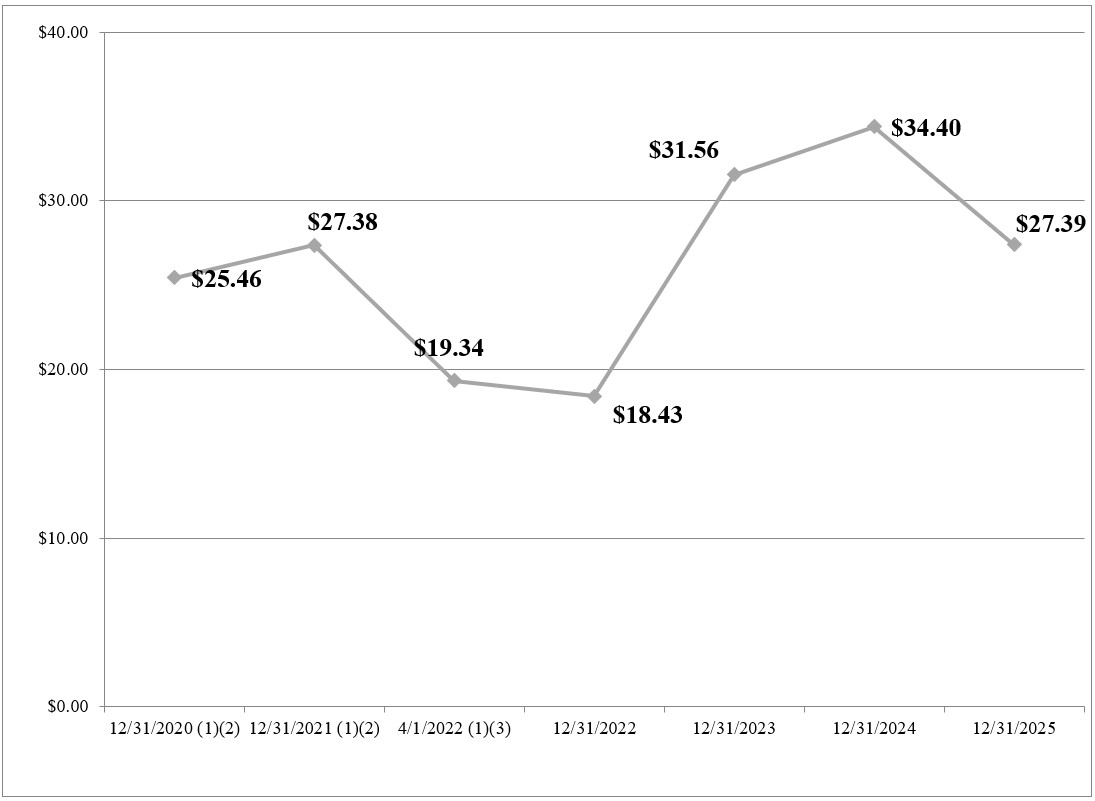
(1) Stock price reflects the post-Stock Split adjusted price level.
(2) Stock price reflects the Lawson year-end stock price prior to the DSG merger date.
(3) Stock price reflects the merger date of the operating companies that comprise DSG.
Required Tabular Disclosure of Most Important Measures to Determine FY 2025 CAP
The items listed below represent the most important measures used to determine CAP for 2025. While we utilize several financial performance measures to align executive compensation with the Company’s performance, not all of those measures are represented in the table below. For further information on these measures, see “Compensation Discussion and Analysis.”
| Most Important Performance Measures | |||||
43
Relationship between CAP and the Company's and the DSG Peer Group's Cumulative TSR over FY 2021 - 2025
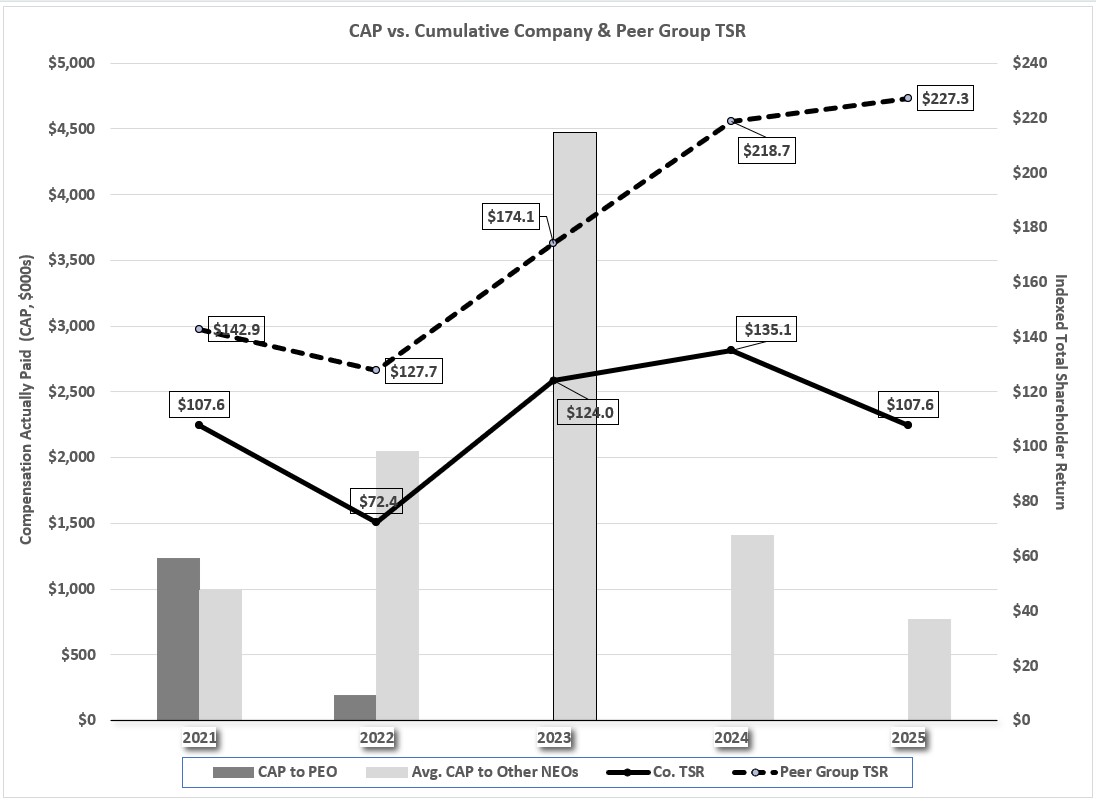
Relationship between CAP and the Company’s Net Income over FY 2021 – 2025
The following graph depicts the relationship of the CAP received by our PEO and other NEOs in 2021, 2022, 2023, 2024 and 2025 to the Company’s Net Income.
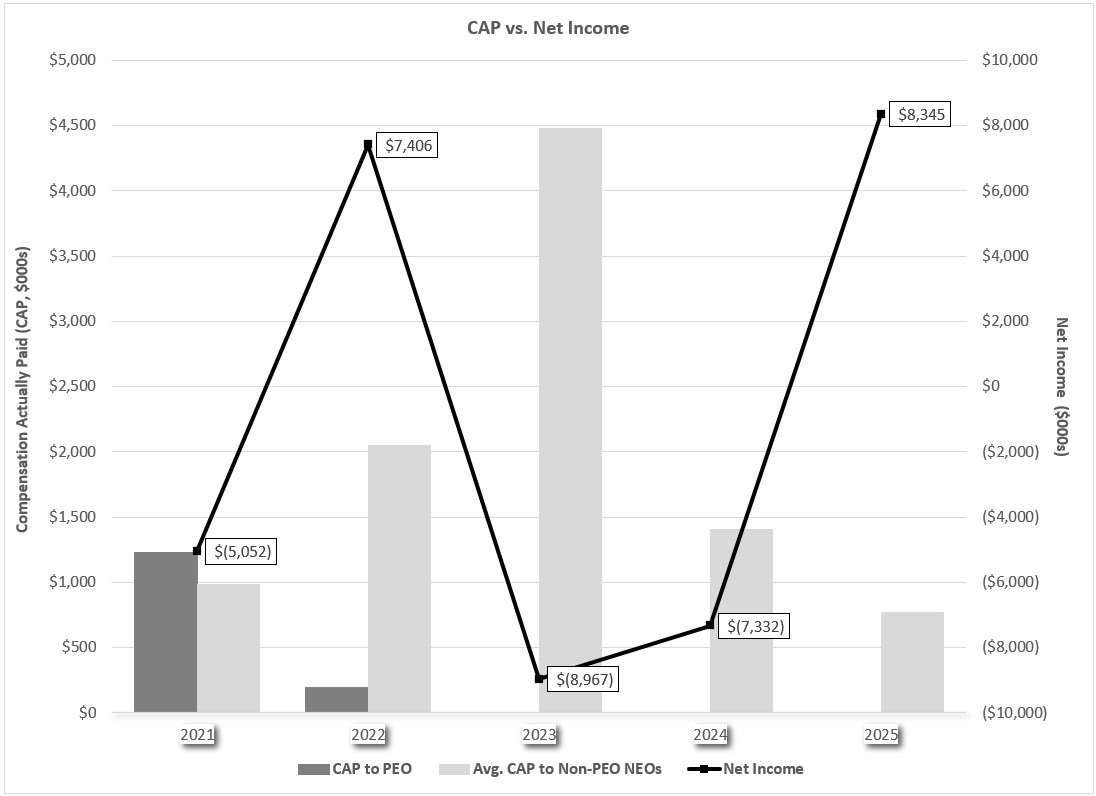
44
Relationship between CAP and the Company’s Adjusted EBITDA over FY 2021 – 2025
The following graph depicts the relationship of the CAP received by our PEO and other NEOs in 2021, 2022, 2023, 2024 and 2025 to the Company’s Adjusted EBITDA.
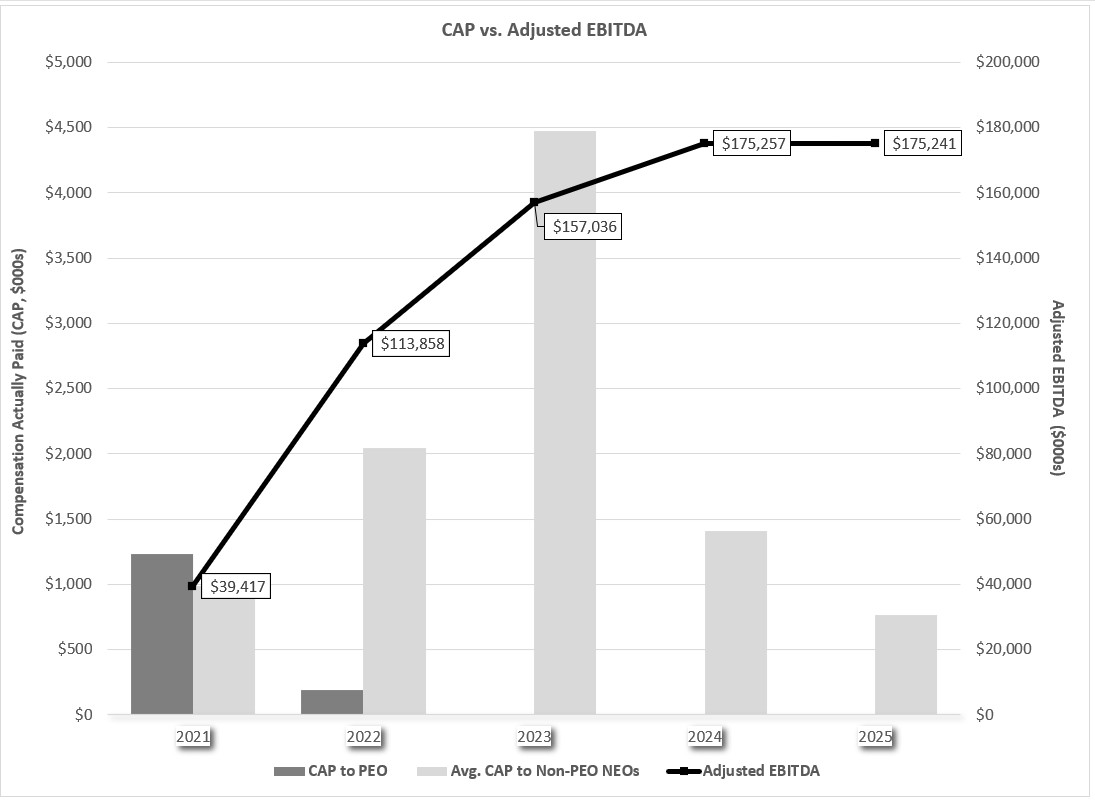
All information provided above under the “Pay vs. Performance Table” heading will not be deemed to be incorporated by reference into any filing of the Company under the Securities Act of 1933, as amended (the “Securities Act”) or the Exchange Act, whether made before or after the date hereof and irrespective of any general incorporation language in any such filing, except to the extent the Company specifically incorporates such information by reference.
Other NEOs Granted Pay Opportunity, Realizable and Realized Compensation
The Summary Compensation Table on page 51 reports the grant date fair value of equity awards in accordance with ASC 718 measurement guidance – the “granted pay opportunity.” We believe that understanding the actual value of equity awards granted to our NEOs provides greater insight into the alignment with the Company’s retention and motivation objectives. The chart below illustrates the aggregate realizable and realized compensation for Messrs. Knutson and Lanuza over the three-year performance period, the 2024-2025 realizable and realized compensation for Mr. Connors and the 2025 realizable and realized compensation for Mr. Litwin. Realizable compensation is lower than the granted pay opportunity due to a majority of the granted and outstanding awards consisting of non-qualified stock options that are "out of the money" and will only realize value in the event of further appreciation in the Company's stock price.
45
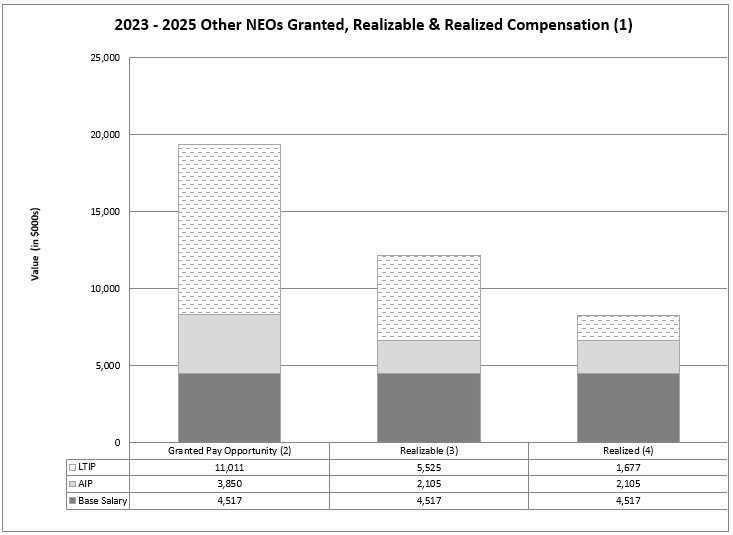
(1) The 2023-2025 aggregate granted pay opportunity, realizable and realized compensation for Mr. Knutson covers the entire performance cycle, as well as from Mr. Lanuza's hire date of April 4, 2022 through December 31, 2025. The granted pay opportunity for Mr. Connors is based on 2024 and 2025 compensation and the granted pay opportunity for Mr. Litwin is based on 2025 compensation.
(2) In the chart above, “Granted Pay Opportunity” equals the sum of the three prior years (i.e., 2023-2025): (i) salary (as reported in the SCT on page 51), (ii) target award opportunity of AIP, and (iii) the grant date fair-value of LTIP awards as reported in the SCT.
(3) In the chart above, “Realizable Pay” equals the sum of the three prior years: (i) salary earned, (ii) AIP earned, and (iii) the value of all earned long-term incentive awards for the completed performance cycle, as well as unvested LTIP awards for the ongoing performance cycle. All unvested long-term incentive awards are valued based on our stock price as of December 31, 2025 (the last trading day of the year) of $27.39.
(4) In the chart above, “Realized Pay” equals the sum of the three prior years: (i) salary earned, (ii) AIP earned, and (iii) the value of all earned LTIP awards for the completed performance cycle.
(5) The chart above does not include the equity incentives granted to Mr. Connors described in the "Equity-Based Incentives/Long-Term Incentive Plan ("LTIP")" section.
Separation and Change-in-Control
Employment and Change-in-Control Agreements
Messrs. Lanuza, Litwin, and Knutson have employment agreements with Lawson and TestEquity, respectively, as further described in the "Employment Agreements" section on page 50. Employment and change-in-control contracts help attract executives to work for the Company and its subsidiaries by protecting them from certain risks, such as position elimination in the event of a business reorganization or a change-in-control or sale of the Company or any of its subsidiaries. The executives or their heirs may receive benefits per the terms of their employment agreement in case of the executive's disability or death.
46
Tax & Accounting Considerations
Policy with Respect to Code Section 162(m)
Code Section 162(m) limits the Company's ability to deduct compensation paid in any given year to our “covered employees” (as defined by Section 162(m), generally, our current and former named executive officers) in excess of $1.0 million. Prior to the enactment of legislation commonly referred to as the Tax Cuts and Jobs Act (the “TCJA”), Section 162(m) provided an exception from this deduction limit for certain forms of “performance-based compensation,” which included the gain recognized by covered employees upon the exercise of compensatory stock options and on the vesting of performance share awards. The TCJA repealed the performance-based compensation exemption under Section 162(m), effective for taxable years beginning after December 31, 2017, subject to certain transition relief. This repeal means that compensation paid to our covered employees in excess of the $1.0 million compensation limitation under Code Section 162(m) will not be deductible unless it qualifies for the limited transition relief applicable to certain arrangements in place as of November 2, 2017, commonly referred to as grandfathered amounts. While our Compensation Committee will continue to consider tax deductibility in determining executive compensation, the Compensation Committee will use its business judgment (as done from time to time in the past) when it is in our best interest to provide for compensation that may not be deductible.
Impact of Accounting Treatment
The Compensation Committee also considers the accounting treatment of the cash and equity awards in making decisions about the awards that the Company grants and maintains. The fair value of stock-based compensation, which includes equity incentives such as stock options, RSAs, RSUs and MSUs as well as cash-based SPRs, is measured in accordance with GAAP and is expensed over the applicable vesting period.
Code Sections 280G and 4999
Code Sections 280G and 4999 relate to a 20% excise tax that may be levied on a payment made to an executive as a result of a CIC if the payment exceeds three times the executive's base earnings (as defined by Code Section 280G). The Company seeks to minimize the tax consequences that might arise under a potential CIC of DSG by limiting the amount of compensation that may be paid to an executive in such a circumstance. In the event the excise tax is triggered, the existing CIC agreements provide that the Company will reduce the CIC payment by the amount necessary so that the payment will not be subject to the excise tax, if this would result in the most beneficial outcome for the executive, net of all federal state and excise taxes. Should the Company not reduce the payment as noted, the existing agreements do not provide for any gross-up payment related to potential Code Section 280G excise taxes, which are the sole responsibility of the executive.
47
EMPLOYMENT AND COMPENSATION AGREEMENTS
Key terms of employment, including compensation, agreements currently in effect between the NEOs and the Company and its operating companies are summarized below.
Robert H. Connors
Mr. Connors is employed under an employment agreement dated as of December 30, 2019, as the President and Chief Executive Officer of Gexpro Services. Pursuant to the agreement, Mr. Connors is entitled to receive a base salary of $400,000 per annum and is eligible for future merit increases as appropriate. The base salary may be increased by the Compensation Committee of the Company's Board of Directors. Mr. Connors is employed on an "at will" basis, and his employment may be terminated at any time at the option of Gexpro Services or Mr. Connors, on the terms and subject to the conditions set forth in the agreement. The agreement provides that he is eligible for a base salary and a performance-based annual incentive bonus.
In the event Gexpro Services terminates Mr. Connors without Cause or if he terminates his employment for Good Reason (each as defined in the employment agreement), Mr. Connors (or if Mr. Connors dies while employed by the Company and prior to his attainment of age 65, his designated beneficiaries) will receive his then current base salary for one year and coverage under Gexpro Services' health benefit plans for an additional one year following termination, at his or the beneficiaries’ cost.
Mr. Connors has agreed not to compete with Gexpro Services, its subsidiaries and other entities in which Gexpro Services and its subsidiaries have an ownership interest during the period of his employment and for a period of twelve months thereafter.
Mr. Connors is also a party to an equity incentive operating agreement entered into prior to the date of the Company's merger with Gexpro Services (the "Connors ME Agreement"). An overview of the Connors ME Agreement and the equity interests that Mr. Connors are entitled to are described in the CD&A.
Ronald J. Knutson
Mr. Knutson is employed under an employment agreement dated as of January 27, 2023, as the Executive Vice President and Chief Financial Officer of the Company and of Lawson. Pursuant to the agreement, Mr. Knutson is entitled to receive a base salary of $435,000 per annum and is eligible for future merit increases as appropriate. The base salary may be increased by the Compensation Committee of the Company's Board of Directors. Mr. Knutson is employed on an "at will" basis, and his employment may be terminated at any time at the option of Lawson or Mr. Knutson, on the terms and subject to the conditions set forth in the agreement. The agreement provides that he is eligible for a base salary, a performance-based annual incentive bonus, and certain equity awards granted in 2023, including stock options and RSUs.
In the event Lawson terminates Mr. Knutson without Cause, or if his employment is terminated due to his death or Disability, or if he terminates his employment for Good Reason (each as defined in the employment agreement), Mr. Knutson (or if Mr. Knutson dies while employed by Lawson and prior to his attainment of age 65, his designated beneficiaries) will receive his then current base salary for two years, accelerated vesting of all outstanding unvested stock options and RSUs granted, and coverage under Lawson's health benefit plans for an additional two years following termination, at his or the beneficiaries’ cost.
In the event of a Change in Control (as such term is defined in the Distribution Solutions Group, Inc. Equity Compensation Plan, as amended), (i) all outstanding unvested stock options granted to Mr. Knutson shall vest 10 days prior to such Change in Control, (ii) all vested stock options shall become fully exercisable 10 days prior to such Change in Control, and (iii) if at the time of a Change in Control there are unexercised vested stock options, and the exercise price of the vested stock option is less than the price paid for a share of common stock in connection with the Change in Control, such stock options shall be cancelled, and Mr. Knutson will receive the value of such stock option between the exercise price and the per-share price received by other stockholders at the time of forfeiture. If at the time of a Change in Control the exercise price of a vested stock option equals or exceeds the price paid for a share of common stock in connection with the Change in Control, and Mr. Knutson has not exercised such vested stock option on or prior to the date of the Change in Control, such stock option shall be cancelled without the payment of consideration therefor. Mr. Knutson's agreement accounts for complying with Internal Revenue Code Section 280G.
Mr. Knutson has agreed not to compete with Lawson, its subsidiaries and other entities in which Lawson and its subsidiaries have an ownership interest during the period of his employment and for a period of eighteen months thereafter.
48
Cesar A. Lanuza
Mr. Lanuza is employed under an employment agreement dated as of April 4, 2022, as the President and Chief Executive Officer of Lawson. Pursuant to the agreement, Mr. Lanuza's base salary was set at $600,000. The base salary will be subject to periodic review by the Compensation Committee of the Company's Board of Directors and may be increased by the Compensation Committee at any time. Mr. Lanuza is employed on an "at will" basis, and his employment may be terminated at any time at the option of Lawson or Mr. Lanuza, on the terms and subject to the conditions set forth in the agreement. Pursuant to this agreement, Mr. Lanuza is eligible for a performance-based annual incentive opportunity as determined each year by the Company’s Board under the Lawson's Annual Incentive Plan, and he was awarded a grant of non-qualified stock options in connection with his employment.
In the event Lawson terminates Mr. Lanuza without Cause, or he terminates his employment for Good Reason (each as defined in the employment agreement), Mr. Lanuza will receive his then current base salary for two years and coverage under Lawson's health benefit plans for an additional two years following termination.
In the event of a Change in Control (as such term is defined in the Distribution Solutions Group, Inc. Equity Compensation Plan), (i) all outstanding unvested stock options shall vest 10 days prior to such Change in Control, (ii) all vested stock options shall become fully exercisable 10 days prior to such Change in Control, and (iii) if at the time of a Change in Control there are unexercised vested stock options, and the exercise price of the vested stock option is less than the price paid for a share of common stock in connection with the Change in Control, such stock options shall be cancelled, and Mr. Lanuza will receive the value of such stock option between the exercise price and the per-share price received by other stockholders at the time of forfeiture. If at the time of a Change in Control the exercise price of a vested stock option equals or exceeds the price paid for a share of common stock in connection with the Change in Control, and Mr. Lanuza has not exercised such vested stock option on or prior to the date of the Change in Control, such stock option shall be cancelled without the payment of consideration therefor. Mr. Lanuza's agreement accounts for complying with Internal Revenue Code Section 280G.
In the event Mr. Lanuza’s employment is terminated due to his death or if Lawson terminates his employment due to his Disability (as defined in the employment agreement) Lawson shall have no obligation to Mr. Lanuza except that Lawson shall pay him any accrued compensation.
Mr. Lanuza has agreed not to compete with Lawson, its subsidiaries and other entities in which Lawson and its subsidiaries have an ownership interest during the period of employment and for a period of eighteen months after the effective date of his termination.
Barry Litwin
Mr. Litwin is employed under an employment agreement dated as of June 26, 2025, as the Chief Executive Officer of TestEquity. Pursuant to the agreement, Mr. Litwin is entitled to receive a base salary of $850,000 per annum and is eligible for future merit increases as appropriate. The base salary may be increased by the Compensation Committee of the Company's Board of Directors. Additionally, the agreement provides that he is eligible for a performance-based annual incentive bonus and certain equity awards granted in 2025, including stock options and RSUs.
In the event TestEquity terminates Mr. Litwin without Cause or if he terminates his employment for Good Reason (each as defined in the employment agreement), Mr. Litwin will receive his then current base salary for twelve months, a pro rata bonus and coverage under TestEquity's health benefit plans until the earliest of: (i) twelve months after the date of his termination of employment; (ii) the date he is no longer eligible for benefits under COBRA; or (iii) the date he obtains other employment that offers medical benefits.
In the event of Mr. Litwin's termination of employment by the Company without Cause (other than by reason of Executive’s death or Disability) or by his resignation for Good Reason, within six (6) months immediately preceding a Change in Control (as defined in Section 4(d) of the agreement) (a “qualified termination” as defined in the agreement), then (A) any unvested RSUs or stock options granted to Mr. Litwin under the agreement shall not immediately be forfeited upon the occurrence of a qualified termination but instead shall be held in abeyance pending determination whether such a Change in Control occurs and (B) if such Change in Control occurs, then all such unvested RSUs and stock options shall be immediately vested upon such Change in Control.
Mr. Litwin has agreed not to compete with TestEquity or its affiliates during the period of employment and for a period of twelve months after the effective date of his termination. Mr. Litwin has also agreed not to directly or indirectly solicit any employee, who was employed by TestEquity or its affiliates, for a period of eighteen months.
49
Report of the Compensation Committee
The Compensation Committee reviewed and discussed with management the foregoing Compensation Discussion and Analysis required by Item 402(b) of Regulation S-K for the year ended December 31, 2025. Based on such review and discussion, the Compensation Committee recommended to the Board, and the Board approved, that the Compensation Discussion and Analysis be included in this Proxy Statement.
Respectfully Submitted by the Compensation Committee:
Bianca A. Rhodes (Chairperson)
I. Steven Edelson
Mark F. Moon
Robert S. Zamarripa
50
EXECUTIVE COMPENSATION
2025 SUMMARY COMPENSATION TABLE
The following table sets forth the compensation for the last three fiscal years awarded to or earned by individuals who served during 2025 as the Company's CEO and each of the Company's four other most highly compensated executive officers in 2025.
| SPR/ | Non-Equity | ||||||||||||||||||||||||||||||||||||||||||||||||||||
| Stock | Option | Incentive Plan | All Other | ||||||||||||||||||||||||||||||||||||||||||||||||||
| Name and Principal | Salary | Bonus | Awards | Awards | Compensation | Compensation | |||||||||||||||||||||||||||||||||||||||||||||||
| Position | Year | ($)(1) | ($)(2) | ($)(3) | ($)(4) | ($)(5) | ($)(6) | Total ($) | |||||||||||||||||||||||||||||||||||||||||||||
J. Bryan King (7) | 2025 | — | — | — | — | — | — | — | |||||||||||||||||||||||||||||||||||||||||||||
| Chairman, President and Chief Executive Officer | 2024 | — | — | — | — | — | — | — | |||||||||||||||||||||||||||||||||||||||||||||
| 2023 | — | — | — | — | — | — | — | ||||||||||||||||||||||||||||||||||||||||||||||
| Ronald J. Knutson | 2025 | 525,000 | 60,000 | — | — | 27,587 | 23,670 | 636,257 | |||||||||||||||||||||||||||||||||||||||||||||
| Executive Vice President, Chief Financial Officer and Treasurer | 2024 | 493,125 | 40,000 | — | — | — | 25,110 | 558,235 | |||||||||||||||||||||||||||||||||||||||||||||
| 2023 | 470,625 | — | 406,600 | 1,441,350 | 393,446 | 23,848 | 2,735,869 | ||||||||||||||||||||||||||||||||||||||||||||||
| Robert H. Connors | 2025 | 451,254 | — | — | — | 226,092 | 12,200 | 689,546 | |||||||||||||||||||||||||||||||||||||||||||||
| President and Chief Executive Officer, Gexpro Services | 2024 | 410,769 | 20,500 | — | — | 120,501 | 12,200 | 563,970 | |||||||||||||||||||||||||||||||||||||||||||||
| 2023 | — | — | — | — | — | — | — | ||||||||||||||||||||||||||||||||||||||||||||||
| Cesar A. Lanuza | 2025 | 600,000 | 50,000 | — | — | 96,313 | 26,526 | 772,839 | |||||||||||||||||||||||||||||||||||||||||||||
| President and Chief Executive Officer, Lawson | 2024 | 600,000 | 60,000 | 3,206,000 | — | — | 26,551 | 3,892,551 | |||||||||||||||||||||||||||||||||||||||||||||
| 2023 | 600,000 | — | — | — | 614,760 | 29,526 | 1,244,287 | ||||||||||||||||||||||||||||||||||||||||||||||
| Barry Litwin | 2025 | 366,154 | 395,845 | 2,291,800 | 3,665,600 | — | 5,885 | 6,725,284 | |||||||||||||||||||||||||||||||||||||||||||||
| Chief Executive Officer, TestEquity | 2024 | — | — | — | — | — | — | — | |||||||||||||||||||||||||||||||||||||||||||||
| 2023 | — | — | — | — | — | — | — | ||||||||||||||||||||||||||||||||||||||||||||||
(1) The amounts listed in this column represent the base salary paid to the NEOs in 2025.
(2) The amounts listed represent discretionary bonus payments paid in 2026 to recognize their efforts in driving strategic initiatives in 2025. As agreed to in his Employment Agreement, Mr. Litwin is eligible for a one-time bonus payment of $395,845 in lieu of participation in the 2025 TEG AIP.
(3) The amounts reported in this column reflect the aggregate grant date fair value of RSUs awarded under the Distribution Solutions Group, Inc. Equity Compensation Plan, as amended. The grant date fair value of the RSUs has been determined in accordance with Financial Accounting Standards Board Accounting Standards Codification (“ASC”) Topic 718. For a discussion of the assumptions and methodologies used in calculating the grant date fair value of the RSUs, please see Note 10 to our consolidated financial statements in the Company’s Annual Report on Form 10-K for the fiscal year ended December 31, 2025.
(4) The amounts reported in this column represent the grant date fair value of nonqualified stock options under the Distribution Solutions Group, Inc. Equity Compensation Plan, as amended. The grant date fair value of the options has been determined in accordance with ASC Topic 718. For a discussion of the assumptions and methodologies used in calculating the grant date fair value of the options, please see Note 10 to our consolidated financial statements in the Company’s Annual Report on Form 10-K for the fiscal year ended December 31, 2025.
(5) Amounts represent AIP bonuses earned (rather than paid) in the respective year. The AIP bonuses awarded in 2025 reported above were paid out in 2026. For a discussion of our AIP, see the subsections of this proxy statement above entitled “Non-Equity (Annual) Incentive Plan ("AIP")”.
(6) See All Other Compensation table for details regarding the amounts in this column for 2025.
(7) Mr. King does not receive any compensation in connection with his roles of Chairman, President & CEO.
51
ALL OTHER COMPENSATION IN 2025
| Profit | 401(k) | Deferred | |||||||||||||||||||||||||||||||||
| Sharing | Matching | Compensation | Disability | ||||||||||||||||||||||||||||||||
| Contribution | Contribution | Contributions | Insurance | ||||||||||||||||||||||||||||||||
| Name and Principal Position | ($) | ($)(1) | ($)(2) | ($)(3) | Total ($) | ||||||||||||||||||||||||||||||
| J. Bryan King | — | — | — | — | — | ||||||||||||||||||||||||||||||
| Chairman, President and Chief Executive Officer | |||||||||||||||||||||||||||||||||||
| Ronald J. Knutson | — | 14,000 | 7,000 | 2,670 | 23,670 | ||||||||||||||||||||||||||||||
| Executive Vice President, Chief Financial Officer and Treasurer | |||||||||||||||||||||||||||||||||||
| Robert H. Connors | — | 12,200 | — | — | 12,200 | ||||||||||||||||||||||||||||||
| President and Chief Executive Officer, Gexpro Services | |||||||||||||||||||||||||||||||||||
| Cesar A. Lanuza | $ | — | $ | 14,000 | $ | 10,000 | $ | 2,526 | $ | 26,526 | |||||||||||||||||||||||||
| President and Chief Executive Officer, Lawson | |||||||||||||||||||||||||||||||||||
| Barry Litwin | $ | — | $ | 5,885 | $ | — | $ | — | $ | 5,885 | |||||||||||||||||||||||||
| Chief Executive Officer, TestEquity | |||||||||||||||||||||||||||||||||||
(1) The Company matches all plan participant contributions equal to 100% on the first 3% of the employee's contributions and 50% on the next 2% of contributions.
(2) Lawson made a deferred compensation contribution of 4.00% of a participant's base salary in excess of the 2025 IRS annual compensation limit of $350,000 to all plan participants, including the NEOs as described above under the "Nonqualified Deferred Compensation" table.
(3) Lawson provides individual disability insurance coverage for all Vice Presidents, Executive Vice Presidents and the CEO/President at a level above non-Executive employees.
52
GRANTS OF PLAN BASED AWARDS IN 2025
| Estimated Future Payouts Under Non-Equity Incentive Plan Awards | All Other Stock Awards: Number of Shares of Stock (#) | All Other Option Awards: Number of Options of Stock (#) | Exercise or Base Price of Option Awards ($) | Grant Date Fair Value of Stock ($) | |||||||||||||||||||||||||||||||||||||||||||||||||
| Named Executive Officer | Grant Date | Threshold ($) | Target ($) | Maximum ($) | |||||||||||||||||||||||||||||||||||||||||||||||||
J. Bryan King (1) | |||||||||||||||||||||||||||||||||||||||||||||||||||||
| Ronald J. Knutson | |||||||||||||||||||||||||||||||||||||||||||||||||||||
2025 AIP (2) | 210,000 | 420,000 | 577,500 | ||||||||||||||||||||||||||||||||||||||||||||||||||
| Robert H. Connors | |||||||||||||||||||||||||||||||||||||||||||||||||||||
2025 AIP (2) | 112,788 | 225,575 | 310,166 | ||||||||||||||||||||||||||||||||||||||||||||||||||
| Cesar A. Lanuza | |||||||||||||||||||||||||||||||||||||||||||||||||||||
2025 AIP (2) | 300,000 | 600,000 | 870,000 | ||||||||||||||||||||||||||||||||||||||||||||||||||
| Barry Litwin | |||||||||||||||||||||||||||||||||||||||||||||||||||||
2025 Initial Equity Award (3) | 8/14/2025 | 100,000 | 35.00 | 1,609,000 | |||||||||||||||||||||||||||||||||||||||||||||||||
2025 Initial Equity Award (3) | 8/14/2025 | 70,000 | 45.00 | 964,600 | |||||||||||||||||||||||||||||||||||||||||||||||||
2025 Initial Equity Award (3) | 8/14/2025 | 50,000 | 55.00 | 598,500 | |||||||||||||||||||||||||||||||||||||||||||||||||
2025 Initial Equity Award (3) | 8/14/2025 | 50,000 | 70.00 | 493,500 | |||||||||||||||||||||||||||||||||||||||||||||||||
2025 Initial Equity Award (4) | 8/14/2025 | 70,000 | 2,291,800 | ||||||||||||||||||||||||||||||||||||||||||||||||||
(1) Mr. King is not an active participant in the AIP plan and does not accept cash incentives based on performance.
(2) Reflects potential awards under the 2025 AIP. These awards were paid in February 2026 for Lawson and March 2026 for TestEquity and Gexpro Services.
(3) Mr. Litwin was awarded an option to purchase 270,000 shares of Company common stock in connection with his employment agreement dated June 26, 2025. The options were granted as follows: (a) 100,000 of the options have an exercise price of $35.00, (b) 70,000 of the options have an exercise price of $45.00, (c) 50,000 of the options have an exercise price of $55.00 and (d) 50,000 of the options have an exercise price of $70.00. One-fifth of each tranche of options vest and became exercisable on the first, second, third, fourth and fifth anniversaries of the grant date.
(4) Mr. Litwin was awarded 70,000 RSUs granted on 8/14/25 and in connection with his employment agreement dated June 26, 2025, which were 25% vested on the date of grant and will vest in 25% increments on each anniversary of the date of grant, subject to repayment by Mr. Litwin of settled RSUs in the event of certain termination events within eighteen months of his employment agreement effective date.
Narrative Discussion of Summary Compensation Table and Grants of Plan-Based Awards Table
See above for a detailed summary of our “Annual Incentive Plan” and “Equity-Based Incentives/Long-Term Incentive Plan ("LTIP")”, including the general vesting conditions applicable to Mr. Lanuza’s stock option award. For a description of the effect of a termination of employment or change of control on the vesting or exercisability of the NEOs’ incentives, please see “Summary Table of Potential Payments Upon Termination or Change in Control.”
53
OUTSTANDING EQUITY AWARDS ON DECEMBER 31, 2025
| Stock Performance Rights and Stock Option Awards (1) | Stock Awards | |||||||||||||||||||||||||||||||||||||
| Number of Securities Underlying Unexercised Options/SPRs | Options/SPR Exercise Price ($) | Options/ SPR Expiration Date | Number of shares or units of stock that have not vested (#) | Market value of shares or units of stock that have not vested ($)(2) | ||||||||||||||||||||||||||||||||||
| Named Executive Officer | Exercisable (#) | Unexercisable (#) | ||||||||||||||||||||||||||||||||||||
J. Bryan King (3) | ||||||||||||||||||||||||||||||||||||||
| Ronald J. Knutson | 10,034 | — | 15.27 | (4) | 12/31/2026 | |||||||||||||||||||||||||||||||||
| 57,600 | 38,400 | 27.50 | (5) | 1/27/2033 | ||||||||||||||||||||||||||||||||||
| 18,000 | 12,000 | 40.00 | (5) | 1/27/2033 | ||||||||||||||||||||||||||||||||||
| 36,000 | 24,000 | 55.00 | (5) | 1/27/2033 | ||||||||||||||||||||||||||||||||||
| 36,000 | 24,000 | 70.00 | (5) | 1/27/2033 | ||||||||||||||||||||||||||||||||||
| (6) | 8,000 | 219,120 | ||||||||||||||||||||||||||||||||||||
Robert H. Connors (3) | ||||||||||||||||||||||||||||||||||||||
| Cesar A. Lanuza | 120,000 | 80,000 | 27.50 | (7) | 4/12/2032 | |||||||||||||||||||||||||||||||||
| 30,000 | 20,000 | 40.00 | (7) | 4/12/2032 | ||||||||||||||||||||||||||||||||||
| 60,000 | 40,000 | 55.00 | (7) | 4/12/2032 | ||||||||||||||||||||||||||||||||||
| 60,000 | 40,000 | 70.00 | (7) | 4/12/2032 | ||||||||||||||||||||||||||||||||||
| (8) | 80,000 | 2,191,200 | ||||||||||||||||||||||||||||||||||||
| Barry Litwin | — | 100,000 | 35.00 | (9) | 8/14/2035 | |||||||||||||||||||||||||||||||||
| — | 70,000 | 45.00 | (9) | 8/14/2035 | ||||||||||||||||||||||||||||||||||
| — | 50,000 | 55.00 | (9) | 8/14/2035 | ||||||||||||||||||||||||||||||||||
| — | 50,000 | 70.00 | (9) | 8/14/2035 | ||||||||||||||||||||||||||||||||||
| (10) | 52,500 | 1,437,975 | ||||||||||||||||||||||||||||||||||||
(1) The data in these columns includes SPR grants, which have similar characteristics to options as they are tied to performance of the Company’s stock price but are settled in cash upon exercise.
(2) RSUs are valued at closing stock price at December 31, 2025 (the last trading day of the year) of $27.39.
(3) Messrs. King and Connors do not have any outstanding equity awards payable by the Company as of December 31, 2025.
(4) Represents the SPRs granted on 3/5/19 as part of the 2019-2021 LTIP, which cliff vest on 12/31/2021 subject to the recipient’s continued employment with the Company.
(5) Mr. Knutson was awarded an option to purchase 246,000 shares of Company common stock in connection with his employment agreement dated January 27, 2023. The options were granted as follows: (a) 96,000 of the options have an exercise price of $27.50, (b) 30,000 of the options have an exercise price of $40.00, (c) 60,000 of the options have an exercise price of $55.00 and (d) 60,000 of the options have an exercise price of $70.00. One-fifth of each tranche of options vest and became exercisable on the first, second, third, fourth and fifth anniversaries of the grant date.
(6) Represents the RSUs granted on 1/27/23 as part of Mr. Knutson's employment agreement, which vest in one-fifth increments on the following dates: 1/27/2024, 4/1/2024, 4/1/2025, 4/1/2026 and 4/1/2027.
(7) Mr. Lanuza was awarded an option to purchase 450,000 shares of Company common stock in connection with his employment agreement dated April 4, 2022. The options were granted as follows: (a) 200,000 of the options have an exercise price of $27.50, (b) 50,000 of the options have an exercise price of $40.00, (c) 100,000 of the options have an exercise price of $55.00 and (d) 100,000 of the options have an exercise price of $70.00. One-fifth of each tranche of options vest and became exercisable on the first, second, third, fourth and fifth anniversaries of the grant date.
(8) Represents the RSUs granted on 6/3/24 to Mr. Lanuza, which vest annually in one-fifth increments starting on the first anniversary date of the grant.
(9) Mr. Litwin was awarded an option to purchase 270,000 shares of Company common stock in connection with his employment agreement dated June 26, 2025. The options were granted as follows: (a) 100,000 of the options have an exercise price of $35.00, (b) 70,000 of the options have an exercise price of $45.00, (c) 50,000 of the options have an exercise price of $55.00 and (d) 50,000 of the options have an exercise price of $70.00. One-fifth of each tranche of options vest and became exercisable on the first, second, third, fourth and fifth anniversaries of the grant date.
54
(10) Represents the RSUs granted on 8/13/25 to Mr. Litwin in connection with his employment agreement dated June 26, 2025, which were 25% vested on the date of grant and will vest in 25% increments on each anniversary of the date of grant, subject to repayment by Mr. Litwin of settled RSUs in the event of certain termination events within eighteen months of his employment agreement effective date..
55
SPR/OPTION EXERCISES AND STOCK VESTED IN 2025
The following table represents the number of SPRs exercised in 2025, as well as the number of shares acquired in 2025.
| SPR Awards | Stock Awards | |||||||||||||||||||||||||
| Named Executive Officer | Number of shares acquired on vesting (#) | Value realized on exercise ($) (1) | Number of shares acquired on vesting (#) | Value realized on vesting ($) (2) | ||||||||||||||||||||||
| J. Bryan King | — | — | — | — | ||||||||||||||||||||||
| Ronald J. Knutson | 17,484 | 365,590 | 4,000 | 112,600 | ||||||||||||||||||||||
| Robert H. Connors | — | — | — | — | ||||||||||||||||||||||
| Cesar A. Lanuza | — | — | — | — | ||||||||||||||||||||||
| Barry Litwin | — | — | 17,500 | 572,950 | ||||||||||||||||||||||
(1) Represents the aggregate dollar value realized upon exercise of SPRs
(2) Represents the aggregate dollar value realized upon vesting of 4,000 restricted stock awards related to Mr. Knutson's January 27, 2023 award agreement vesting on April 1, 2025 and 17,500 restricted stock awards related to Mr. Litwin's August 14, 2025 award agreement vesting on August 14, 2025 respectively.
56
NON-QUALIFIED DEFERRED COMPENSATION
Under the Lawson executive deferral plan, certain executives, including the Lawson NEOs, may defer portions of their base salary, bonus, and LTIP award amounts. Deferral elections are made by eligible executives by the end of the year proceeding the plan year for which the election is made. A Lawson executive may defer a minimum of $2,000 aggregate of base salary, bonus and/or LTIP award. The maximum deferral amount for any plan year is 80% of base salary, 100% of bonus and 100% of LTIP amounts. Lawson also makes a contribution to the 2004 Deferral Plan equal to the amount the executives, including NEOs, would have received under the applicable tax-qualified 401(k) plan, but for Internal Revenue Code limits.
The investment options available to an executive include funds generally similar to or as available through its qualified retirement plan. Lawson does not provide for any above market return for participants in the 2004 Executive Deferral Plan.
A Lawson executive may elect to receive distributions under three scenarios, receiving benefits in either a lump sum or in annual installments up to five years in the event of termination and up to fifteen years in the event of death or disability. Upon demonstrating an unforeseeable financial emergency and receipt of approval from the Compensation Committee, a Lawson executive may interrupt deferral or be allowed to access funds in his deferred compensation account.
| Named Executive Officer | Executive Contributions in Last FY ($)(1) | Registrant Contributions in Last FY ($)(2) | Aggregate Earnings in Last FY ($) | Aggregate Withdrawals/Distributions in Last FY ($) | Aggregate Balance at Last FYE ($)(3) | |||||||||||||||||||||||||||
| J. Bryan King | — | — | — | — | — | |||||||||||||||||||||||||||
| Ronald J. Knutson | — | 7,000 | (236,735) | — | 2,957,420 | |||||||||||||||||||||||||||
| Robert H. Connors | — | — | — | — | — | |||||||||||||||||||||||||||
| Cesar A. Lanuza | — | 10,000 | 1,113 | — | 40,747 | |||||||||||||||||||||||||||
| Barry Litwin | — | — | — | — | — | |||||||||||||||||||||||||||
(1) Represents contributions in 2026 pertaining to 2025 earnings.
(2) Represents profit sharing and 401(k) contributions in excess of the 2025 IRS annual compensation limit of $350,000.
(3) Amounts reported at the beginning of the fiscal year were $0, $3,187,155, $0, 29,634 and $0 Messrs. King, Knutson, Connors, Lanuza and Litwin.
Defined Benefit Plans
We do not maintain or contribute to any defined benefit pension plans or supplemental executive retirement plans for our NEOs.
Policies and Practices Related to the Grant of Certain Equity Awards
57
SUMMARY TABLE OF POTENTIAL PAYMENTS UPON TERMINATION OR CHANGE-IN-CONTROL
The following table outlines potential payments to our NEOs under existing contracts, agreements, plans or arrangements for various scenarios under termination or a CIC, assuming a December 31, 2025 termination date and the closing price of our common stock of $27.39 on that date. The termination benefits are further described in the foregoing Compensation Agreements section. Payments to Messrs. Knutson, Lanuza and Litwin may be reduced if it would result in the imposition of an excise tax under Code Section 280G and the reduction would result in the NEO receiving a greater amount net of tax payment. The actual amounts payable can only be calculated at the time of the event. This table only reflects amounts with respect to contracts and agreements that are beyond those benefits generally available to all salaried employees. In addition, upon termination, payments due to executives include distribution of any balance in the Lawson deferred compensation plan, any accrued and unpaid vacation and all other benefits that have been accrued but not yet paid.
In order for the NEOs to receive the acceleration of benefits listed below upon a CIC, termination of employment is required within a designated time period after the occurrence of a CIC. This approach is commonly referred to as a "double trigger" acceleration upon a CIC.
58
| Named Executive Officer | Termination After a Change of Control | Termination Without Cause by DSG | Voluntary Termination for Good Reason by Executive | Death | Disability | ||||||||||||||||||||||||||||||
J. Bryan King (1) | |||||||||||||||||||||||||||||||||||
Ronald J. Knutson (2)(3) | |||||||||||||||||||||||||||||||||||
| Base Salary | $ | 1,050,000 | $ | 1,050,000 | $ | 1,050,000 | $ | 1,050,000 | $ | 1,050,000 | |||||||||||||||||||||||||
| Annual Incentive Plan | — | — | — | — | — | ||||||||||||||||||||||||||||||
2023 RSUs (4) | 219,120 | 219,120 | 219,120 | 219,120 | 219,120 | ||||||||||||||||||||||||||||||
2023 Options (5) | — | — | — | — | — | ||||||||||||||||||||||||||||||
| Medical Benefits | 34,548 | 34,548 | 34,548 | 34,548 | 34,548 | ||||||||||||||||||||||||||||||
Cutback Deduction (6) | — | — | — | — | — | ||||||||||||||||||||||||||||||
| Total | $ | 1,303,668 | $ | 1,303,668 | $ | 1,303,668 | $ | 1,303,668 | $ | 1,303,668 | |||||||||||||||||||||||||
Robert H. Connors (7) | |||||||||||||||||||||||||||||||||||
| Base Salary | $ | 455,400 | $ | 455,400 | $ | 455,400 | $ | — | $ | — | |||||||||||||||||||||||||
| Annual Incentive Plan | — | — | — | — | — | ||||||||||||||||||||||||||||||
| Medical Benefits | — | — | — | — | — | ||||||||||||||||||||||||||||||
| Cutback Deduction | — | — | — | — | — | ||||||||||||||||||||||||||||||
| Total | $ | 455,400 | $ | 455,400 | $ | 455,400 | $ | — | $ | — | |||||||||||||||||||||||||
Cesar A. Lanuza (2)(8) | |||||||||||||||||||||||||||||||||||
| Base Salary | $ | 1,200,000 | $ | 1,200,000 | $ | 1,200,000 | $ | — | $ | — | |||||||||||||||||||||||||
| Annual Incentive Plan | — | — | — | — | — | ||||||||||||||||||||||||||||||
2023 Options (5) | — | — | — | — | — | ||||||||||||||||||||||||||||||
2024 RSUs (4) | 2,191,200 | 369,852 | — | 369,852 | 369,852 | ||||||||||||||||||||||||||||||
| Medical Benefits | 49,562 | 49,562 | 49,562 | — | — | ||||||||||||||||||||||||||||||
Cutback Deduction (6) | — | — | — | — | — | ||||||||||||||||||||||||||||||
| Total | $ | 3,440,762 | $ | 1,619,414 | $ | 1,249,562 | $ | 369,852 | $ | 369,852 | |||||||||||||||||||||||||
Barry Litwin (9) | |||||||||||||||||||||||||||||||||||
| Base Salary | $ | 850,000 | $ | 850,000 | 0 | $ | 850,000 | 0 | $ | — | 0 | $ | — | ||||||||||||||||||||||
| Annual Incentive Plan | 850,000 | 850,000 | 850,000 | — | — | ||||||||||||||||||||||||||||||
2025 RSUs (4) | 1,437,975 | 183,348 | 183,348 | 183,348 | 183,348 | ||||||||||||||||||||||||||||||
2025 Options (5) | |||||||||||||||||||||||||||||||||||
| Medical Benefits | 0 | 0 | 0 | 0 | 0 | — | 0 | — | |||||||||||||||||||||||||||
| Cutback Deduction | — | — | — | — | — | ||||||||||||||||||||||||||||||
| Total | $ | 3,137,975 | $ | 1,883,348 | $ | 1,883,348 | $ | 183,348 | $ | 183,348 | |||||||||||||||||||||||||
(1) Mr. King does not receive any compensation in connection with his roles of Chairman, President & CEO.
(2) Termination payment does not include the payouts of deferred compensation of $2,957,420 and $40,747 due to Messrs. Knutson and Lanuza, respectively. These amounts are discussed above under the caption “Nonqualified Deferred Compensation”.
(3) Pursuant to Mr. Knutson's employment agreement, severance includes two (2) times his 2025 salary, full acceleration of outstanding equity, and two (2) years of benefits continuance.
(4) The value of accelerated RSUs are based on the Company's stock price as of December 31, 2025 ($27.39).
(5) Calculated as the number of unvested options multiplied by the spread between the Company's stock price as of December 31, 2025 ($27.39) and the exercise prices of the outstanding awards.
59
(6) Pursuant to the "better of" net payment terms upon a CIC in their respective employment agreements, Messrs. Knutson, Lanuza and Litwin would receive a full payment net of all taxes without a cut-back to preclude Sec. 4999 excise taxes.
(7) Pursuant to Mr. Connors' employment agreement, severance includes one (1) times his 2025 salary and one (1) year of benefits continuance.
(8) Pursuant to Mr. Lanuza's employment agreement, severance includes one (1) times his 2025 salary, full acceleration of outstanding equity, and one (1) years of benefits continuance.
(9) Pursuant to Mr. Litwin's employment agreement, severance includes one (1) times his 2025 salary, full acceleration of outstanding equity, and one (1) years of benefits continuance.
60
DIRECTOR COMPENSATION IN 2025
Director Compensation
The Compensation Committee is responsible for reviewing director compensation and making adjustments to the structure when necessary to reflect material changes to the complexity of the Company. The Company's non-employee directors are eligible to receive an annual cash retainer of $75,000 (paid on a quarterly basis) for participating in the Board and Board committee meetings. Our non-employee directors also received a regular cycle annual RSU grant with a grant date fair value of $125,000 that cliff-vests upon the one-year anniversary of the date of grant. Directors' travel expenses for attending meetings are reimbursed by the Company. The Compensation Committee meets annually to review and approve director compensation. Director fees are pro-rated for periods of service less than a full year.
The independent Lead Director and the Chairpersons of the respective Board committees are also eligible for cash retainers as follows:
| Committee Chairperson | Additional Cash Retainer ($) | |||||||
| Independent Lead Director | 50,000 | |||||||
| Audit | 25,000 | |||||||
| Compensation | 20,000 | |||||||
| Nominating and Corporate Governance | 10,000 | |||||||
The members of the respective Board committees are also eligible for the additional cash retainers as follows:
| Committee Member | Additional Cash Retainer ($) | |||||||
| Audit | 10,000 | |||||||
| Compensation | 7,500 | |||||||
| Nominating and Corporate Governance | 5,000 | |||||||
Director Compensation Table
The following table shows compensation earned in 2025 by non-employee directors.
| Director | 2025 Fees Earned or Paid in Cash ($) | 2025 Stock Awards ($) (1) | 2025 Total ($) | |||||||||||||||||
| I. Steven Edelson | 87,500 | 125,000 | 212,500 | |||||||||||||||||
| Lee S. Hillman | 158,750 | 125,000 | 283,750 | |||||||||||||||||
J. Bryan King (2) | — | — | — | |||||||||||||||||
| Mark F. Moon | 90,000 | 125,000 | 215,000 | |||||||||||||||||
| Bianca A. Rhodes | 101,250 | 125,000 | 226,250 | |||||||||||||||||
M. Bradley Wallace (3) | — | — | — | |||||||||||||||||
| Robert S. Zamarripa | 92,500 | 125,000 | 217,500 | |||||||||||||||||
(1) Represents the grant date fair value of the RSUs under the Distribution Solutions Group, Inc. Equity Compensation Plan, as amended, for 2025 board service. The grant date fair value of the RSUs has been determined in accordance with ASC Topic 718. For a discussion of the assumptions and methodologies used in calculating the grant date fair value of the RSUs, please see Note 10 to our consolidated financial statements in the Company’s Annual Report on Form 10-K for the fiscal year ended December 31, 2025. As of December 31, 2025, each of our non-employee directors held 4,630 unvested RSUs, with the exception of J. Bryan King and M. Bradley Wallace, who did not receive any RSUs for their 2025 board service.
(2) J. Bryan King waived his right to the regular cycle annual RSU grant for 2025, as well as any director fees for 2025.
(3) M. Bradley Wallace waived his right to the regular cycle annual RSU grant for 2025, as well as any director fees for 2025.
61
CERTAIN RELATIONSHIPS AND RELATED TRANSACTIONS
The Company’s policy regarding related party transactions is outlined in the Code of Conduct which is applicable to all employees and sales representatives and is available on our website at www.distributionsolutionsgroup.com in the investor relations corporate governance section. Additionally, all directors and senior officers of the Company must complete an annual questionnaire in which they are required to disclose in writing any related party transactions. Information on our website is not incorporated by reference into this proxy statement.
The Company’s policy is for all transactions between the Company and any related person to be promptly reported to the Company’s Secretary and General Counsel who will gather the relevant information about the transaction and present the information to the Audit Committee. The Audit Committee then determines whether the transaction is a material related party transaction to be presented to the Board of Directors. The Board of Directors then approves, ratifies, or rejects the transaction. A majority of the members of the Company’s Board of Directors and a majority of independent and disinterested directors must approve the transaction for it to be ratified. The Board of Directors only approves those proposed transactions that are in, or not inconsistent with, the best interests of the Company and its stockholders.
Business Combinations of TestEquity and Gexpro Services with the Company
On December 29, 2021, the Company entered into:
•an Agreement and Plan of Merger (the “TestEquity Merger Agreement”) by and among (i) LKCM TE Investors, LLC, a Delaware limited liability company (the “TestEquity Equityholder”), (ii) TestEquity Acquisition, LLC, a Delaware limited liability company and a wholly owned subsidiary of the TestEquity Equityholder (“TestEquity”), (iii) the Company and (iv) Tide Sub, LLC, a Delaware limited liability company and a wholly-owned subsidiary of the Company (“Merger Sub 1”), pursuant to the terms and subject to the conditions of which the parties agreed, among other things, that Merger Sub 1 would merge with and into TestEquity, with TestEquity surviving the merger as a wholly-owned subsidiary of the Company (the “TestEquity Merger”); and
•an Agreement and Plan of Merger (the “Gexpro Services Merger Agreement” and, together with the TestEquity Merger Agreement, the “Merger Agreements”) by and among (i) 301 HW Opus Investors, LLC, a Delaware limited liability company (the “Gexpro Services Stockholder”), (ii) 301 HW Opus Holdings, Inc., a Delaware corporation and a wholly owned subsidiary of the Gexpro Services Stockholder (“Gexpro Services”), (iii) the Company and (iv) Gulf Sub, Inc., a Delaware corporation and a wholly-owned subsidiary of the Company (“Merger Sub 2”), pursuant to the terms and subject to the conditions of which the parties agreed, among other things, that Merger Sub 2 would merge with and into Gexpro Services, with Gexpro Services surviving the merger as a wholly-owned subsidiary of the Company (the “Gexpro Services Merger” and, together with the TestEquity Merger, the “Mergers”).
On April 1, 2022 (the “Closing Date”), the TestEquity Merger was consummated pursuant to the TestEquity Merger Agreement and the Gexpro Services Merger was consummated pursuant to the Gexpro Services Merger Agreement.
As of the date hereof, entities affiliated with LKCM and J. Bryan King, including private investment partnerships for which LKCM serves as investment manager, owned a majority of the ownership interests in the TestEquity Equityholder (which in turn owned all of the outstanding equity interests of TestEquity as of immediately prior to the completion of the TestEquity Merger, and which received all of the shares of Company common stock issued in connection with the TestEquity Merger). As of the Closing Date, each of J. Bryan King and Mark F. Moon (who are members of the Company’s board of directors and nominees for re-election as a director at the Annual Meeting) was a director of the TestEquity Equityholder. In addition, as of the Closing Date and as of the date hereof, Mark F. Moon held a direct or indirect equity interest in the TestEquity Equityholder.
As of the date hereof, entities affiliated with LKCM and J. Bryan King, including private investment partnerships for which LKCM serves as investment manager, owned a majority of the ownership interests in Gexpro Services Stockholder (which in turn owned all of the outstanding stock of Gexpro Services as of immediately prior to the completion of the Gexpro Services Merger, and which received all of the shares of Company common stock issued in connection with the Gexpro Services Merger). In addition, as of the Closing Date and as of the date hereof, Robert H. Connors (who is the President and Chief Executive Officer of Gexpro Services) held a direct or indirect equity interest in Gexpro Services Stockholder.
Prior to the Merger of Gexpro Services with the Company in 2022, Gexpro Services was controlled by Gexpro Services Stockholder, a portfolio company and affiliate of LKCM Headwater Investments III, L.P. (“HW3”). In connection with HW3’s acquisition of Gexpro Services in 2020, HW3 entered into an operating agreement for Gexpro Services Stockholder with,
62
among others, members of Gexpro Services’ management team, including Mr. Connors. The operating agreement and other ancillary documents provided for the issuance of equity interests in Gexpro Services Stockholder to members of Gexpro Services’ management, which equity interests were subject to certain time-based and performance-based vesting hurdles. As of the date hereof, Mr. Connors has satisfied all of the time-based vesting hurdles associated with his equity grant. Mr. Connors equity grant in Gexpro Services Stockholder is also subject to performance-based vesting hurdles, which vesting hurdles have not been satisfied to date. The performance-based vesting hurdles are tied to HW3 achieving certain investment returns based on multiples of invested capital in connection with any liquidity event or similar change-of-control transaction by Gexpro Services Stockholder. As a result of the Gexpro Services Merger, Mr. Connors’ equity incentives are indirectly tied to the value of Company common stock, as Gexpro Services Stockholder’s principal asset is the shares of Company common stock it received in connection with the Gexpro Services Merger, including the subsequent issuance of shares of Company common stock pursuant to the earnout provisions of the Gexpro Services Merger Agreement. Any amounts ultimately paid by Gexpro Services Stockholder to its members, including HW3 and Mr. Connors, will not be borne by the Company’s stockholders, however, as any such amounts will be paid by Gexpro Services Stockholder in accordance with the terms and provisions of its operating agreement.
Additional Information about Certain Beneficial Owners of Company Common Stock
J. Bryan King is the Chairman of the Board of Directors of the Company. J. Bryan King has also served as President and Chief Executive Officer of the Company since May 1, 2022. For additional information about the beneficial ownership of Company common stock by LKCM and J. Bryan King, and their affiliated entities holding such shares of Company common stock, see the section of this proxy statement entitled “Security Ownership of Certain Beneficial Owners and Management.” As a result of such beneficial ownership, LKCM and J. Bryan King are able to exercise significant control over the election of directors to the Board of Directors of the Company and the vote on all other matters submitted to a vote of the Company’s stockholders. M. Bradley Wallace, a director of the Company, is a Founding Partner of LKCM Headwater Investments, the private capital investment group of LKCM.
Registration Rights Agreement
In connection with the consummation of the Mergers, the Company, the TestEquity Equityholder and the Gexpro Services Stockholder entered into a Registration Rights Agreement, dated as of April 1, 2022 (the “Registration Rights Agreement”), pursuant to which, among other things, the Company has agreed to register for resale, subject to the terms and conditions set forth therein, any and all Registrable Securities.
“Registrable Securities” means any and all (i) shares of Company common stock beneficially owned by the Demand Stockholders (as defined below) and (ii) other equity securities issued or issuable directly or indirectly with respect to the securities referred to in the foregoing clause (i) by way of conversion or exchange thereof or share dividend or share split or in connection with a combination of shares, recapitalization, reclassification, merger, amalgamation, arrangement, consolidation or other reorganization. “Demand Stockholders” means the TestEquity Equityholder, the Gexpro Services Stockholder and their respective transferees that become parties to the Registration Rights Agreement pursuant to the terms set forth in the Registration Rights Agreement.
The Registration Rights Agreement provides that, subject to the terms and conditions thereof, and subject to the availability of Form S-3 to the Company, any Demand Stockholder may require the Company to file one or more Form S-3 registration statements, providing for an offering to be made on a continuous basis pursuant to Rule 415 under the Securities Act of 1933, as amended (the “Securities Act”), relating to the offer and sale, from time to time, of an amount of Registrable Securities then held by such Demand Stockholder that equals or is greater than the Registrable Amount. “Registrable Amount” means an amount of Registrable Securities having an aggregate value of at least $5 million (based on the anticipated offering price (as reasonably determined in good faith by the Company)), without regard to any underwriting discount or commission, or such lesser amount of Registrable Securities as would result in the disposition of all of the Registrable Securities beneficially owned by the applicable Demand Stockholders; provided, that such lesser amount shall have an aggregate value of at least $2 million (based on the anticipated offering price (as reasonably determined in good faith by the Company)), without regard to any underwriting discount or commission.
The Registration Rights Agreement also provides that, if the Company is ineligible under law to register Registrable Securities on a registration statement on Form S-3 or is so eligible but has failed to comply with its obligations described in the prior paragraph, any Demand Stockholders will be entitled to make no more than four (4) written requests of the Company for registration under Securities Act of an amount of Registrable Securities then held by such requested Demand Stockholders that equals or is greater than the Registrable Amount. In addition, the Registration Rights Agreement entitles the Demand Stockholders, subject to the terms and conditions set forth therein, to certain “piggyback” registration rights in connection with
63
other registrations by the Company of any shares of Company common stock under the Securities Act, subject to certain exceptions.
The Registration Rights Agreement provides that any particular securities constituting Registrable Securities will cease to be Registrable Securities when they (i) have been effectively registered or qualified for sale by prospectus filed under the Securities Act and disposed of in accordance with the registration statement covering such securities, or (ii) may be sold pursuant to Rule 144 under the Securities Act without regard to volume limitations or other restrictions on transfer thereunder.
The Registration Rights Agreement also provides that the registration rights granted thereunder will terminate, as to any holder of Registrable Securities, on the earlier to occur of (a) the date on which all Registrable Securities held by such holder have been disposed of, or (b) the date on which all Registrable Securities held by such holder may be sold without registration in compliance with Rule 144 without regard to volume limitations or other restrictions on transfer thereunder.
Principal Executive Office Lease
In connection with the Company’s headquarters move to Fort Worth, Texas in 2023, the Company has been utilizing office space in a building that is leased by LKCM. The Company is not charged any rent or other amounts for the use of the office space.
Consulting Services
Subsequent to the Mergers, individuals employed by LKCM Headwater Operations, LLC, a related party of LKCM, have provided the Company with certain consulting services in order to identify cost savings, revenue enhancements and operational synergies of the combined companies. As of December 31, 2025, an expense of $1.1 million was recorded within Selling, general and administrative expenses within the Consolidated Statements of Operations and Comprehensive Income (Loss), reflecting expenses incurred during 2025 for these consulting services.
LKCM Headwater Take-Private Proposal
On March 14, 2026, the Board received a preliminary, non-binding proposal from LKCM Headwater to acquire all of the outstanding shares of the Company’s common stock not currently owned by LKCM Headwater and its affiliates for a purchase price of $29.50 per share in cash (the “Take-Private Proposal”). LKCM Headwater publicly announced the Take-Private Proposal in an amendment to its Schedule 13D filed with the SEC on March 16, 2026. As of the date of such filing, LKCM Headwater, together with its affiliates, beneficially owned approximately 78.7% of the Company’s outstanding shares of common stock.
Mr. King, our Chairman, CEO and President, is the founder and President of LKCM Headwater. Given Mr. King's relationship with LKCM Headwater and LKCM Headwater’s beneficial ownership interest in the Company, the Take-Private Proposal, if consummated, would constitute a "going private" transaction under Rule 13e-3 of the Exchange Act. In addition, Mr. Moon, a member of the Board, holds a direct or indirect equity interest in the TestEquity Equityholder and will likely be deemed an interested party in the transaction.
In response to the Take-Private Proposal, the Board intends to establish a special committee comprised solely of independent and disinterested directors (the "Special Committee") to, among other things, evaluate the Take-Private Proposal, consider strategic alternatives available to the Company, and make a recommendation to the Board regarding the advisability and fairness of the Take-Private Proposal to the Company and its stockholders. Any definitive agreement with respect to the Take-Private Proposal would require the approval of a majority of the Company's disinterested stockholders.
There can be no assurance that the Special Committee will recommend approval of the Take-Private Proposal, that any definitive agreement will be executed, that our disinterested stockholders will approve any such transaction, or that a transaction will be consummated on the terms proposed, or at all.
If the Take-Private Proposal is consummated, LKCM Headwater would become the sole stockholder of the Company, the Company's common stock would be delisted from trading on Nasdaq, and the Company would cease to be a reporting company under the Exchange Act and would no longer be required to file periodic reports with the SEC.
64
FEES BILLED TO THE COMPANY BY GRANT THORNTON LLP
Grant Thornton LLP (“GT”) was appointed the principal auditor of DSG on May 19, 2023.
Aggregate fees for professional services rendered for the Company by GT for the years ended December 31, 2025 and 2024 were as follows:
| Year Ended December 31, | |||||||||||
2025 | 2024 | ||||||||||
| Audit Fees | $ | 2,649,991 | $ | 2,510,965 | |||||||
| Audit-Related Fees | — | — | |||||||||
| Tax Fees | — | 37,740 | |||||||||
| All Other Fees | 7,648 | 3,500 | |||||||||
| Percentage of Total Fees Attributable to Non-Audit (“Other”) Fees | 0.29 | % | 0.14 | % | |||||||
| Total Fees | $ | 2,657,639 | $ | 2,552,205 | |||||||
Audit Fees
Amounts identified as audit fees in the tables above include fees for the annual audit of the Company’s financial statements, review of the Company's Quarterly Reports on Form 10-Q each year, statutory audits and fees related to GT’s respective audit of the Company's effectiveness of internal control over financial reporting as required by Section 404 of the Sarbanes-Oxley Act of 2002.
Audit-Related Fees
The Company did not incur any audit-related fees in 2025 or 2024. The term “audit-related fees” means fees for assurance and related services that are reasonably related to the performance of the audit or review of the Company’s financial statements and not reported above under “Audit Fees.”
Tax Fees
Amounts identified as tax fees consist of fees for professional services rendered for tax compliance, tax advice and tax planning. Such fees were comprised of domestic and international income tax compliance and tax consulting services. The Company did not incur any tax fees in 2025. The company incurred $37,740 in tax fees in 2024.
All Other Fees
In 2025, the Company incurred other fees of $7,648 for financial statement preparation, and in relation to a regulatory filing for a previous acquisition by Gexpro Services. The Company incurred $3,500 in other fees in 2024 in relation to a regulatory filing for a previous acquisition by Gexpro Services.
Pre-Approval of Services by Independent Auditor
The Audit Committee has adopted policies and procedures for the pre-approval of the audit and non-audit services performed by the Company’s independent auditor to assure that the provision of such services does not impair the auditor's independence. The Audit Committee approves all audit fees and terms for all services provided by the Company’s independent auditor and considers whether these services are compatible with the auditor's independence. The Chairman of the Audit Committee may approve additional proposed services that arise between Audit Committee meetings provided that the decision to approve the service is presented at the next scheduled Audit Committee meeting. All non-audit services provided by the Company’s independent auditor must be pre-approved by the Audit Committee Chairman prior to the engagement and ratified by the Audit Committee. The Audit Committee pre-approved all audit and permitted non-audit services performed by the Company's independent auditors for 2025 and 2024.
Any proposed engagement that does not fit within the definition of a pre-approved service may be presented to the Audit Committee for consideration at its next regular meeting or, if earlier consideration is required, to the Audit Committee or one or more of its members. The member or members to whom such authority is delegated shall report any specific approval of services at the Audit Committee's next regular meeting. The Audit Committee will regularly review summary reports detailing all services being provided to the Company by its independent auditor.
65
Report of the Audit Committee of the Board of Directors
The responsibilities of the Audit Committee, which are set forth in the Audit Committee Charter adopted by the Board of Directors in 2025, include providing oversight to the Company's financial reporting process through periodic meetings with the Company's independent auditors and management to review accounting, auditing, internal controls, and financial reporting matters. The management of the Company is responsible for the preparation and integrity of the financial reporting information and related systems of internal controls. The Audit Committee, in carrying out its role, relies on the Company's senior management, including senior financial management, and its independent auditors.
With regard to the 2025 audit, the Audit Committee discussed with the Company's independent auditors the scope, extent and procedures for their audit. Following the completion of the audit, the Audit Committee met with the independent auditors, with and without management present, to discuss the results of their examinations, the cooperation received by the auditors during the audit examination, their evaluation of the Company's internal control over financial reporting and the overall quality of the Company's financial reporting.
The Audit Committee reviewed and discussed the audited financial statements included in the 2025 Annual Report on Form 10-K with management. Management has confirmed to us that such financial statements (i) have been prepared with integrity and objectivity and are the responsibility of management and (ii) have been prepared in conformity with accounting principles generally accepted in the United States.
We have discussed with Grant Thornton LLP, our independent auditors, the matters required to be discussed under Auditing Standard No. 16, Communication with Audit Committees ("AS 16"), issued by the Public Company Accounting Oversight Board ("PCAOB"). AS 16, as amended, requires our independent auditors to provide us with additional information regarding the scope and results of their audit of the Company's financial statements with respect to (i) their responsibility under auditing standards of the PCAOB (United States), (ii) significant accounting policies, (iii) management judgments and estimates, (iv) any significant audit adjustments, (v) any disagreements with management, and (vi) any difficulties encountered in performing the audit.
We have received from Grant Thornton LLP a letter providing the disclosures required by the PCAOB Rule 3526 (Independence Discussions with Audit Committees) with respect to any relationships between Grant Thornton LLP and the Company that, in its professional judgment, may reasonably be thought to bear on independence. Grant Thornton LLP has discussed its independence with us. Grant Thornton LLP confirmed in its letter that, in its professional judgment, it is independent of the Company.
Based on the review and discussions described above with respect to the Company's audited financial statements included in the Company's 2025 Annual Report on Form 10-K, we have recommended to the Board of Directors that such financial statements be included in the Company's Annual Report on Form 10-K.
The Audit Committee has reviewed management's process designed to achieve compliance with Section 404 of the Sarbanes-Oxley Act of 2002 and received periodic updates regarding management's progress.
As specified in the Audit Committee Charter, it is not the duty of the Audit Committee to plan or conduct audits or to determine that the Company's financial statements are complete and accurate and in accordance with accounting principles generally accepted in the United States. That is the responsibility of management and the Company's independent auditors. In giving our recommendation to the Board of Directors, we have relied on (i) management's representation that such financial statements have been prepared with integrity and objectivity and in conformity with accounting principles generally accepted in the United States and (ii) the report of the Company's independent auditors with respect to such financial statements.
Respectfully submitted by the Audit Committee:
Lee S. Hillman (Chairperson)
Bianca A. Rhodes
Robert S. Zamarripa
The foregoing report of the Audit Committee does not constitute soliciting material and shall not be deemed incorporated by reference by any general statement incorporating by reference this proxy statement into any filing by the Company under the Securities Act or the Exchange Act, except to the extent that we specifically incorporate this information by reference, and shall not otherwise be deemed filed under such acts.
66
Delinquent Section 16(a) Reports
Section 16(a) of the Exchange Act requires the Company's directors and executive officers, and persons who own more than 10% of a registered class of Company equity securities such as the shares of the Company's common stock (collectively, “Reporting Persons”), to file reports of ownership and changes in ownership with the SEC. Reporting Persons are required by SEC regulations to furnish the Company with copies of all Section 16(a) forms they file. Based solely on its review of the copies of such forms received and/or written representations from the Reporting Persons, the Company believes that with respect to the year ended December 31, 2025 all of the Reporting Persons complied with all applicable Section 16(a) filing requirements.
Householding of Annual Meeting Materials
A copy of our Annual Report on Form 10-K for the year ended December 31, 2025, excluding certain of the exhibits, Notice of Annual Meeting, or Proxy Statement may be obtained without charge by writing to: Corporate Secretary, Distribution Solutions Group, Inc., 301 Commerce Street, Suite 1700 Fort Worth, Texas, 76102. Copies are also available to the public free of charge on or through our website at www.distributionsolutionsgroup.com. Information on our website is not incorporated by reference into this proxy statement.
Some banks, brokers, and other nominee record holders may be participating in the practice of “householding” proxy statements and annual reports. This means that only one copy of the Notice of Annual Meeting, this Proxy Statement and the 2025 Annual Report on Form 10-K may have been sent to multiple stockholders in your household. If you would prefer to receive separate copies of these documents either now or in the future, please contact your bank, broker or other nominee.
Stockholder Proposals for 2027 Annual Meeting
Deadline for Rule 14a-8 Proposals
In order to be properly evaluated for eligibility for inclusion in the proxy statement and form of proxy relating to the 2027 annual meeting, any stockholder proposals submitted under Rule 14a-8 under the Exchange Act must be in writing and received by the Corporate Secretary at the Company’s corporate headquarters located at 301 Commerce Street, Suite 1700 Fort Worth, Texas, 76102 by December 2, 2026, which is 120 calendar days before the date of the Company’s proxy statement for its 2026 Annual Meeting. In the event that the date of the 2027 annual meeting is changed by more than 30 days from the first anniversary of the date of the 2026 Annual Meeting, then the proposal must be received no later than a reasonable time before the Company begins to print and send its proxy materials for the 2027 annual meeting. The proposal will also need to comply with the SEC’s regulations under Rule 14a-8 under the Exchange Act regarding the inclusion of stockholder proposals in Company-sponsored proxy materials.
Deadline for Stockholder Proposals (other than Rule 14a-8 proposals and Stockholder Nominations of Directors)
Stockholders who wish to present a proposal for business (other than any stockholder proposals made in accordance with Rule 14a-8, as described above, and other than any nominations for directors, as described below) at the 2027 annual meeting must deliver timely notice of such stockholder proposal to the Corporate Secretary at the Company’s corporate headquarters, 301 Commerce Street, Suite 1700, Fort Worth, Texas, 76102. Under the Company’s Amended and Restated By-Laws, to be timely a stockholder’s notice must be so delivered not fewer than 90 days nor more than 120 days prior to the first anniversary of the 2026 Annual Meeting (which would mean no earlier than January 14, 2027 and no later than February 13, 2027); provided, that if the date of the 2027 annual meeting is advanced by more than 30 days or delayed by more than 70 days from the first anniversary of the 2026 Annual Meeting, notice by the stockholder to be timely must be so delivered not earlier than 120 days prior to the date of the 2027 annual meeting and not later than the close of business on the later of the 90th day prior to the date of the 2027 annual meeting or the 10th day following the day on which public announcement of the date of such meeting is first made by the Company. Refer to the Company’s Amended and Restated By-Laws for further details regarding additional requirements and procedures for submitting proposals.
67
Deadline for Stockholder Nominations of Directors
Under the Company’s Third Amended and Restated Certificate of Incorporation (“Certificate of Incorporation”), stockholders who wish to nominate a candidate for election to the Board of Directors at the 2027 annual meeting must so indicate by notice in writing, delivered or mailed by first class mail, postage prepaid, to the Corporate Secretary not less than 14 days prior to the 2027 annual meeting; provided, however, that if less than 21 days' notice of the 2027 annual meeting is given to stockholders, such written notice shall be delivered or mailed to the Corporate Secretary not later than the close of the seventh day following the day on which notice of the meeting was mailed to the Company’s stockholders. The Company’s Certificate of Incorporation specifies additional information that must be set forth in the notice.
Deadline for Notice under Rule 14a-19 of Solicitation of Proxies in Support of Director Nominees
Under Rule 14a-19 under the Exchange Act, subject to certain exceptions, no person may solicit proxies in support of director nominees other than the Company’s nominees at the 2027 Annual Meeting unless (among other things) (i) such person provides timely notice to the Company of certain information or (ii) the required information has been provided in a preliminary or definitive proxy statement previously filed by such person. To be timely, the notice described in clause (i) must be postmarked or transmitted electronically to the Company at the Company’s corporate headquarters, 301 Commerce Street, Suite 1700, Fort Worth, Texas, 76102, no later than 60 calendar days prior to the anniversary of the 2026 Annual Meeting (which would be March 15, 2027); provided that if the date of the 2027 annual meeting will be changed by more than 30 calendar days from the first anniversary of the date of the 2026 Annual Meeting, the notice must be provided by the later of 60 calendar days prior to the date of the 2027 annual meeting or the 10th calendar day following the day the Company first publicly announces the date of the 2027 annual meeting.
Other Proposals
The Board of Directors knows of no other proposals which may be presented for action at this year’s Annual Meeting. However, if any other proposal properly comes before the Annual Meeting, the persons named in the accompanying form of proxy will vote in accordance with their judgment upon such matter.
Conclusion
Stockholders are urged to execute and return promptly the enclosed form of proxy in the envelope provided or to vote your shares by telephone or via the Internet.
By Order of the Board of Directors
Richard D. Pufpaf
Secretary
April ___, 2026
68
| APPENDIX A | |||||
| DISTRIBUTION SOLUTIONS GROUP, INC. | |||||
| SEC REGULATION G GAAP RECONCILIATIONS | |||||
The Company reports its financial results in accordance with U.S. generally accepted accounting principles (GAAP). However, the Company's management believes that certain non-GAAP financial measures may provide users of this financial information with additional meaningful comparisons between current results and results in prior operating periods. Management believes that these non-GAAP financial measures can provide additional meaningful reflections of underlying trends of the business because they provide a comparison of historical information that excludes certain non-operational or non-cash items that impact the overall comparability. See Tables below for supplemental financial data and corresponding reconciliations to GAAP financial measures for the years ended December 31, 2025 and 2024. Non-GAAP financial measures should be viewed in addition to, and not as an alternative for, the Company's reported results prepared in accordance with GAAP.
| Reconciliation of GAAP Operating Income (Loss) to Non-GAAP Adjusted EBITDA | ||||||||||||||||||||||||||||||||||||||||||||||||||||||||||||||
| YTD 2025 and YTD 2024 | ||||||||||||||||||||||||||||||||||||||||||||||||||||||||||||||
| (Dollars in thousands) | ||||||||||||||||||||||||||||||||||||||||||||||||||||||||||||||
| (Unaudited) | ||||||||||||||||||||||||||||||||||||||||||||||||||||||||||||||
| Lawson Products | Gexpro Services | TestEquity | Canada Branch Division | Other | Eliminations | Consolidated DSG | ||||||||||||||||||||||||||||||||||||||||||||||||||||||||
| Year Ended | 2025 | 2024 | 2025 | 2024 | 2025 | 2024 | 2025 | 2024 | 2025 | 2024 | 2025 | 2024 | 2025 | 2024 | ||||||||||||||||||||||||||||||||||||||||||||||||
| Revenue from external customers | $ | 480,768 | $ | 468,976 | $ | 495,495 | $ | 439,163 | $ | 782,367 | $ | 770,866 | $ | 221,393 | $ | 125,099 | $ | — | $ | — | $ | — | $ | — | $ | 1,980,023 | $ | 1,804,104 | ||||||||||||||||||||||||||||||||||
| Intersegment revenue | 320 | 68 | 1,160 | 1,560 | 870 | 314 | 33 | — | — | — | (2,383) | (1,942) | — | — | ||||||||||||||||||||||||||||||||||||||||||||||||
| Revenue | 481,088 | 469,044 | 496,655 | 440,723 | 783,237 | 771,180 | 221,426 | 125,099 | — | — | (2,383) | (1,942) | 1,980,023 | 1,804,104 | ||||||||||||||||||||||||||||||||||||||||||||||||
Operating income (loss) | $ | 18,763 | $ | 14,555 | $ | 48,811 | $ | 36,533 | $ | 14,405 | $ | 3,967 | $ | 7,714 | $ | 6,024 | $ | (11,430) | $ | (5,124) | $ | 78,263 | $ | 55,955 | ||||||||||||||||||||||||||||||||||||||
| Depreciation and amortization | 27,074 | 24,349 | 14,128 | 15,489 | 33,032 | 30,799 | 6,645 | 3,739 | — | — | 80,879 | 74,376 | ||||||||||||||||||||||||||||||||||||||||||||||||||
| Adjustments: | ||||||||||||||||||||||||||||||||||||||||||||||||||||||||||||||
| Acquisition related costs(1) | 109 | 7,023 | (129) | 1,501 | (178) | 2,251 | 329 | 23 | 34 | (656) | 165 | 10,142 | ||||||||||||||||||||||||||||||||||||||||||||||||||
| Stock-based compensation(2) | 2,926 | 4,132 | 413 | — | 1,787 | 433 | — | — | 1,546 | 668 | 6,672 | 5,233 | ||||||||||||||||||||||||||||||||||||||||||||||||||
Severance and acquisition related retention expenses (3) | 2,620 | 4,937 | 511 | 460 | 1,579 | 17,791 | 770 | 49 | — | (1) | 5,480 | 23,236 | ||||||||||||||||||||||||||||||||||||||||||||||||||
| Inventory step-up(4) | — | 1,066 | — | — | — | — | — | 1,816 | — | — | — | 2,882 | ||||||||||||||||||||||||||||||||||||||||||||||||||
| Other non-recurring(5) | 150 | 337 | — | 1,792 | 326 | 1,047 | 172 | — | 3,134 | 257 | 3,782 | 3,433 | ||||||||||||||||||||||||||||||||||||||||||||||||||
Non-GAAP adjusted EBITDA | $ | 51,642 | $ | 56,399 | $ | 63,734 | $ | 55,775 | $ | 50,951 | $ | 56,288 | $ | 15,630 | $ | 11,651 | $ | (6,716) | $ | (4,856) | $ | 175,241 | $ | 175,257 | ||||||||||||||||||||||||||||||||||||||
Operating income (loss) as a percent of revenue | 3.9% | 3.1% | 9.8% | 8.3% | 1.8% | 0.5% | 3.5% | 4.8% | N/M | N/M | 4.0% | 3.1% | ||||||||||||||||||||||||||||||||||||||||||||||||||
Adjusted EBITDA as a percent of revenue | 10.7% | 12.0% | 12.8% | 12.7% | 6.5% | 7.3% | 7.1% | 9.3% | N/M | N/M | 8.9% | 9.7% | ||||||||||||||||||||||||||||||||||||||||||||||||||
(1) Transaction and integration costs related to acquisitions.
(2) Expense (benefit) primarily for stock-based compensation, of which a portion varies with the Company's stock price.
(3) Includes severance expense from actions taken not related to a formal restructuring plan and acquisition related retention expenses.
(4) Inventory fair value step-up adjustment for acquisition accounting related to acquisitions completed.
(5) Other non-recurring costs consist of certain non-recurring strategic projects and other non-recurring items.
N/M - Not meaningful
69
| Distribution Solutions Group, Inc. | |||||||||||||||||||||||
| Reconciliation of GAAP Net Income (Loss) and GAAP Diluted EPS to Non-GAAP Adjusted Net Income and Non-GAAP Adjusted Diluted EPS | |||||||||||||||||||||||
| (Dollars in thousands, except per share data) | |||||||||||||||||||||||
| (Unaudited) | |||||||||||||||||||||||
| Twelve Months Ended | |||||||||||||||||||||||
| December 31, 2025 | December 31, 2024 | ||||||||||||||||||||||
| Amount | Diluted EPS(2) | Amount | Diluted EPS(2) | ||||||||||||||||||||
| Net income (loss) | $ | 8,345 | $ | 0.18 | $ | (7,332) | $ | (0.16) | |||||||||||||||
| Pretax adjustments: | |||||||||||||||||||||||
| Stock-based compensation | 6,672 | 0.14 | 5,233 | 0.11 | |||||||||||||||||||
| Acquisition related costs | 165 | — | 10,142 | 0.22 | |||||||||||||||||||
| Amortization of intangible assets | 46,485 | 0.99 | 47,483 | 1.01 | |||||||||||||||||||
| Severance and acquisition related retention expenses | 5,480 | 0.12 | 23,236 | 0.50 | |||||||||||||||||||
| Change in fair value of earnout liabilities | 1,000 | 0.02 | 988 | 0.02 | |||||||||||||||||||
| Inventory step-up | — | — | 2,882 | 0.06 | |||||||||||||||||||
| Other non-recurring | 3,782 | 0.08 | 3,433 | 0.07 | |||||||||||||||||||
| Total pretax adjustments | 63,584 | 1.35 | 93,397 | 1.99 | |||||||||||||||||||
Tax effect on adjustments(1) | (16,506) | (0.35) | (23,735) | (0.51) | |||||||||||||||||||
Deferred tax asset valuation allowance(3) | 2,990 | 0.06 | 5,674 | 0.12 | |||||||||||||||||||
| Non-GAAP adjusted net income | $ | 58,413 | $ | 1.24 | $ | 68,004 | $ | 1.44 | |||||||||||||||
(1) The adjustment to the income tax expense (benefit) is determined by excluding the non-GAAP adjustments by jurisdiction.
(2) Pretax adjustments to diluted EPS calculated on 47.166 million and 46.811 million diluted shares for the twelve months ended December 31, 2025 and 2024, respectively.
(3) The estimated impact to the deferred tax asset valuation allowance from interest expense limitations under Section 163(j) determined by including the non-GAAP adjustments by jurisdiction.
70
| Distribution Solutions Group, Inc. | |||||||||||
| Reconciliation of GAAP Operating Income (Loss) to Non-GAAP Adjusted Operating Income | |||||||||||
| (Dollars in thousands) | |||||||||||
| (Unaudited) | |||||||||||
| Twelve Months Ended | |||||||||||
| December 31, | |||||||||||
| 2025 | 2024 | ||||||||||
| Operating income (loss) | $ | 78,263 | $ | 55,955 | |||||||
| Gross profit adjustments: | |||||||||||
Inventory step-up(1) | — | 2,882 | |||||||||
| Total gross profit adjustments | — | 2,882 | |||||||||
| Selling, general and administrative expenses adjustments: | |||||||||||
Acquisition related costs(2) | 165 | 10,142 | |||||||||
Amortization of intangible assets | 46,485 | 47,483 | |||||||||
Stock-based compensation(3) | 6,672 | 5,233 | |||||||||
Severance and acquisition related retention expenses(4) | 5,480 | 23,236 | |||||||||
Other non-recurring(5) | 3,782 | 3,433 | |||||||||
| Total selling, general and administrative adjustments | 62,584 | 89,527 | |||||||||
| Total adjustments | 62,584 | 92,409 | |||||||||
| Non-GAAP adjusted operating income | $ | 140,847 | $ | 148,364 | |||||||
(1) Inventory fair value step-up adjustment for acquisition accounting related to acquisitions completed.
(2) Transaction and integration costs related to acquisitions.
(3) Expense (benefit) primarily for stock-based compensation, of which a portion varies with the Company's stock price.
(4) Includes severance expense for actions taken not related to a formal restructuring plan and acquisition related retention expenses.
(5) Other non-recurring costs consist of certain non-recurring strategic projects and other non-recurring items.
71
| APPENDIX B | ||
| DISTRIBUTION SOLUTIONS GROUP, INC. AMENDED AND RESTATED 2026 EQUITY COMPENSATION PLAN | ||
As approved by the Board of Directors on ___, 2026
As approved by the Stockholders on ___, 2026
72
TABLE OF CONTENTS
| Page | |||||
73
DISTRIBUTION SOLUTIONS GROUP, INC.
AMENDED & RESTATED 2026 EQUITY COMPENSATION PLAN
1.Definitions
The following terms shall have the following meanings unless the context indicates otherwise:
1.1“Annual Incentive Award” shall mean a cash-denominated compensation award based on the achievement of performance goals, subject to the requirements of Section 13.0 and awarded by the Committee in accordance with the terms of the Plan.
1.2“Award” shall mean a Stock Option, Stock Appreciation Right, Stock Award, Stock Unit, Annual Incentive Award, or Performance-Based Award, awarded by the Committee in accordance with the terms of the Plan.
1.3“Award Agreement” shall mean a written agreement between the Company and the Participant that establishes the terms, conditions, restrictions and/or limitations applicable to an Award in addition to those established by the Plan and by the Committee’s exercise of its administrative powers.
1.4“Board” shall mean the Board of Directors of the Company.
1.5“Cause” shall have the meaning set forth in an employment or consulting agreement between a Participant and the applicable Employer, or, if no such agreement exists, or if such agreement does not define “Cause,” “Cause” shall mean (a) the Participant’s willful or intentional failure to perform the duties of his or her Service in any material respect, (b) malfeasance or negligence in the performance of the Participant’s duties of Service in any material respect, (c) the Participant’s commission of a felony under the laws of the United States or any state thereof or any other jurisdiction in which the Participant resides (whether or not in connection with his or her Service), (d) the Participant’s disclosure of material confidential information about the business of the Company or any of its Subsidiaries to any individual or entity, other than in the performance of the duties of his or her Service, (e) the Participant’s material violation of any formal written policy adopted by the Company or any of its Subsidiaries, (f) the Participant’s knowing certification of any misrepresentation or false information in any fling by the Company or any of its Subsidiaries with a government agency, (g) the Participant’s commission of an act or acts that result in the imposition of criminal or civil penalties against the Company or any of its Subsidiaries by a government agency, or (h) any other act or omission by the Participant (other than an act or omission resulting from the exercise by the Participant of good faith business judgment) which is materially injurious to the financial condition or the business reputation of the Company or any of its Subsidiaries. In addition, the Participant’s Service will be deemed to have terminated for Cause if within six (6) months before or after the Participant’s Service is terminated, the Board learns of facts and circumstances that would have justified a termination for Cause.
1.6“Change in Control” shall mean the occurrence, in a single transaction or in a series of related transactions, of any one or more of the following events: (a) the acquisition (in one transaction or a series of transactions) by one or more related or affiliated (within the meaning of the Exchange Act) entities or persons (other than related or affiliated entities or persons who as of the effective date of this Plan own more than fifty percent (50%) of the outstanding Voting Stock of the Company) of fifty percent (50%) or more of the outstanding Voting Stock of the Company, (b) the sale or other disposition of all or substantially all of the assets of the Company, (c) the merger or consolidation of the Company with or into another entity, as a result of which merger or consolidation the holders of the outstanding Voting Stock of the Company immediately prior to such transaction hold fifty percent (50%) or less of the outstanding Voting Stock of the surviving entity immediately after such transaction, and (d) a majority of members of the Board is replaced during any consecutive 12-month period by directors whose appointment or election is not endorsed by a majority of the members of the Board prior to the date of the appointment or election (excluding the purpose of determining a “majority of the members of the Board,” any member whose initial assumption of office occurs as a result of an actual or threatened election contest with respect to the election or removal of directors or other actual or threatened solicitation of proxies or consents by or on behalf of a person other than the Board (including without limitation any settlement thereof)). Notwithstanding any other provision in this Section 1.6, in no event will a Change in Control occur if, following the consummation of any event described in subsections (a) through (d) above, Luther King Capital Management Corporation or any of its affiliates remain the majority holder of the equity interests of the Company (or the successor entity to the Company in such transaction).
Notwithstanding the foregoing, a “Change in Control”, to the extent necessary to comply with Section 409A, shall mean a “change in control event” as defined for purposes of Section 409A.Notwithstanding the foregoing definition or any other provision of this Plan, (A) the term Change in Control will not include a sale of assets, merger or other transaction effected exclusively for the purpose of changing the domicile of the Company, and (B) the term Change in Control will not include a sale, lease, exclusive license or other disposition of all or substantially all of the consolidated assets of the Company and its Subsidiaries if all or substantially all of the proceeds from any such sale,
74
lease, exclusive license or other disposition will be, in the discretion of the Board, retained by the Company and/or its Subsidiaries for the purpose of reinvestment into a new or existing line of business, expansion of the Company’s business activities, or for any other purpose deemed advisable by the Board.
The Committee, as administrator of the Plan, shall have full and final authority, which shall be exercised in its discretion, to determine conclusively whether a Change in Control has occurred pursuant to the above definition, the date of the occurrence of such Change in Control and any incidental matters relating thereto; provided that any exercise of authority in conjunction with a determination of whether a Change in Control is a “change in control event” as defined in Treasury Regulation Section 1.409A-3(i)(5) shall be consistent with such regulation.
1.7“Code” shall mean the Internal Revenue Code of 1986, as amended from time to time.
1.8“Committee” shall mean (a) the Board or (b) a committee or subcommittee of the Board appointed by the Board from among its members. The Committee may be the Board’s Compensation Committee or such committee that performs the functions generally associated with those functions performed by the compensation committees of publicly traded corporations. Unless the Board determines otherwise, and such determination is reduced to a writing articulating the reasons for such determination, the Committee shall be comprised solely of not less than two (2) members, each of whom shall qualify as:
a.a “Non-Employee Director” within the meaning of Rule 16b-3(b)(3) (or any successor rule) under the Exchange Act, and
b.if the Common Stock is readily tradable on a national securities exchange or other market system, an “independent director” as such term is defined or used by the rules of the exchange or system on which the Company’s Common Stock is listed.
1.9“Common Stock” shall mean the common stock, $1.00 par value per share, of the Company.
1.10“Company” shall mean Distribution Solutions Group, Inc., a Delaware corporation.
1.11“Disability” shall be determined by the Committee in its reasonable discretion. Notwithstanding the foregoing, “Disability”, to the extent necessary to comply with Section 409A, shall mean a “disability” as defined for purposes of Section 409A.
1.12“Effective Date” shall mean ____, 2026, the date the Board approves and adopts this amendment and restatement of the Plan (which was originally effective March 17, 2009), subject to the approval of the Plan by the Company’s stockholders at the Company’s 2026 Annual Meeting.
1.13“Employee” shall mean an employee of an Employer as described in Treasury Regulation Section 1.421-7(h).
1.14“Employer” shall mean the Company or applicable Subsidiary for which the Participant performs Service.
1.15“Exchange Act” shall mean the Securities Exchange Act of 1934 and all regulatory and interpretative guidance issued thereunder, as amended from time to time, and any successor provisions or regulations.
1.16“Fair Market Value” shall mean, with respect to share of Common Stock:
a.if the Common Stock is readily tradable on a national securities exchange or other market system, the closing price of the Common Stock on the date of calculation (or on the last preceding trading date if Common Stock was not traded on such date), or
b.if the Common Stock is not readily tradable on a national securities exchange or other market system:
i.the book value of a share of Common Stock as of the last day of the last completed fiscal quarter preceding the date of calculation; or
ii.any other value as otherwise determined in good faith by the Board through the reasonable application of a reasonable valuation method within the meaning of Section 409A.
1.17“ISO” shall mean an “incentive stock option” as such term is defined in Code Section 422.
1.18“Nonemployee Director” shall mean a member of the Board who is not an Employee.
75
1.19“Nonqualified Stock Option” shall mean a Stock Option that does not qualify as an ISO.
1.20“Participant” shall mean any Employee or Nonemployee Director to whom an Award has been granted by the Committee under the Plan.
1.21“Performance-Based Award” shall mean an Award granted to a Participant is subject to Performance Measures.
1.22“Performance Goals” shall mean the level(s) of achievement relating to the Performance Measures selected by the Committee for a Performance-Based Award. The Performance Goals may be applied on an absolute basis or relative to an identified index, peer group, or one or more competitors or other companies (including particular business segments or divisions or such companies), as specified by the Committee. The Performance Goals need not be the same for all Participants.
1.23“Plan” shall mean the Distribution Solutions Group, Inc. Equity Compensation Plan, as amended and restated as set forth herein, and as further amended from time to time.
1.24“Section 409A” shall mean Section 409A of the Code and all regulatory and interpretative guidance issued thereunder, as amended from time to time, and any successor provisions or regulations.
1.25“Service” means the provision of personal services to an Employer, including, without limitation, in the capacity of an Employee or a Nonemployee Director.
1.26“Stock Award” shall mean an award of Common Stock, subject to the requirements of Section 11.0 and awarded by the Committee in accordance with the terms of the Plan.
1.27“Stock Option” shall mean an award of an option to purchase a share of Common Stock, subject to the requirements of Section 10.0 and awarded by the Committee in accordance with the terms of the Plan.
1.28“Stock Unit” shall mean an award of a notional right to receive a share of Common Stock, subject to the requirements of Section 11.0 and awarded by the Committee in accordance with the terms of the Plan.
1.29“Subsidiary” shall mean a corporation of which the Company directly or indirectly owns more than fifty percent (50%) of the Voting Stock or any other business entity in which the Company directly or indirectly has an ownership interest of more than fifty percent (50%).
1.30“Treasury Regulation” shall mean the regulations promulgated under the Code by the United States Department of the Treasury, as amended from time to time.
1.31“Unvested” shall mean an Award (or portion of an Award) that has not yet Vested.
1.32“Vest” shall mean:
a.with respect to Stock Options, when the Stock Option (or a portion thereof) first becomes exercisable and remains exercisable subject to the terms and conditions of such Stock Option, such that the Participant has an unrestricted right, title and interest (but subject to any expiration date) to obtain the compensation (if any) attributable to such Stock Option (or a portion thereof) or to otherwise enjoy the benefits underlying such Stock Option; or
b.with respect to Awards other than Stock Options, when the Participant has:
i.an unrestricted right, title and interest to receive the compensation (whether payable in cash or Common Stock or a combination of both) attributable to an Award (or a portion of such Award) or to otherwise enjoy the benefits underlying such Award; and
ii.a right to transfer an Award subject to no Company-imposed restrictions or limitations other than restrictions and/or limitations imposed by the Plan and/or by the Committee in accordance with the Plan.
1.33“Vesting Date” shall mean the date or dates on which an Award Vests.
1.34“Voting Stock” shall mean the capital stock of any class or classes having general voting power under ordinary circumstances, in the absence of contingencies, to elect the directors of a corporation.
76
2.Purpose of Plan
2.1Purpose. The purpose of the Plan is to motivate certain Employees and Nonemployee Directors to put forth maximum efforts toward the growth, profitability, and success of the Company and its Subsidiaries by providing incentives to such Employees and Nonemployee Directors through cash payments and/or through the ownership and performance of the Common Stock. In addition, the Plan is intended to provide incentives that will attract and retain highly qualified individuals as Employees and Nonemployee Directors, and to assist in aligning the interests of such Employees and Nonemployee Directors with the interests of the stockholders of the Company.
3.Term of Plan
3.1Term. The Plan shall be effective as of the Effective Date and shall terminate on the tenth (10th) anniversary of the Effective Date (unless sooner terminated by the Board in accordance with Section 17.0).
4.Stockholder Approval
4.1Stockholder Approval. The Plan shall be approved by the Company’s stockholders at the 2026 Annual Meeting. Prior to such approval, the Committee may grant Awards to Participants pursuant to the terms of the Plan as in effect prior to its amendment and restatement. The Committee may also grant Awards to Participants pursuant to the terms of this amended and restated Plan, which Awards shall be conditioned upon the approval of the Plan by the Company’s stockholders at the 2026 Annual Meeting, provided that any Award granted under the amended and restated Plan prior to the approval by the Company’s stockholders shall be effective as of the date of grant (unless the Committee specifies otherwise at the time of grant), but no such Award may Vest, be paid out, or otherwise be disposed of prior to such stockholder approval. If the stockholders of the Company fail to approve the Plan in accordance with this Section 4.1, any Award granted under the terms of this amended and restated Plan shall be cancelled.
4.2Plan Amendment. Any amendment to the Plan that is determined to be a “material amendment” or a “material revision” or a “material modification” (or word(s) of similar effect) under the rules of the exchange or system on which the Company’s Common Stock is listed must be approved by the stockholders of the Company before such amendment shall be effective.
4.3Repricings. Any amendment, revision, replacement, cancellation and regrant, or other change to an outstanding Award that is determined to be a “repricing” (or word(s) of similar effect) under the rules of the exchange or system on which the Company’s Common Stock is listed (including any reduction in the exercise price of a Stock Option or the cancellation of an underwater Stock Option in exchange for cash or another Award) must be approved by the stockholders of the Company before such “repriced” Award shall be effective.
5.Administration
5.1Responsibility. The Committee shall have the responsibility, in its sole discretion, to control, operate, manage, interpret, and administer the Plan and any Award Agreement issued thereunder in accordance with its terms, and to make all other determinations that it deems necessary or advisable for the administration of the Plan or any Award Agreement.
5.2Award Agreement. Each Award granted under the Plan shall be evidenced by an Award Agreement that shall be signed by the Committee and the Participant; provided, however, that in the event of any conflict between a provision of the Plan and any provision of an Award Agreement, the provision of the Plan shall prevail.
5.3Authority of the Committee. The Committee shall have all the discretionary authority that may be necessary or helpful to enable it to discharge its responsibilities with respect to the Plan, including but not limited to the following:
a.to determine eligibility for participation in the Plan;
b.to determine eligibility for, and the type and size of, an Award granted under the Plan;
c.to grant Awards to, and to enter into Award Agreements with, Participants;
d.to supply any omission, correct any defect, or reconcile any inconsistency in the Plan in such manner and to such extent as it shall deem appropriate in its sole discretion to carry the same into effect;
e.to issue administrative guidelines as an aid to administer the Plan and make changes in such guidelines as it from time to time deems proper;
77
f.to make rules for carrying out and administering the Plan and make changes in such rules as it from time to time deems proper;
g.to the extent permitted under the Plan, grant waivers of Plan terms, conditions, restrictions, and limitations;
h.subject to Section 4.3, to grant Awards in replacement of Awards previously granted under this Plan or any other incentive compensation plan of an Employer;
i.to take any and all other actions it deems necessary or advisable for the proper operation or administration of the Plan; and
j.to amend, modify, extend cancel or renew any Award, and authorize the exchange, substitution, or replacement of Awards; provided, that (i) no such amendment, modification, extension, cancellation, renewal, exchange, substitution or replacement will be to the detriment of a Participant with respect to any Award previously granted, without the affected Participant’s written consent (ii), any such amendment, modification, extension, cancellation, renewal exchange, substitution, or replacement must satisfy the requirements for exemption under Section 409A, and (iii) in no event will the Committee be permitted to (A) reduce the exercise Price of any outstanding Stock Option, (B) exchange or replace an outstanding Stock Option with a new Stock Option with a lower exercise price, (C) cancel a Stock Option in exchange for cash or other Awards, or (D) increase the number or percentage of shares of Common Stock authorized for Awards under the Plan, without stockholder approval, except as provided in Section 7.2.
5.4Action by the Committee. The Committee may act only by a majority of its members. Any determination of the Committee may be made, without a meeting, by a writing or writings signed by all of the members of the Committee. In addition, the Committee may authorize any one or more of its members to execute and deliver documents on behalf of the Committee.
5.5Delegation of Authority. The Committee may delegate to one or more of its members, or to one or more agents, such administrative duties as it may deem advisable; provided, however, that any such delegation shall be in writing. In addition, the Committee, or any person to whom it has delegated duties under this Section 5.5, may employ one or more persons to render advice with respect to any responsibility the Committee or such person may have under the Plan. The Committee may employ such legal or other counsel, consultants and agents as it may deem desirable for the administration of the Plan and may rely upon any opinion or computation received from any such counsel, consultant or agent. Expenses incurred by the Committee in the engagement of such counsel, consultant or agent shall be paid by the applicable Employer, as determined by the Committee.
5.6Determinations and Interpretations by the Committee. All determinations and interpretations made by the Committee shall be binding and conclusive on all Participants and their heirs, successors, and legal representatives.
5.7Liability. No member of the Board, no member of the Committee and no employee of the Employers shall be liable for any act or failure to act hereunder, except in circumstances involving his or her bad faith, gross negligence or willful misconduct, or for any act or failure to act hereunder by any other member or employee or by any agent to whom duties in connection with the administration of the Plan have been delegated.
5.8Indemnification. The Company shall indemnify members of the Committee and any agent of the Committee who is an employee of the Company, against any and all liabilities or expenses to which they may be subjected by reason of any act or failure to act with respect to their duties on behalf of the Plan, except in circumstances involving such person’s bad faith, gross negligence or willful misconduct.
6.Eligibility and Participation
6.1Eligibility. All Employees and Nonemployee Directors shall be eligible to participate in the Plan and to receive Awards.
6.2Participation. The Committee in its sole discretion shall designate who shall be a Participant and receive Awards under the Plan. Designation of a Participant in any year shall not require the Committee to designate such person or entity to receive an Award in any other year or, once designated, to receive the same type or amount of Award as granted to the Participant in any other year. The Committee shall consider such factors as it deems pertinent in selecting Participants and in determining the type and amount of their respective Awards.
78
7.Shares Subject to Plan
7.1Available Shares. The aggregate number of shares of Common Stock that shall be available for issuance pursuant to Awards under the Plan during its term shall be equal to 3,152,117, which includes 152,117 shares previously authorized under the Plan before this amendment and restatement, and an additional 3,000,000 shares authorized under the Plan in connection with this amendment and restatement. Such shares of Common Stock available for issuance under the Plan may be either authorized but unissued shares, shares of issued stock held in the Company’s treasury, or both, at the discretion of the Company, and subject to any adjustments made in accordance with Section 7.2. To the extent that an Award granted under this Plan is canceled, expired, forfeited, surrendered, or otherwise terminated without delivery of the shares to the Participant, the shares of Common Stock retained by or returned to the Company shall (a) not be deemed to have been delivered under the Plan, and (b) be available for future Awards under the Plan, and (c) increase the shares of Common Stock available for issuance by one share for each share that is retained by or returned to the Company. Shares of Common Stock surrendered by Participants or withheld by the Company to pay all or a portion of the exercise price, purchase price, and/or withholding taxes with respect to any Awards shall not be subject to new Awards under the Plan. Awards granted pursuant to a preceding version of this Plan shall be subject to this version of the Plan except to the extent that applying the terms of this version of the Plan would create an amendment for accounting purposes or to the extent that treatment under the prior version would be more favorable for the Participant. All of the shares available for issuance pursuant to this Section 7.1 shall, without limitation, be available to be granted as ISOs.
7.2Adjustment to Shares. If there is any change in the Common Stock of the Company, through merger, consolidation, reorganization, recapitalization, stock dividend, stock split, reverse stock split, split-up, split-up, spin-off, combination of shares, exchange of shares, dividend in kind or other similar change in capital structure, or distribution (other than normal cash dividends) to stockholders of the Company, an adjustment shall be made to each outstanding Award so that the value of each such Award immediately after such change shall not be significantly diluted or enhanced relative to its value immediately prior to such change. Such adjustment shall be made successively each time any such change shall occur. In order to prevent such dilution or enhancement of Participants’ rights under the Plan, the Committee shall have the authority to adjust, in an equitable manner, the number and kind of shares that may be issued under the Plan, the number and kind of shares subject to outstanding Awards, the exercise price applicable to outstanding Stock Options, and the Fair Market Value of a share of Common Stock and other value determinations applicable to outstanding Awards. Appropriate adjustments may also be made by the Committee in the terms of any Awards granted under the Plan to reflect such changes and to modify any other terms of outstanding Awards on an equitable basis, including modifications of Performance Goals and changes in the length of performance periods. In addition, the Committee is authorized to make adjustments to the terms and conditions of and the criteria included in, Awards in recognition of unusual or nonrecurring events affecting the Company or the financial statements of the Company, or in response to changes in applicable laws, regulations, or accounting principles. Notwithstanding anything contained in the Plan, any adjustment:
a.with respect to an ISO due to a change described in this Section 7.2 shall comply with the rules of Code Section 424(a), and in no event shall any adjustment be made which would render any ISO granted hereunder other than an incentive stock option for purposes of Code Section 422, and
b.with respect to an Award that qualifies as “nonqualified deferred compensation” under Section 409A shall fully comply with the rules under Section 409A, and in no event shall any adjustment be made which would render any Award granted hereunder to be subject to tax under Section 409A.
8.Maximum Individual Awards
The maximum aggregate number of shares of Common Stock that may be granted in any calendar year with respect to Awards under the Plan to any single Participant (the “Grant Limitation”) shall be: (a) 500,000 to any Participant other than a Nonemployee Director, and (b) 60,000 to any Participant who is a Nonemployee Director; provided that, in no event may any number of shares of Common Stock be granted during any one Directors’ Compensation Year to any single Nonemployee Director with a grant date fair value that, when aggregated with all cash compensation for service as a Nonemployee Director of the Company during such period, exceeds $900,000 . For purposes of the Plan, “Nonemployee Directors’ Compensation Year” shall mean the approximately one-year period beginning on each regular annual meeting of the Company’s stockholders and ending on the next regular annual meeting of the Company’s stockholders. In the event of any adjustment under Section 7.2 to the number of shares that may be issued under the Plan, the Grant Limitation shall be proportionately adjusted.
79
9.Awards
9.1Type of Awards. The Committee may, in its sole discretion, grant the following Awards of Stock Options, Stock Appreciation Rights, Stock Awards, Stock Units, Annual Incentive Awards, and Performance-Based Awards to Employees and/or Nonemployee Directors.
9.2Award Terms and Conditions. Subject to any terms and/or conditions explicitly required by the Plan, the Committee, in its sole discretion, shall determine all of the terms and conditions of each Award, including but not limited to the following:
•method of exercise;
•vesting;
•expiration term of Award;
•effects of termination of Participant’s Service;
•Change-in-Control Vesting and other effects of a Change in Control;
•qualification of a Stock Option as an ISO;
•payout in cash, in property, or any combination of cash and property;
•restrictive covenants;
•transferability;
•tax withholding;
•tax deferral arrangements;
•tandem or combination Awards; and
•any other term or condition that is not inconsistent with the Plan.
9.3Performance Measures. The Committee may select one or any combination of the following Performance Measures with respect to the Company or any Subsidiary or any business unit or combination thereof:
•revenue;
•sales;
•pretax income before allocation of corporate overhead and bonus;
•budget;
•cash flow;
•earnings per share;
•net income;
•division, group or corporate financial goals;
•appreciation in and/or maintenance of the price of the Common Stock or any other publicly traded securities of the Company;
•dividends paid;
•total stockholder return;
•return on stockholders’ equity;
80
•return on assets;
•return on investment;
•internal rate of return;
•attainment of strategic and operational initiatives;
•market share;
•operating margin;
•profit margin;
•gross profits;
•earnings before interest and taxes;
•economic value added models;
•comparisons with various stock market indices;
•earnings before interest, taxes, depreciation and amortization;
•increase in number of customers;
•reductions in costs;
•resolution of administrative or judicial proceedings or disputes; or
•funds from operations.
The Committee, in its discretion, may elect to exclude, in calculating performance under any of the above criteria, (a) unusual gains, unusual losses and other nonrecurring items (including, without limitation, the impact from any foreign currency devaluations and acquisition termination fees (net of related costs)), (b) the amount of all charges and expenses incurred or income earned in connection with any refinancing, restructuring, rationalization, recapitalization or reorganization involving the Company and its Subsidiaries, (c) the cumulative effects of accounting changes, (d) discontinued operations, and (e) any business units, divisions, Subsidiaries or other entities sold or acquired.
9.4Vesting of Awards. Awards granted under the Plan shall vest no earlier than the first anniversary of the date the Award is granted and no Award may provide for partial or graduated vesting beginning before the first anniversary of the date it is granted; provided that, notwithstanding the foregoing, Awards that result in the issuance of an aggregate of up to five percent (5%) of the shares of Common Stock available pursuant to Section 7 may be granted to any one or more Participants without respect to the minimum vesting period requirements of this sentence.
10.Stock Options
10.1In General. The Committee may, in its sole discretion, grant Stock Options to Employees and/or Nonemployee Directors on or after the Effective Date. The Committee shall, in its sole discretion, determine the Employees and Nonemployee Directors who will receive Stock Options and the number of shares of Common Stock underlying each Stock Option. With respect to Employees who become Participants, the Committee may grant such Participants ISOs or Nonqualified Stock Options or a combination of both. With respect to Nonemployee Directors who become Participants, the Committee may grant such Participants only Nonqualified Stock Options. Each Stock Option shall be subject to such terms and conditions consistent with the Plan as the Committee may impose from time to time. In addition, each Stock Option shall be subject to the terms and conditions set forth in Sections 10.2 through 10.9 below.
10.2Exercise Price. The Committee shall specify the exercise price of each Stock Option in the Award Agreement; provided, however, that (a) the exercise price of any ISO shall not be less than one hundred percent (100%) of the Fair Market Value of a share of Common Stock on the date of grant, and (b) the exercise price of any Nonqualified Stock Option shall not be less than one hundred percent (100%) of the Fair Market Value of a share of Common Stock on the date of grant, unless the Committee in its sole discretion determines otherwise.
81
10.3Term of Stock Option. The Committee shall specify the term of each Stock Option in the Award Agreement; provided, however, that (a) no ISO shall be exercised after the tenth (10th) anniversary of the date of grant of such ISO and (b) no Nonqualified Stock Option shall be exercised after the twentieth (20th) anniversary of the date of grant of such Nonqualified Stock Option. Each Stock Option shall terminate at such earlier times and upon such conditions or circumstances as the Committee shall, in its sole discretion, set forth in the Award Agreement on the date of grant.
10.4Vesting Date. The Committee shall specify the Vesting Date with respect to each Stock Option in the Award Agreement, subject to the minimum vesting requirements of Section 9.4. The Committee may grant Stock Options that are Vested, either in whole or in part, on the date of grant. If the Committee fails to specify a Vesting Date in the Award Agreement, one-third (1/3) of such Stock Option shall Vest and become exercisable on each of the first three (3) anniversaries of the date of grant and shall remain exercisable following such anniversary date until the Stock Option expires in accorda0 with its terms under the Award Agreement or under the terms of the Plan. The Vesting of a Stock Option may be subject to such other terms and conditions as shall be determined by the Committee, including, without limitation, accelerating the Vesting if certain Performance Goals are achieved.
10.5Exercise of Stock Options. The Stock Option exercise price may be paid in cash or, in the sole discretion of the Committee, by the delivery of shares of Common Stock then owned by the Participant, by the withholding of shares of Common Stock for which a Stock Option is exercisable, or by a combination of these methods. In the sole discretion of the Committee, payment may also be made by delivering a properly executed exercise notice to the Company together with a copy of irrevocable instructions to a broker to deliver promptly to the Company the amount of sale or loan proceeds to pay the exercise price. To facilitate the foregoing, the Company may enter into agreements for coordinated procedures with one or more brokerage firms. The Committee may prescribe any other method of paying the exercise price that it determines to be consistent with applicable law and the purpose of the Plan, including, without limitation, in lieu of the exercise of a Stock Option by delivery of shares of Common Stock then owned by a Participant, providing the Company with a notarized statement attesting to the number of shares owned by the Participant, where upon verification by the Company, the Company would issue to the Participant only the number of incremental shares to which the Participant is entitled upon exercise of the Stock Option. In determining which methods a Participant may utilize to pay the exercise price, the Committee may consider such factors as it determines are appropriate; provided, however, that with respect to ISOs, all such discretionary determinations by the Committee shall be made at the time of grant and specified in the Award Agreement.
10.6Rights as a Stockholder. A Participant shall have no rights as a stockholder with respect to the shares of Common Stock covered by a Stock Option until that Participant has become the holder of record of any such shares, and no adjustment shall be made with respect to any such shares of Common Stock for dividends in cash or other property or distributions of other rights on the Common Stock for which the record date is prior to the date on which that Participant has become the holder of record of any shares covered by such Stock Option; provided, however, that Participants are entitled to the adjustments set forth in Section 7.2. No dividends or dividend equivalents shall be paid in connection with Stock Options.
10.7Restrictions Relating to ISOs. In addition to being subject to the terms and conditions of this Section 10.0, ISOs shall comply with all other requirements under Code Section 422. Accordingly, ISOs may be granted only to Participants who are employees (as described in Treasury Regulation Section 1.421-7(h)) of the Company or of any “Parent Corporation” (as defined in Code Section 424(e)) or of any “Subsidiary Corporation” (as defined in Code Section 424(0) on the date of grant. The aggregate Fair Market Value (determined as of the time the ISO is granted) of the Common Stock with respect to which ISOs (under all option plans of the Company and of any Parent Corporation and of any Subsidiary Corporation) are exercisable for the first time by a Participant during any calendar year shall not exceed $100,000. The maximum number of shares of Common Stock that may be delivered to Participants with respect to ISOs under the Plan shall be 200,000. For purposes of the preceding sentence, ISOs shall be taken into account in the order in which they are granted. ISOs shall not be transferable by the Participant otherwise than by will or the laws of descent and distribution and shall be exercisable, during the Participant’s lifetime, only by such Participant. The Committee shall not grant ISOs to any Employee who, at the time the ISO is granted, owns stock possessing (after the application of the attribution rules of Code Section 424(d)) more than ten percent (10%) of the total combined Voting Stock of the Company or of any Parent Corporation or of any Subsidiary Corporation, unless the exercise price of the ISO is fixed at not less than one hundred and ten percent (110%) of the Fair Market Value of a share of Common Stock on the date of grant and the exercise of such ISO is prohibited by its terms after the fifth (5th) anniversary of the ISO’s date of grant. In addition, no ISO shall be issued to a Participant in tandem with a Nonqualified Stock Option issued to such Participant in accordance with Treasury Regulation Section 14a.422A-1, Q/A-39.
10.8Additional Terms and Conditions. The Committee may, by way of the Award Agreements or otherwise, establish such other terms, conditions, restrictions and/or limitations, if any, of any Stock Option, provided they are not
82
inconsistent with the Plan, including, without limitation, the requirement that the Participant not engage in competition with the Employers.
10.9Conversion Stock Options. The Committee may, in its sole discretion, grant a Stock Option to any holder of an option (hereinafter referred to as an “Original Option”) to purchase shares of the stock of any corporation:
a.the stock or assets of which were acquired, directly or indirectly, by the Company or any Subsidiary, or
b.which was merged with and into the Company or a Subsidiary;
so that the Original Option is converted into a Stock Option (hereinafter referred to as a “Conversion Stock Option”); provided, however, that such Conversion Stock Option as of the date of its grant (the “Conversion Stock Option Grant Date”) shall have the same economic value as the Original Option as of the Conversion Stock Option Grant Date. In addition, unless the Committee, in its sole discretion determines otherwise, a Conversion Stock Option which is converting an Original Option intended to qualify as an ISO shall have the same terms and conditions as applicable to the Original Option in accordance with Code Section 424 and the Treasury Regulations thereunder so that the conversion (i) is treated as the issuance or assumption of a stock option under Code Section 424(a), and (ii) is not treated as a modification, extension or renewal of a stock option under Code Section 424(h).
10.10Stock Appreciation Rights. The Committee may, in its sole discretion, grant Stock Appreciation Rights (“SARs”) to Employees and/or Nonemployee Directors on or after the Effective Date. An SAR is the award of the contingent right to receive Common Stock or cash, as specified in the Award Agreement, in the future, based on the value or the appreciation in the value, of Stock. The Committee shall, in its sole discretion, determine the Employees and Nonemployee Directors who will receive SARs and the number of shares of Common Stock underlying each SAR. Each SAR shall be subject to all of the same terms and conditions applicable to Stock Options, including, but not limited to Sections 1.34, 4.3, 5.3(j), and 10.2 through 10.6, and such other terms and conditions consistent with the Plan as the Committee may impose from time to time.
11.Stock Awards and Stock Units
11.1Stock Awards. The Committee may, in its sole discretion, grant Stock Awards to Employees and/or Nonemployee Directors as additional compensation or in lieu of other compensation for Service to an Employer. A Stock Award shall consist of shares of Common Stock which shall be subject to such terms and conditions as the Committee in its sole discretion determines appropriate, including, without limitation, restrictions on the sale or other disposition of such shares, the Vesting Date with respect to such shares, subject to the minimum vesting requirements of Section 9.4, and the right of the Company to reacquire such shares for no consideration upon termination of the Participant’s Service within specified periods.
11.2Delivery of Shares. Upon the Vesting of a Stock Award, the restrictions applicable to the shares of Common Stock underlying a Stock Award shall lapse. The Committee may require (a) the Participant to deliver a duly signed stock power, endorsed in blank, relating to the Common Stock covered by such Stock Award and/or (b) that the stock certificates evidencing such shares be held in custody or bear restrictive legends until the restrictions thereon shall have lapsed. With respect to the shares of Common Stock subject to a Stock Award, the Participant may have all of the rights of a holder of shares of Common Stock, including the right to receive dividends and to vote the shares, to the extent that the Committee so determines on the date of grant and provides in the Award Agreement; provided, however, that any shares of Common Stock distributed as a dividend or otherwise with respect to any Stock Award as to which the restrictions have not yet lapsed, shall be subject to the same restrictions as such Stock Awards and held or restricted as provided in this Section.
11.3In General. The Committee may, in its sole discretion, grant to Employees and/or Nonemployee Directors Stock Units as additional compensation or in lieu of other compensation for Service to an Employer. A Stock Unit is a hypothetical right to receive a share of Common Stock and is represented by a notional account established and maintained (or caused to be established or maintained) by the Company for a Participant who receives a grant of Stock Units. Stock Units shall be subject to such terms and conditions as the Committee, in its sole discretion, determines appropriate including, without limitation, determinations of the Vesting Date with respect to such Stock Units and the criteria for the Vesting of such Stock Units, subject to the minimum vesting requirements of Section 9.4. A Stock Unit granted by the Committee shall provide for payment in shares of Common Stock at such time or times as the Award Agreement shall specify.
11.4Payout of Stock Units. Upon the Vesting of a Stock Unit, the share of Common Stock corresponding to the Stock Unit shall be distributed to the Participant, unless the Committee, in its sole discretion, provides for the payment of the Stock Unit in cash (or partly in cash and partly in shares of Common Stock) equal to the value of the shares of Common Stock which would otherwise be distributed to the Participant.
83
12.Performance-Based Awards
12.1In General. The Committee, in its sole discretion, may designate Awards granted under the Plan as Performance-Based Awards.
12.2Annual Incentive Awards. The Committee may, in its sole discretion, may make Annual Incentive Awards to Employees, which may be based on the achievement of specified performance goals as determined by the Committee. A Participant must remain continuously in Service with an Employer through the last day of the calendar year to be eligible to receive a payout of the Annual Incentive Award with respect to such calendar year. Unless the Committee specifies otherwise in the Award Agreement, payout of the Annual Incentive Award will be made in cash. A Participant who terminates Service before the end of the calendar year will forfeit his or her Annual Incentive Award; provided that, if the Participant’s Service terminated due to the Participant’s death or Disability, the Committee may approve, in its sole discretion, a pro rata payout to such Participant.
Notwithstanding the foregoing, if there is a Change in Control of the Company, the Committee, in its sole discretion, may provide for immediate payout of the Annual Incentive Award otherwise payable to a Participant pursuant to this Section.
13.Change in Control
13.1Accelerated Vesting. Notwithstanding any other provision of this Plan to the contrary, if there is a Change in Control of the Company, the Committee, in its sole discretion, may take such actions as it deems appropriate with respect to outstanding Awards, including, without limitation, accelerating the Vesting Date and/or payout of such Awards; provided, however, that such action shall not conflict with any provision contained in an Award Agreement unless such provision is amended in accordance with Section 17.0.
13.2Cashout. The Committee, in its sole discretion, may determine that, upon the occurrence of a Change in Control of the Company, (i) all or a portion of certain outstanding Awards shall terminate within a specified number of days after notice to the holders, (ii) each holder of an Award shall receive an amount equal to the value of such Award on the date of the Change in Control, which with respect to each share of Common Stock subject to a Stock Option shall be an amount equal to the excess of the Fair Market Value of a share of Common Stock immediately prior to the occurrence of such Change in Control over the exercise price per share of such Stock Option, and/or (iii) underwater Stock Options may be cancelled for no consideration. Such amount shall be payable in cash, in one or more kinds of property (including the property, if any, payable to stockholders of the Company in the Change in Control transaction) or in a combination thereof, as the Committee, in its sole discretion, shall determine.
13.3Assumption or Substitution of Awards. In the event of a Change in Control in which outstanding Awards are assumed, continued, or substituted by the surviving corporation or its parent (such assumed, continued, or substituted awards, “Replacement Awards”), such Replacement Awards shall continue in accordance with their terms. To constitute Replacement Awards, the assumed, continued, or substituted awards must: (a) be of the same type as the Award being replaced; (b) have a value at least equal to the value of the Award being replaced, as determined by the Committee in its sole discretion; (c) have terms and conditions no less favorable to the Participant than the original Award (including vesting terms); and (d) if the underlying Award was an equity-based award, relate to publicly traded equity securities of the Company or its successor or its parent in the Change in Control. Without limiting the generality of the foregoing, a Replacement Award may take the form of a continuation of the applicable Award if the Company is the surviving corporation in the Change in Control and such Award otherwise meets the requirements of this Section 13.3.
13.4Non-pro-rata Consideration. In the event of a Change of Control transaction in which the consideration for the Common Stock is not allocated to all stockholders on a pro-rata basis based solely on their stockholdings, such as payments for non-compete agreements to particular non-employee stockholders, because of structuring of the transaction or otherwise, the Committee shall make such equitable adjustments in the amount to be received by each holder of an Award to take into account such additional consideration that is not otherwise reflected in the price per share of Common Stock that would otherwise be considered with respect to such Award.
14.Termination of Service
14.1Termination of Service. Due to Death or Disability. Unless otherwise provided pursuant to any written agreement between an Employer and a Participant, if a Participant’s Service is terminated due to death or Disability:
a.all Unvested portions of Awards held by the Participant on the date of the Participant’s death or the date of the termination of his or her Service, as the case may be, shall immediately be forfeited by such Participant as of such date;
84
b.all Vested portions of Awards (other than Vested portions of Stock Options) held by the Participant on the date of the Participant’s death or the date of the termination of his or her Service, as the case may be, shall be paid in accordance with the payout schedule applicable to Vested Awards; and
c.all Vested portions of Stock Options held by the Participant on the date of the Participant’s death or the date of the termination of his or her Service, as the case may be, shall remain exercisable until the earlier of:
i.the end of the twelve (12) month period following the date of the Participant’s death or the date of the termination of his or her Service, as the case may be, or
ii.the date the Stock Option would otherwise expire.
14.2Termination of Service for Cause. Unless otherwise provided pursuant to any written agreement between an Employer and a Participant, if a Participant’s Service is terminated by the Company for Cause, all Awards held by a Participant on the date of the termination of his or her Service for Cause, whether Vested or Unvested, shall immediately be forfeited by such Participant as of such date. In the event that Stock, cash or other property comprising a Vested Award has been distributed to a Participant prior to a termination of Service for Cause, the Participant shall be obligated to return to the Company within thirty (30) days after such termination of Service (a) the Stock, cash or other property comprising that Award or (b) if such Stock or other property has been disposed of by the Participant, cash equal in amount to the greater of (i) the Fair Market Value of such Stock or other property at the time of its disposition or (ii) the amount received in exchange for such Stock or other property.
14.3Other Terminations of Service. Unless otherwise provided pursuant to any written agreement between an Employer and a Participant, if a Participant’s Service is terminated for any reason other than for Cause, death or Disability:
a.all Unvested portions of Awards held by the Participant on the date of the termination of his or her Service shall immediately be forfeited by such Participant as of such date;
b.all Vested portions of Awards (other than Vested portions of Stock Options) held by the Participant on the date of the termination of his or her Service shall be paid in accordance with the payout schedule applicable to Vested Awards; and
c.all Vested portions of Stock Options held by the Participant on the date of the termination of his or her Service shall remain exercisable until the earlier of:
i.the end of the ninety (90) day period following the date of the termination of his or her Service, or
ii.the date the Stock Option would otherwise expire.
14.4Committee Discretion. Notwithstanding anything contained in the Plan to the contrary, the Committee may, in its sole discretion, provide that:
a.any or all Unvested portions of Stock Options held by the Participant on the date of the Participant’s death and/or the date of the termination of his or her Service, as the case may be, shall immediately become exercisable as of such date and, except with respect to ISOs, shall remain exercisable until a date that occurs on or prior to the date the Stock Option is scheduled to expire;
b.any or all Vested portions of Nonqualified Stock Options held by the Participant on the date of the Participant’s death and/or the date of the termination of his or her Service, as the case may be, shall remain exercisable until a date that occurs on or prior to the date the Stock Option is scheduled to expire;
c.any or all Unvested portions of Stock Awards and/or Stock Units held by the Participant on the date of the Participant’s death and/or the date of the termination of his or her Service shall immediately Vest or shall become Vested on a date that occurs on or prior to the date the Award is scheduled to vest; and/or
d.all Vested portions of Awards (other than Vested portions of Stock Options) held by the Participant on the date of the Participant’s death or the date of the termination of his or her Service, as the case may be, shall be paid on a date that occurs prior than the Vested Award is schedules to be paid.
14.5ISOs. Notwithstanding anything contained in the Plan to the contrary, (a) the provisions contained in this Section 14.0 shall be applied to an ISO only if the application of such provision maintains the treatment of such ISO as an
85
ISO, and (b) the exercise period of an ISO in the event of a termination of the Participant’s Service due to Disability provided in Section 14.1, shall be applied only if the Participant is “permanently and totally disabled” (as such term is defined in Code Section 22(e)(3)).
15.Taxes
15.1Withholding Taxes. With respect to Employees, an Employer may require a Participant who has become Vested in an Award granted hereunder, or who exercises a Stock Option granted hereunder, to reimburse the corporation which employs such Participant for any taxes required by any governmental regulatory authority to be withheld or otherwise deducted and paid by such corporation or entity in respect of the issuance or disposition of such shares or the payment of any amounts. In lieu thereof, the corporation or entity that employs such Participant shall have the right to withhold the amount of such taxes from any other sums due or to become due from such corporation or entity to the Participant upon such terms and conditions as the Committee shall prescribe. The Employer may, in its discretion, hold the stock certificate to which such Participant is entitled upon the Vesting of an Award or the exercise of a Stock Option as security for the payment of such withholding tax liability, until cash sufficient to pay that liability has been accumulated.
15.2Use of Common Stock to Satisfy Withholding Obligation. With respect to Employees, at any time that an Employer becomes subject to a withholding obligation under applicable law with respect to the Vesting of a Stock Award or Stock Unit or the exercise of a Nonqualified Stock Option (the “Tax Date”), except as set forth below, a holder of such Award may elect to satisfy, in whole or in part, the holder’s related personal tax liabilities (an “Election”) by (a) directing the Employer to withhold from shares issuable in the related vesting or exercise either a specified number of shares or shares of Common Stock having a specified value not greater than the maximum individual statutory tax rate in a given jurisdiction (or such lower mount as may be necessary to avoid liability award accounting, or any other accounting consequence or cost, as determined by the Committees and in any event in accordance with Company policies), (b) tendering shares of Common Stock previously issued pursuant to the exercise of a Stock Option or other shares of the Common Stock owned by the holder, or (c) combining any or all of the foregoing Elections in any fashion. An Election shall be irrevocable. Any withheld shares and any other shares of Common Stock tendered in payment shall be valued based on the Fair Market Value of a share of Common Stock on the Tax Date. The Committee may disapprove of any Election, suspend or terminate the right to make Elections or provide that the right to make Elections shall not apply to particular shares or exercises. The Committee may impose any additional conditions or restrictions on the right to make an Election as it shall deem appropriate, including conditions or restrictions with respect to Section 16 of the Exchange Act.
15.3No Guarantee of Tax Consequences. No person connected with the Plan in any capacity, including, but not limited to, the Company and any Subsidiary and their directors, officers, agents and employees makes any representation, commitment, or guarantee that any tax treatment, including, but not limited to, federal, state and local income, estate and gift tax treatment, will be applicable with respect to amounts deferred under the Plan, or paid to or for the benefit of a Participant under the Plan, or that such tax treatment will apply to or be available to a Participant on account of participation in the Plan.
15.4Section 409A Deferred Compensation. Awards under the Plan are intended to be exempt from, or otherwise comply with, the requirements of Section 409A, and the Plan and each Award shall be interpreted and construed consistent with such intent. Notwithstanding anything in the Plan to the contrary, the Committee, in its sole discretion, may permit Participants to elect to defer receipt of all or any portion of an Award otherwise payable to the Participant, pursuant to procedures established by the Committee and in compliance with the requirements of Section 409A. References in this Plan to “termination of Service” and similar terms shall mean a “separation from service” within the meaning of that term under Section 409A to the extent necessary or advisable to comply with Section 409A. Any payment or distribution of an Award that is subject to Section 409A that is to be made to a Participant who is a “specified employee” of the Company within the meaning of that term under Section 409A and as determined by the Committee, on account of a “separation from service” under Section 409A, may not be made before the date that is six (6) months after the date of such “separation from service.” The Company cannot guarantee that the Awards, payments, and benefits that may be made or provided under the Plan will satisfy all applicable provisions of Section 409A.
15.5Golden Parachutes. Subject to any written agreement between an Employer and a Participant, if any payment to be made under the Plan would be treated by the Internal Revenue Service as an “excess parachute payment” as such term is defined in Code Section 280G, then the Employer may reduce the amount of such payment so that such payment will not be treated as an “excess parachute payment”; provided, however, that such reduction must take into account all “parachute payments” as such term is defined in Code Section 280G, so that such reduction results in the aggregate of all “parachute payments” to the Participant being equal to $1.00 less than the Participant’s applicable “base amount” as such term is defined in Code Section 280G.
86
16.Miscellaneous
16.1Listing of Shares and Related Matters. If at any time the Committee shall determine that the listing, registration or qualification of the shares of Common Stock subject to any Award on any securities exchange or under any applicable law, or the consent or approval of any governmental regulatory authority, is necessary or desirable as a condition of, or in connection with, the granting of an Award or the issuance of shares of Common Stock thereunder, such Award may not be exercised, distributed or paid out, as the case may be, in whole or in part, unless such listing, registration, gratification, consent or approval shall have been effected or obtained free of any conditions not acceptable to the Committee.
16.2No Right, Title, or Interest in Company Assets. Participants shall have no right, title, or interest whatsoever in or to any investments that the Company may make to aid it in meeting its obligations under the Plan. Nothing contained in the Plan, and no action taken pursuant to its provisions, chill create or be construed to create a trust of any kind, or a fiduciary relationship between the Company and any Participant, beneficiary, legal representative or any other person. To the extent that any person acquires a right to receive payments from the Company under the Plan, such right shall be no greater than the right of an unsecured general creditor of the Company. All payments to be made hereunder shall be paid from the general funds of the Company and no special or separate fund shall be required to be established and no segregation of assets shall be required to be made to assure payment of such amounts except as expressly set forth in the Plan. The Plan is not intended to be subject to the Employee Retirement Income Security Act of 1974, as amended.
16.3No Right to Continued Employment or Service or to Grants. The Participant’s rights, if any, to continue to provide Service to an Employer (in any capacity) shall not be enlarged or otherwise affected by his or her designation as a Participant under the Plan, and the Employer reserves the right to terminate the Service of any Employee at any time. The adoption of the Plan shall not be deemed to give any Employee or Nonemployee Director or any other individual or entity any right to be selected as a Participant or to be granted an Award.
16.4Employment Agreement. Notwithstanding any provision of the Plan or an Award Agreement to the contrary, to the extent an employment agreement between a Participant and the Company or a Subsidiary provides vesting terms with respect to an Award that are more favorable to the Participant than those set forth in the Plan or an Award Agreement, the vesting terms in such employment agreement shall control.
16.5Awards Subject to Foreign Laws. The Committee may grant Awards to individual Participants who are subject to the tax laws of nations other than the United States, and such Awards may have terms and conditions as determined by the Committee as necessary to comply with applicable foreign laws. The Committee may take any action that it deems advisable to obtain approval of such Awards by the appropriate foreign governmental entity; provided, however, that no action may be taken which would result in a violation of the Exchange Act or any other applicable law.
16.6Governing Law. The Plan, all Awards granted hereunder, and all actions taken in connection herewith shall be governed by and construed in accordance with the laws of the State of Illinois without reference to principles of conflict of laws, except as superseded by applicable federal law. The jurisdiction and venue for any disputes arising under, or any action brought to enforce (or otherwise relating to), the Plan will be exclusively in the courts in the State of Illinois, County of Cook, including the Federal Courts located therein (should Federal jurisdiction exist).
16.7No Fractional Shares. No fractional shares of Common Stock shall be issued or delivered pursuant to the Plan or any Award. The Committee shall determine whether cash or other property shall be issued or paid in lieu of fractional shares, or whether such fractional shares or any rights relating thereto shall be forfeited or otherwise eliminated.
16.8Transferability. Except as otherwise set forth in an Award Agreement, Awards under the Plan are not transferable except to the Participant’s beneficiary upon the death of the Participant. To the extent that the Participant who receives an Award under the Plan has the right to exercise such Award, the Award may be exercised during the lifetime of the Participant only by the Participant. Notwithstanding the foregoing provisions, the Committee may permit Awards under the Plan to be transferred to or for the benefit of the Participant’s family (including, without limitation, to a trust or partnership for the benefit of a Participant’s family), subject to such procedures as the Committee may establish. In no event will an ISO be transferable to the extent that such transferability would violate the requirements applicable to such option under Code Section 422.
16.9Electronic Delivery of Plan Information and Electronic Signatures. To the extent permitted by applicable law, the Company may deliver by email or other electronic means (including posting on a web site maintained by the Company or by a third party under contact with the Company) all documents relating to the Plan or any Award thereunder (including without limitation, prospectuses required by applicable securities law) and all other documents
87
that the Company is required to deliver to its security holders (including without limitation, annual reports and proxy statements). To the extent permitted by applicable law, the Participant’s execution of an Award Agreement may be made by electronic facsimile or other method of recording of the Participant’s signature in a manner that is acceptable to the Committee.
17.Amendment or Termination of Plan or Awards
17.1Amendment of Plan. The Board may amend the Plan at any time with or without prior notice; provided, however, that no such action shall reduce the amount of any outstanding Award or otherwise adversely change the terms and conditions thereof without the Participant’s consent, unless such amendment is required to conform the terms of an outstanding Award or the Plan to the requirements of applicable Law.
17.2Termination of Plan. The Board may suspend or terminate the Plan at any time with or without prior notice; provided, however, that no such action shall reduce the amount of any outstanding Award or otherwise adversely change the terms and conditions thereof without the Participant’s consent.
17.3Amendment or Cancellation of Award Agreements. The Committee may amend or modify any Award Agreement at any time, provided that if the amendment or modification adversely affects the Participant, such amendment or modification shall be by mutual agreement between the Committee and the Participant, or such other persons as may then have an interest therein. In addition, and subject to stockholder approval in accordance with Section 4.0, by mutual agreement between the committee and a Participant or such other persons as may then have an interest therein, Awards may be granted to a Participant in substitution and exchange for, and in cancellation of, any Awards previously granted to such Participant under the Plan, or any award previously granted to such Participant under any other present or future plan of the Company or any present or future plan of an entity which (a) is purchased by the Company, (b) purchases the Company, or (c) merges into or with the Company.
17.4Compensation Recovery Policy. Notwithstanding any provision in the Plan or in any Award Agreement to the contrary, Awards granted or paid under the Plan will be subject to recovery under the Company’s Compensation Recovery Policy as may be in effect from time to time, including, without limitation, the provisions of any such policy required by Section 10D of the Exchange Act and any applicable rules or regulations issued by the U.S. Securities and Exchange Commission or any national securities exchange or national securities association on which the Common Stock may be traded.
88

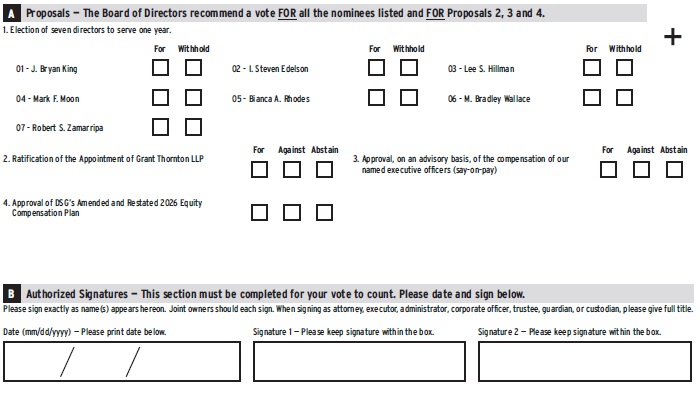
89
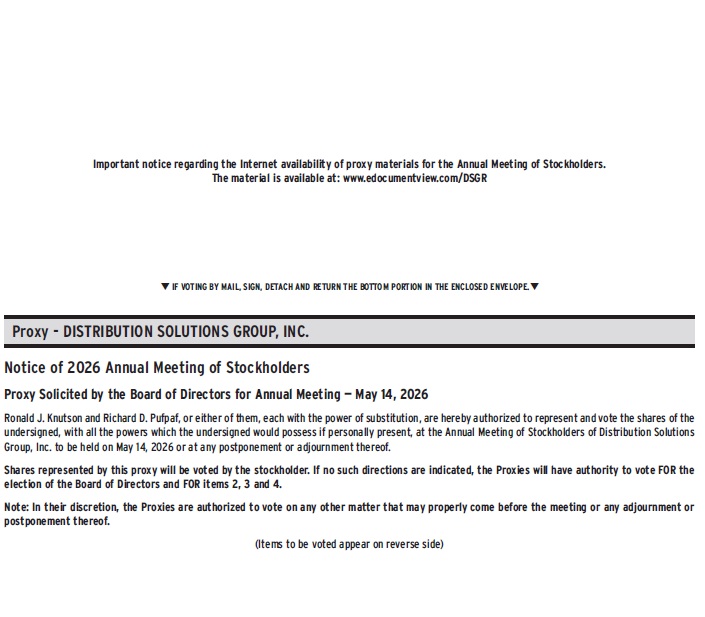
90